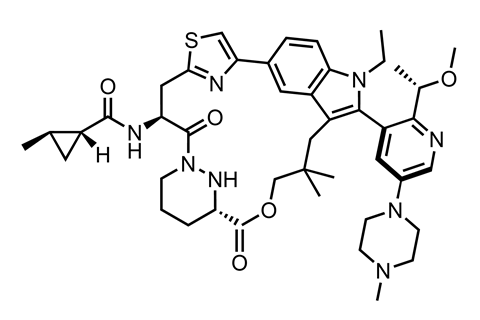
A groundbreaking drug has gained approval from the US Food and Drug Administration (FDA) for addressing metastatic pancreatic cancer. This innovative medication, Rasonque (daraxonrasib), obstructs Ras proteins, which are associated with numerous cancer types and were previously deemed ‘undruggable’. Pancreatic cancer is a harsh illness, with a mere five-year survival rate of 8% for patients afflicted with its most prevalent form. Clinical trials indicated that pancreatic cancer patients administered a daily dose of daraxonrasib in pill form had a median survival of 13 months, compared to 7 months for those receiving standard chemotherapy treatment.
‘This represents a significant advancement for pancreatic cancer,’ remarks Stephanie Dougan, a cancer immunologist at the Dana-Farber Cancer Institute in Boston, US. ‘It is the first instance where we have a functional drug.’
In healthy cells, the activation of a protein known as K-Ras triggers a signaling cascade that activates genes responsible for cell growth and division. However, mutations in a single amino acid can cause K-Ras to be perpetually active, resulting in the unchecked cell proliferation observed in various cancers.
Daraxonrasib, created by Revolution Medicines based in California, acts as a molecular adhesive that attaches to another protein found in most cells. This produces a formation that inhibits the K-Ras protein, ceasing its signaling and halting cancer progression.
Mutated K-Ras is found in 90% of pancreatic cancers, about 40% of colorectal cancers, and as much as 30% of lung cancers. ‘Ras mutations rank as the most prevalent mutations across all cancers,’ states Channing Der, a Ras oncogene researcher at the University of North Carolina at Chapel Hill, US, whose laboratory has collaborated with Revolution Medicines, including on two pivotal studies in 2024 regarding Ras inhibitors. ‘This new drug is paving the way for the treatment of other cancers, particularly lung and colorectal cancers.’
Der was instrumental in identifying K-Ras in 1982, when it became an evident target for cancer treatments. However, it was seen as undruggable, partly due to a lack of suitable binding sites for small molecules. The recent strategy hinges on the drug binding to a widespread protein, cyclophilin A. ‘Instead of a small molecule that cannot locate a pocket on Ras, we now possess a large binary complex that seizes it,’ explains Der.
An important advancement: Unlike two previous FDA-approved Ras inhibitors, which target a specific mutation, daraxonrasib binds to all three Ras proteins present in the body. This potentially allows daraxonrasib to be effective irrespective of which Ras mutation is fueling a patient’s cancer.
By affecting Ras proteins in normal tissues, daraxonrasib also results in side effects, including rashes and gastrointestinal issues. ‘Normal cells are also impacted, but normal cells do not share the same reliance on Ras signaling as cancer cells, which provides a favorable therapeutic window,’ notes Dougan. However, she observes that there are indications that cancer cells may eventually develop resistance to Ras inhibition, suggesting that it is not a definitive cure.
Nonetheless, the approval of daraxonrasib is viewed as a major progression for the treatment of pancreatic cancer. ‘The standard of care for pancreatic cancer consists of two largely ineffective chemotherapy regimens, which can be quite toxic,’ remarks Der, who mentions that many patients are left bedridden as a result. Dougan mentions that while a small fraction of patients undergo successful surgeries, in most cases, the cancer has already metastasized beyond the pancreas.
The new drug is authorized for patients who have not responded to other treatments, but there is hope that data will advocate for earlier deployment. ‘This drug is so effective that I anticipate it will be used as a first-line therapy,’ says Dougan. ‘There is a significant quality of life enhancement in being able to take an oral medication that has fewer side effects [than chemotherapy].’
Analysis by Der and his team indicates there are presently 79 anti-Ras medications across more than 200 clinical trials, with additional approvals anticipated, including 16 in phase 3 clinical studies. ‘Daraxonrasib is not the sole player in this space,’ states Der. ‘I am enthusiastic about the advancements expected in the upcoming months.’
‘There was such pessimism surrounding pancreatic cancer. Many companies were reluctant to conduct trials because they always resulted in failure,’ notes Dougan. She expresses hope that daraxonrasib could enable immunotherapies to achieve greater success. ‘If the tumors can remain regressing or stable for six months, that gives T-cells an opportunity to act,’ she explains. Der also hopes that treatments combining daraxonrasib with other cancer medications could be effective, emphasizing that most successful cancer therapies are combination treatments.