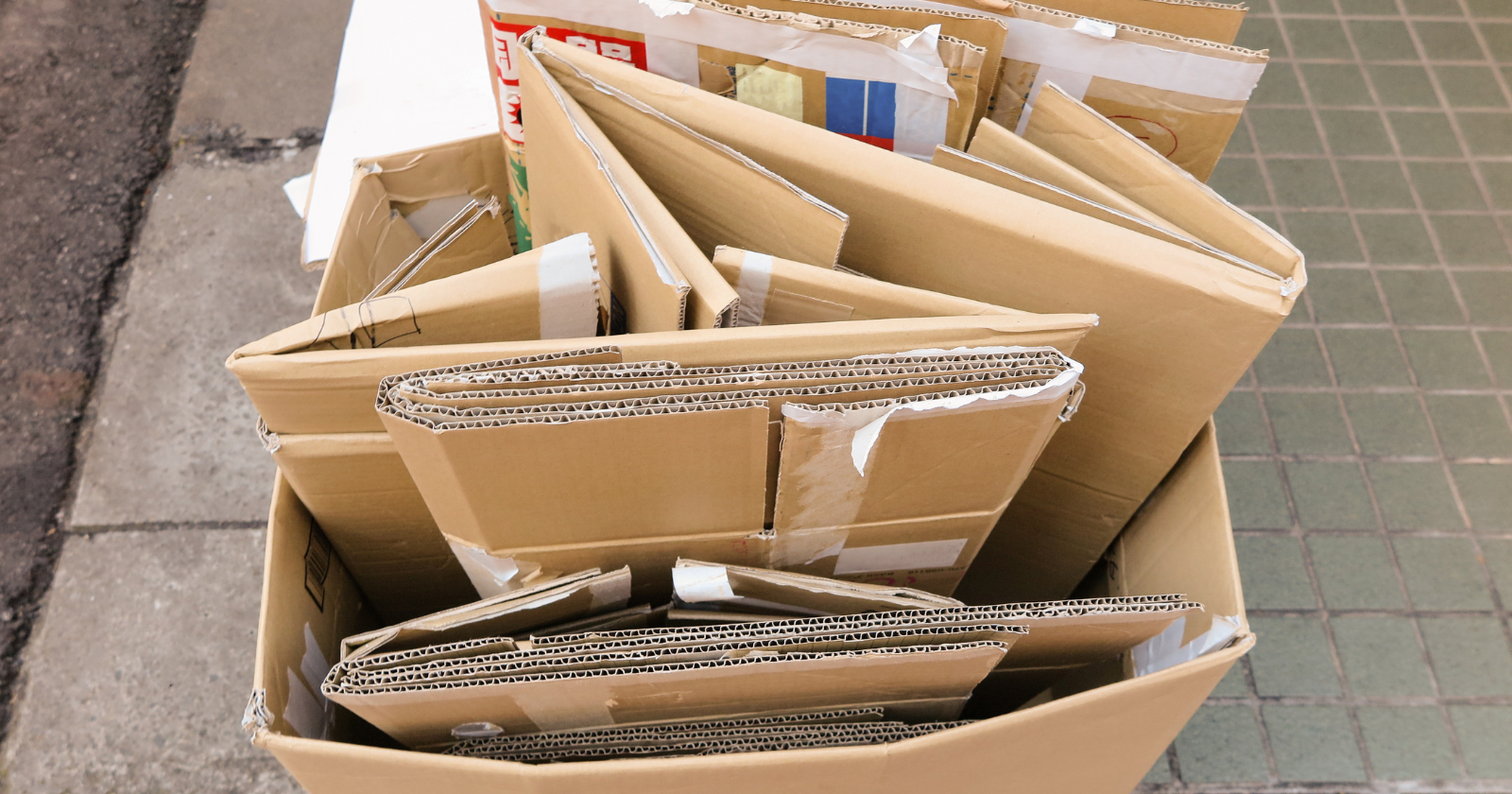
A paper bag that transported someone’s lunch on Tuesday holds a potential future within a smartphone.
Scientists at NTU Singapore have discovered a method to transform kraft paper, the brown material found in grocery bags and cardboard boxes, into the carbon anodes utilized by lithium-ion batteries. This is not a metaphor; it’s the actual packaging, processed into functional electrodes.
Pieces of kraft paper are laser-etched and arranged into lattice configurations, some of which resemble a spiky piñata, then placed in a furnace at 1,200 degrees Celsius, with the oxygen removed. Without oxygen, paper cannot ignite. It releases water and volatile substances instead, leaving behind nearly pure carbon, maintaining the shape it was originally cut into. The process is technically referred to as carbonisation.
Incineration, which is where the majority of kraft paper currently goes, emits carbon dioxide.
An anode, in simple terms, serves as a space for ions. A lithium-ion battery moves these ions back and forth between two electrodes, and during charging, they migrate to the anode and fit themselves among stacked sheets of carbon atoms, remaining locked in until the battery is needed for power. Graphite is the typical material used because, as EE Power clarifies, it can absorb a significant number of ions without compromising its structure. Any alternative has to successfully replicate this feat, thousands of times, without disintegrating.
What the lab cells accomplished
Cells created with the paper-derived anodes were charged and discharged up to 1,200 times, which NTU estimates to be about twice the lifespan of today’s phone battery anodes. Batteries utilizing these anodes absorbed energy up to five times more efficiently than traditional equivalents, a durability the team attributes to the arrangement of paper fibers prior to heating.
One research team, one analysis, one set of lab cells. Reported in the journal Additive Manufacturing, this work falls under materials science long before it fits into any product development timeline, and the same study notes reversible capacities of 65 to 140 milliamp hours per gram. In comparison, commercial graphite offers approximately 372 milliamp hours per gram. Energy density remains a question yet to be resolved.
The reason behind the anode’s high cost
Why should anyone care about the origin of an anode? Primarily, cost. As reported by E&T magazine, the anode constitutes 10 to 15 percent of the total cost of a lithium-ion battery. Nearly all of that cost is due to graphite, whether mined or synthesized, which has quietly become one of the major bottlenecks in the energy transition.
By 2035, the International Energy Agency projects that China will supply about 80 percent of battery-grade graphite. In October 2025, Beijing announced export restrictions covering graphite anode materials, cathode materials, and battery production equipment. The agency’s 2026 critical minerals outlook quantifies the risk: a complete disruption to battery-grade graphite trade could jeopardize more than 300 billion US dollars annually in production outside of China.
Demand is exacerbating the situation. Graphite usage increased by 6 to 8 percent in 2024, alongside nickel, cobalt, and rare earths. According to the IEA, energy applications, primarily electric vehicles and grid storage, drove 85 percent of that growth in battery metals demand over the previous two years.
In light of this, a furnace filled with old cardboard begins to appear less as a novelty.
From spiky piñata to production line
“Paper is used in numerous capacities in