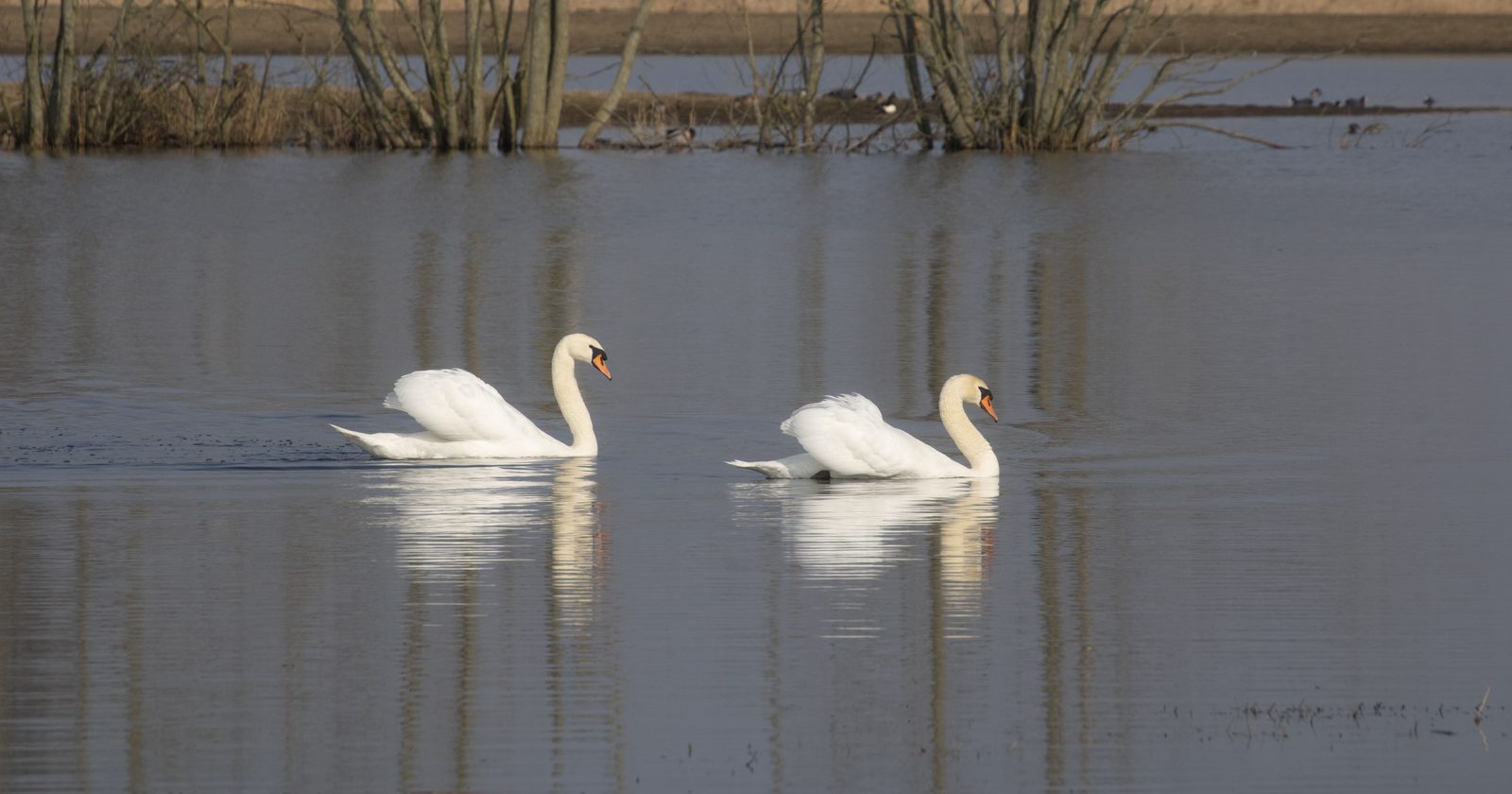
Two birds. That is the origin of Michigan’s mute swan narrative. In 1919, a solitary pair was transported from Iowa to Charlevoix County, located in the northern section of the state, above Grand Traverse Bay. Wildlife records concur on the crucial detail: the juvenile birds were permitted to fly freely instead of having their wings clipped. Over the subsequent decades, they disseminated throughout the region.
*A note before we proceed: we are not wildlife biologists, ecologists, or ethicists. What follows is our interpretation of the research and public records, not a judgment on how the state should respond. The figures here originate from a limited number of studies and agency documents, and population counts for wild birds are mere estimates.*
## From two birds to seventeen thousand
Mute swans are native to Europe and Asia. They were introduced to North America in the mid-1800s to embellish parks and private properties, which explains how a pair ended up on an Iowa estate initially. Michigan’s Department of Natural Resources identifies the Charlevoix pair as the inaugural wild mute swans in the state, and the entire population can be traced back to those two birds.
The growth merits careful examination, as it illustrates how a problem can gradually emerge in a state. By the mid-1940s, the flock had expanded to approximately 47 birds. By 1990, that number exceeded 2,000 statewide. The count in 2000 reached about 5,700 birds. Prior to state intervention, the population was increasing by 9 to 10 percent each year—steady growth that appears benign in any single year, yet alarming over decades. By 2013, the number surged to around 17,500 birds, making it the largest mute swan population in any US state.
## The issue of a beautiful bird
The immediate argument is that a swan is simply a swan. They are graceful, they are white, and most individuals enjoy spotting one on a lake. The objections do not pertain to their appearance but rather their behavior and diet.
Regarding behavior, the DNR is unambiguous. Barbara Avers, a waterfowl and wetlands specialist at the agency, has highlighted a trend closely monitored: as the population increases, so do reports of mute swans exhibiting aggressive behavior.
In terms of diet, the statistics are indisputable. A single mute swan can consume four to eight pounds of vegetation daily, uprooting the underwater flora that other wetland species rely on. The significant concern is their displacement of native birds, notably the trumpeter swan, which the state categorizes as threatened. Avers has noted the observations made by the DNR: “We’ve received numerous reports of them driving out Trumpeters, and when we remove the Mute Swan, we observe Trumpeter Swans nesting.”
## The repercussions of the 17,520 peak
As the count reached its 2013 zenith, the state had already classified the birds as non-native and invasive, initiating removal efforts with permits. Part of the DNR’s rationale centered around projected population trends. Avers articulated the direst scenario plainly: “If we didn’t take measures to diminish mute swan populations, we could face 24,000 in five years.” She also framed the consequences similarly: “If we permit this to continue, Michigan’s wetlands and wildlife would be jeopardized, and there would be intolerable levels of conflict with humans.”
Consequently, the state established a formal goal: fewer than 2,000 wild mute swans by 2030. What implementing that goal entails in practice brings an uncomfortable twist to the narrative. A Michigan State University model determined that achieving this target would require reducing annual survival rates of swans by roughly 25 percent. In simple terms, it translates to the necessity of culling many birds. The shooting of adults and the destruction of nests and eggs lowered the population to about 8,000 by 2019, with the majority of removals occurring post-2010.
## An ecological case that remains a matter of values
The program has faced persistent opposition from animal advocacy groups, and the objections are not solely based on biological concerns. Even individuals who acknowledge that mute swans deplete vegetation and displace trumpeters may still object to firearms on a lake. When the DNR rejected a request to cease the culling, animal rights organizations advocated instead for non-lethal methods to manage the birds.
This divide is what researchers have actively explored. Corey Jager and colleagues at Michigan State University investigated how Michigan’s news coverage portrayed the struggle over control. They discovered that the tension stemmed from differing perceptions of what constitutes a healthy ecosystem, proper wildlife behavior, and whether killing the birds can ever be justified. The discord was as much moral as it was ecological.
Science can describe the system, but it cannot dictate whether or how intervention should occur. The data may indicate that