**Bionic Reading Technique and Its Impact: A Comprehensive Examination**
Bionic Reading represents a distinctive typographic method that highlights the initial letters of every word by bolding them, while keeping the rest of the letters in standard weight. This technique suggests that emphasizing the beginnings of words offers a visual signal, facilitating the reader’s eye movement. According to conventional guidelines, words with an even number of characters have their first segment bolded; meanwhile, odd-numbered words feature one extra character in bold. The premise is that these emphasized initial letters naturally attract the eye, allowing readers to quickly grasp the start of each word, while the remainder is processed with a lesser degree of concentration.
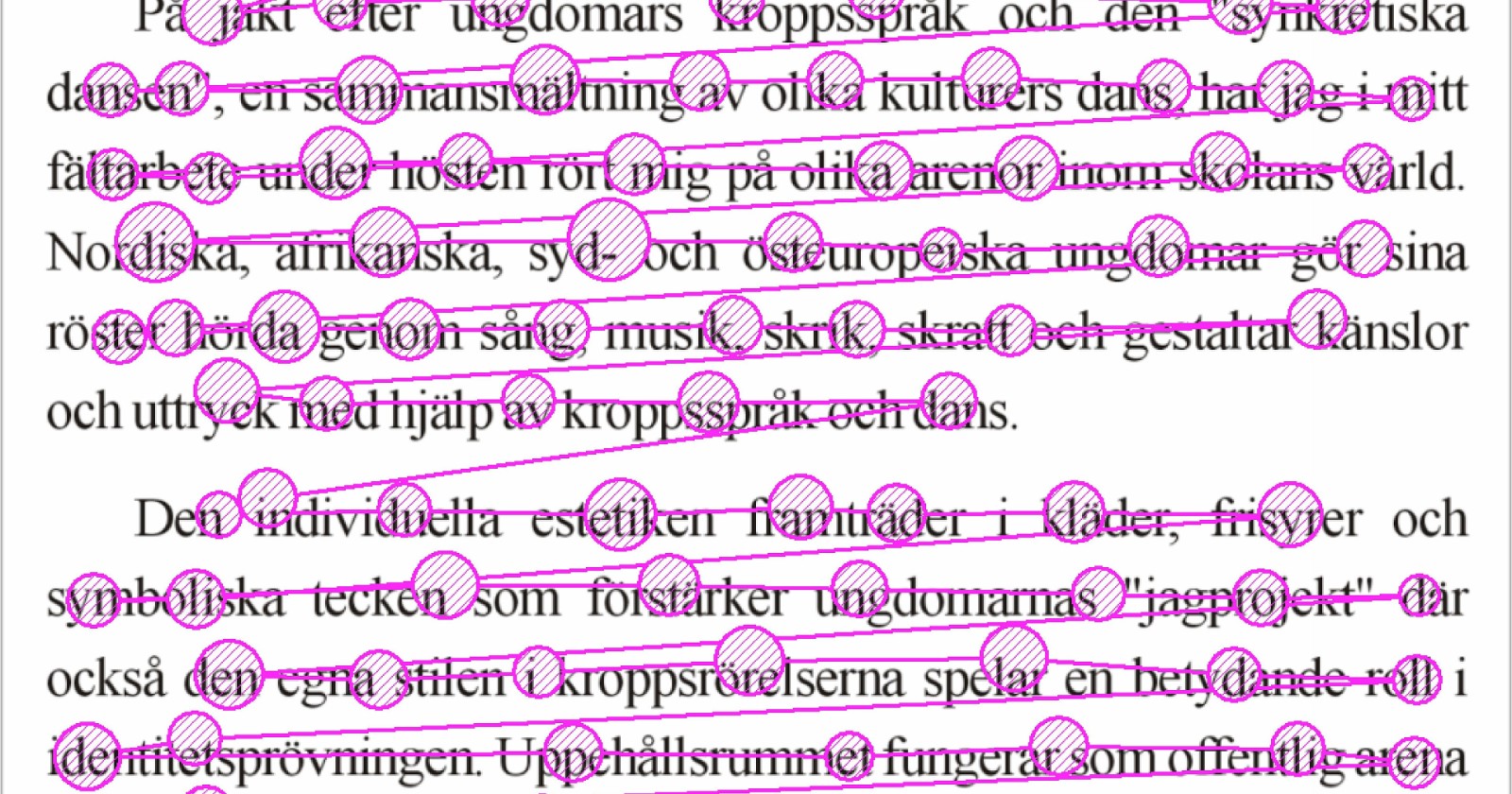
A pivotal study titled “No, Bionic Reading does not work,” released on 2 September in the Royal Society Open Science, introduced this typographic technique to thorough evaluation using eye-tracking technology. Researchers Adam Parker, Hyunjun Lee, Haibei Wang, and Holly Joseph investigated whether Bionic Reading truly improves reading effectiveness. The findings indicated that although the technique modified eye movements, notably bringing initial focus nearer to the beginnings of longer words, it did not result in enhanced reading speeds or better comprehension.
Their research comprised 90 skilled adult readers, who read sentences in three distinct typefaces. The Bionic Reading method, already boasting a considerable presence with over 100,000 downloads on the Google Play Store, was distributed via apps and an API licensed to other products. Despite its expanding user community, the typographic modification showed no significant edge over regular text display in terms of speed or understanding during the experiment.
**Previous Evaluations and Studies**
Earlier evaluations have similarly examined Bionic Reading, frequently uncovering similar results. An online study by Readwise, engaging over 2,000 participants, discovered an average decrease of 2.6 words per minute while utilizing the bolding method, although this was not statistically significant. In 2024, Joshua Snell’s paper confirmed the absence of benefits for both rapid and slow readers employing the technique.
Three significant eye-tracking studies also offered valuable insights. Around 2025, researchers like Spear determined that boldface led to shorter but more frequent fixations, without modifying overall reading durations. Another 2025 study found no persuasive effect from bolding initial letters. These investigations imply that while bolded text affects certain eye movements, it does not convert into actual reading advantages.
In contrast to these findings stands an unpublished Swiss study that claimed favorable effects of Bionic Reading. However, this study lacked peer review, and its advantages may mirror subjective impressions rather than objective enhancements.
**Testing to Distinguish Effects**
The investigation utilized a creative control setup, comparing unbolded text, Bionic Reading-styled text, and a variant with mid-word bolding. This method aimed to ascertain whether the observed effects arose from bolded starts or a general visual disruption. Although bolding initial letters in eight-letter words did diminish the typical left-of-center eye landing, the overall reading speed and comprehension did not change.
Participants’ readability preferences, evaluated on a ten-point scale, leaned towards unbolded text over bolded alternatives — 43 of 90 participants deemed plain text as the most readable. Consequently, the study concludes that alterations brought by Bionic Reading do not significantly influence crucial metrics like reading speed or understanding appreciably.
**Concluding Thoughts**
The research delivers a clear conclusion for proficient adult readers — Bionic Reading, while it influences initial reading focus on longer words, does not boost reading efficiency or comprehension. Nevertheless, its effects on populations facing reading challenges remain uncharted. The authors advise caution since the root causes of reading difficulties extend beyond visual prompts, encompassing aspects such as phonological processing and vocabulary.
Addressing individual preferences through adjustable bolding options or various fonts presents a research opportunity. In the meantime, for adept readers, Bionic Reading modifies gaze patterns without measurable impacts on speed and comprehension.