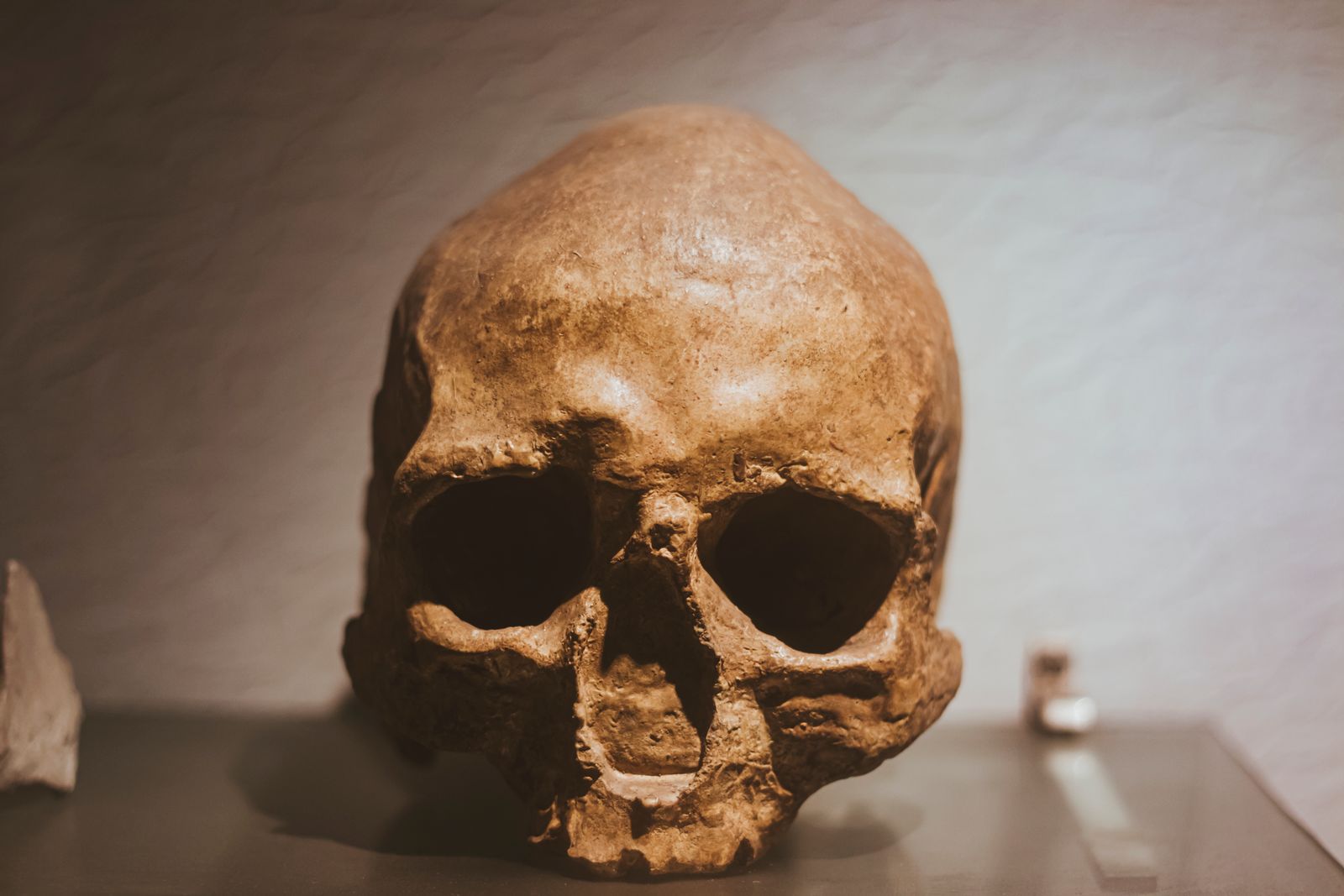
The Denisovans, who later mated with contemporary human groups, possessed a more ancient layer of blended ancestry themselves, as per a recent reconstruction of ancient genomes. Researchers from UC Berkeley believe that between 3 to 5 percent of Denisovan DNA originated from an unnamed “super-archaic” group whose lineage split from that of modern humans around 1.8 million years ago.
A portion of this ancient DNA subsequently transferred through Denisovan-derived chromosome segments into the forebears of modern people. This conclusion is derived from a statistical examination of genomic family trees, rather than from a newly sequenced fossil belonging to the unidentified ancestor.
This represents a singular study, not an established consensus.
The DNA traversed a two-phase pathway
The proposed pathway entails two separate instances of interbreeding, separated by a significant duration. Initially, the descendants of the deeply diverged population mingled with Denisovans in Eurasia, likely more than 200,000 years ago. Subsequently, Denisovans interbred with contemporary human populations. These interactions conveyed a minor portion of the older contribution for a second time.
Describing the Denisovans as “already hybrids” reflects that layered inheritance. It should not imply that one distinctly defined species suddenly transformed into a stable mixture. Ancient human groups fragmented, migrated, and exchanged genes repeatedly, and the terminologies used for them encapsulate that population history.
The UC Berkeley description of the research clarifies that the estimate of 3 to 5 percent pertains to the super-archaic portion of Denisovan DNA. It does not indicate that 3 to 5 percent of any living individual’s entire genome derives from this source.
Current populations received merely a fraction of that fraction.
Denisovan ancestry itself constitutes a minority of contemporary genomes, with the largest known representations in certain Oceanian populations. The even older component nested within is consequently smaller.
TRACE deduced ancestry without a donor genome
Yulin Zhang, Arjun Biddanda, and their team published their findings in a peer-reviewed article in Science. Their methodology is termed TRACE, short for Tracking Archaic Contributions via Ancestral Recombination Graph Estimation.
A chromosome does not maintain a single family history from beginning to end. Recombination mixes DNA in each generation, meaning adjacent stretches can present different genealogies. An ancestral recombination graph illustrates that evolving web of local trees throughout a genome.
TRACE scrutinizes those reconstructed trees for branches sufficiently deep to indicate a population separated from the sampled ancestors for an extended duration, linked to segments consistent with subsequent gene flow. It does not necessitate a sequenced ancient genome from the donor or an external comparison group.
The team initially tested the method on simulated histories to determine whether it could recover known Neanderthal and Denisovan ancestry. The primary data consisted of 503 phased whole-genome sequences from British, Han Chinese, Indian Telugu, Yoruba, and Luhya participants in the 1000 Genomes Project.
For the super-archaic investigation, the researchers conducted a separate analysis of 92 high-coverage Oceanian genomes. These were particularly revealing as Oceanian populations preserve more Denisovan ancestry than most other contemporary groups, providing the method with more inherited Denisovan sequences to search for an older layer.
The signal was embedded within Denisovan regions
The most profound unidentified lineages in the Oceanian analysis were notably concentrated within chromosome regions already categorized as Denisovan-derived. The researchers did not observe similar enrichment within Neanderthal-derived regions. That disparity is the reason the authors favor a pathway through Denisovans as opposed to a direct transfer from the super-archaic population to modern humans.
The study did not witness either interaction. It inferred the sequence from the position and genealogical depth of remaining DNA segments. Other demographic histories can occasionally generate similar patterns, which is why the choices in simulation and validation against known ancestry are significant.
ScienceBlog has separately reviewed the broader TRACE discovery of two unidentified lineages. The other signal in that publication is distinct: a “ghost” population that seems to have directly mingled with modern human ancestors in Africa and contributed approximately 0.5 to 1 percent of the genomes examined.
The super-archaic pathway is one progression