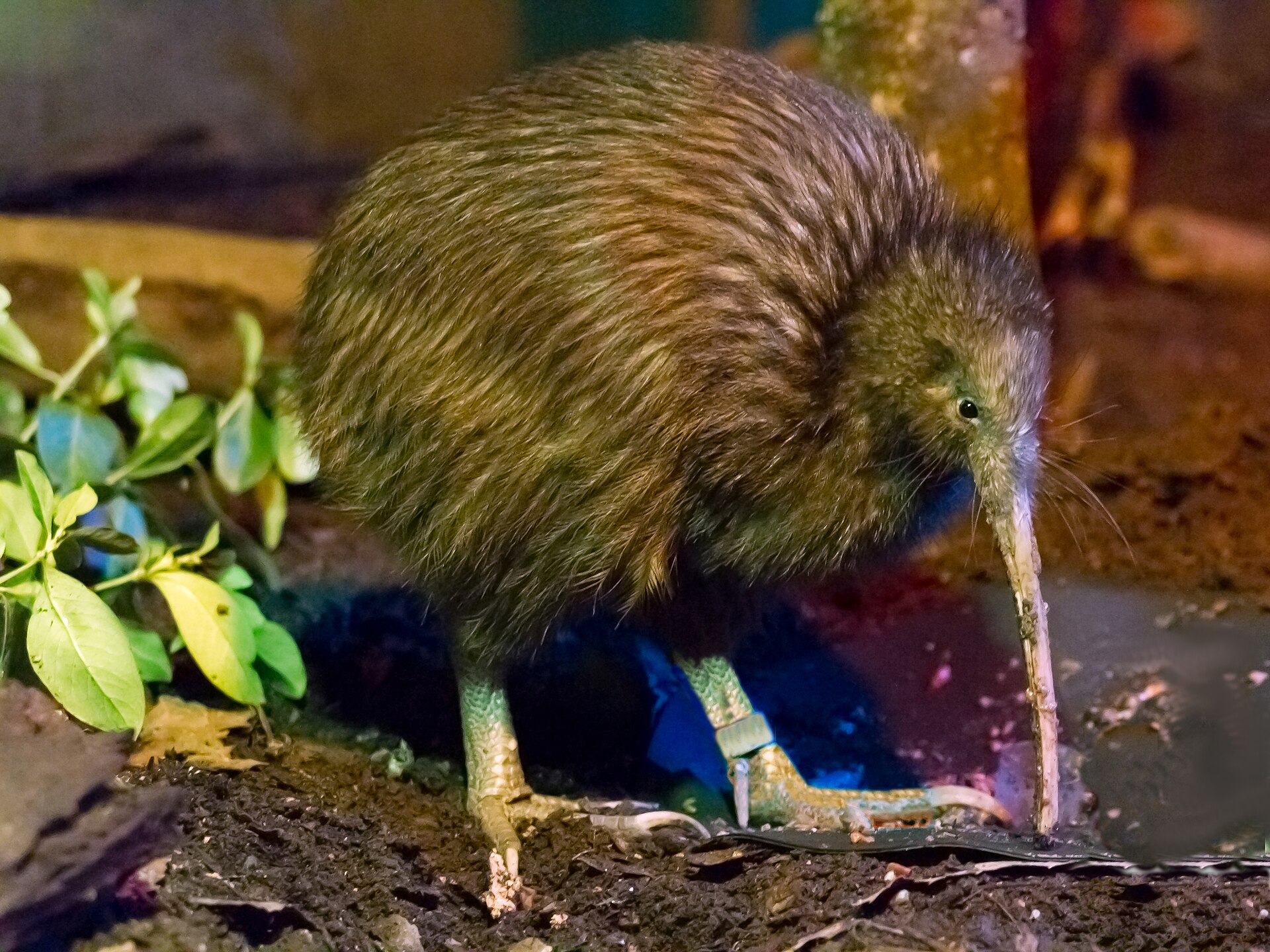
In early September 2026, a field team in the hills to the west of Wellington captured a North Island brown kiwi, removed a small plastic transmitter from its leg, and allowed the bird to return to the undergrowth. This bird marked the conclusion of 250. With its release, the entire group freed under the Capital Kiwi Project’s Department of Conservation translocation permit is now traversing across farms, wind farms, regenerating gullies, and mountain bike paths without a single radio tag among them. The project informed The Spinoff that this moment signified the culmination of nearly a decade of effort, and the key statistic to ponder is this: of the chicks the project tracked, over 90 percent attained stoat-proof weight. The target set by DOC was 30 percent.
The disparity between 30 and 90-plus is not merely an artifact of rounding. It represents the contrast between a reintroduction that struggles and one that builds upon itself, achieved through a trap line established years prior to the arrival of the first kiwi.
Five thousand three hundred traps, and no fence anywhere
Capital Kiwi commenced the installation of traps across Wellington’s western hills in 2018, four years ahead of the kiwi’s introduction. The current network includes approximately 5,300 traps, extending from Pariwhero / Red Rocks on the southern coast to Porirua, covering a landscape that vastly differs from the fenced sanctuaries often envisioned by New Zealanders when considering kiwi recovery. No predator fencing exists. No gates are present. The majority of the land is privately held, productive land: sheep and beef pastures, pine and regenerating manuka, wind turbines spinning on the ridges, and a vibrant array of mountain bike parks where riders now coexist with a nocturnal bird that can weigh as much as a housecat.
Before releasing any birds, the project managed that trap network for three years, gathering data on the number of stoats trapped and their locations, ensuring that the kiwi arrived in a landscape that had already been prepared rather than one still undergoing assessment. The first birds were released in November 2022. DOC’s translocation permit permitted 250, and those birds were released in phases over the following years with support from Ngāti Toa and Taranaki Whānui, the mana whenua whose rohe encompasses the area now inhabited by the birds.
The lack of a fence is intentional. Fenced sanctuaries provide exceptional insurance, but they are limited, and the land that can be fenced is also limited. What Capital Kiwi has been investigating is whether a large, unfenced, privately owned, multi-functional working landscape can maintain a low enough predator density to allow kiwi to breed. The removal of the transmitters signifies the project’s assertion that, for this cohort, it is feasible.
A chick has to reach a kilogram
Adult kiwi are impressive creatures. They possess robust legs, can kick powerfully, and are not easy targets for a stoat. Their eggs are among the largest relative to body size in the avian world, and a stoat faces significant difficulty in attacking one. The vulnerability lies within a narrow and specific timeframe: between hatching and roughly one kilogram of body weight, at which point a chick is small enough to be preyed upon and not yet robust enough to defend itself. Project founder Paul Ward, in conversation with The Spinoff, explained that this threshold indicates the weight at which a chick can fend for itself, outlining the stark reality of unmanaged failure rates. Without pest control, 95 to 100 percent of kiwi chicks fail to reach this weight.
This serves as the baseline against which DOC’s 30 percent permit target was established. Achieving 30 percent survival to stoat-proof weight is deemed sufficient for a kiwi population to sustain itself and gradually proliferate.
The monitoring revealed different results. Across more than 5,000 hectares and three years of observation, several dozen monitored chicks were tracked, with over 90 percent of them reaching fight weight. The NZ Herald and The Listener reported that nine out of ten chicks survive to become stoat-proof. The crucial caveat, and one the project has emphasized, is that this statistic pertains to monitored chicks—those whose fathers wore transmitters and whose nests were located and consistently revisited. It does not represent a complete count of every chick hatched in the western hills and should not be interpreted as such. What it indicates is that in the segment of the population under close observation, stoat pressure was reduced sufficiently to make early mortality the exception rather than the norm.
Taking the tags off is not taking the pressure off
Transmitters are invaluable for gathering information. They also impose a burden on the bird and on the volunteers who must catch it twice yearly to swap batteries and assess leg condition. The removal of the transmitters signifies a decision that the population no longer requires individual-level monitoring for management, not a declaration that management is complete.
What replaces the tags is a multi-layered monitoring approach. Tracking tunnels and trail cameras