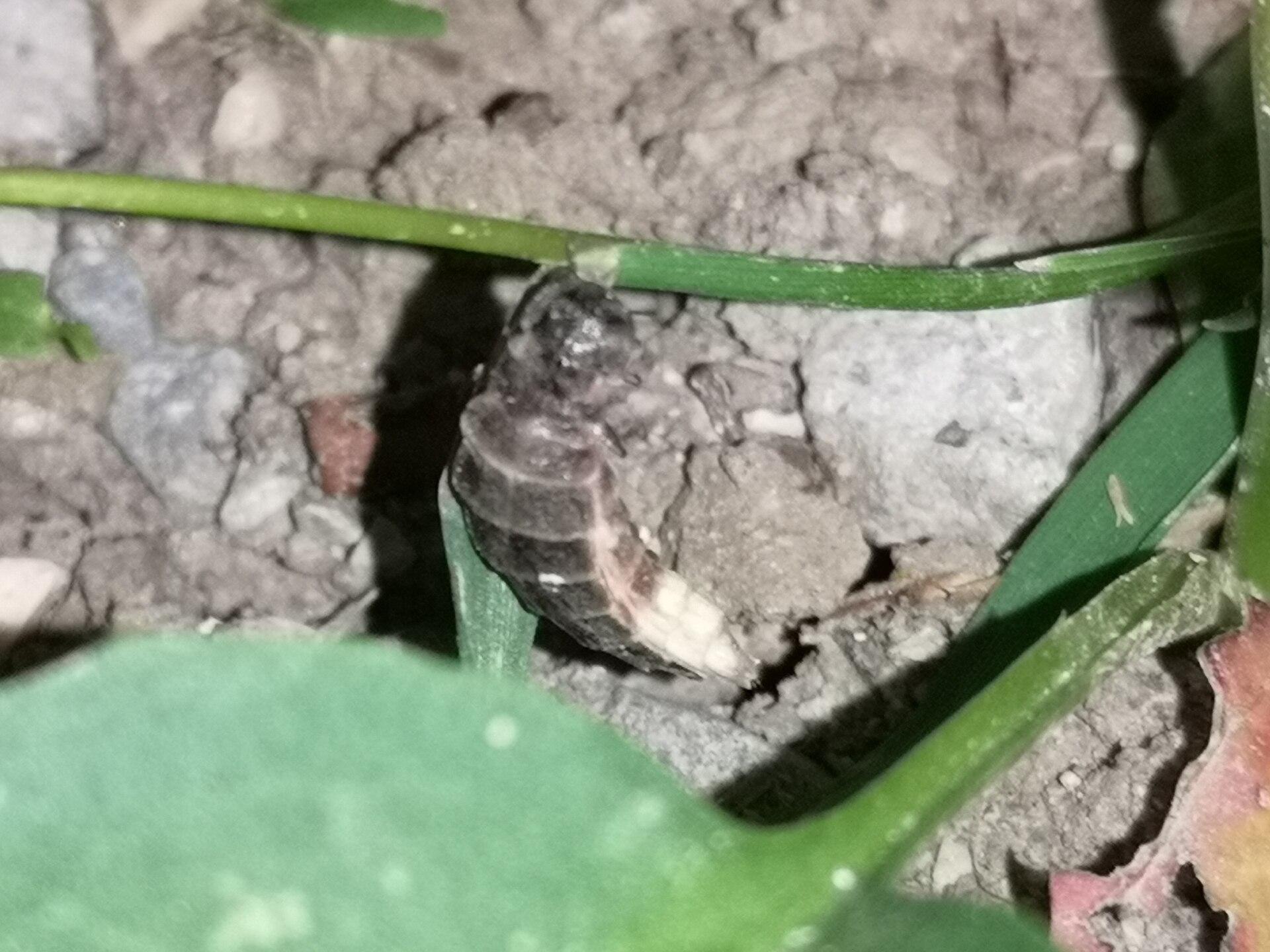
Twelve. This is the impressive tally of luminous female common glowworms recorded by volunteers strolling the grassy peripheries of Nosterfield nature reserve in North Yorkshire over consecutive weeks this summer, marking the first time in over a century that this species has illuminated that area. The counts were disclosed on Monday, September 7, 2026, by the Guardian, which reported that volunteers from the Lower Ure Conservation Trust discovered up to a dozen females showcasing their cool green lights above the grass on different nights. An additional 1,900 larvae, raised in captivity, are poised for release at the same reserve later this year.
The light itself merits attention. Lampyris noctiluca is actually a beetle, not a worm, and the glow is primarily produced by the adult female, who ascends a stem, angles the bright underside of her abdomen upwards, and waits. The male, endowed with wings yet lacking comparable luminescence, locates her through this signal. A glowing female thus serves as definitive evidence: it indicates that larvae have thrived, fed, transformed into pupae, and matured on-site. It is the sole tangible proof yielded by a glowworm reintroduction.
A garden shed in Bristol, and a two-year wait
The insects inhabiting the reserve this summer originate from a small, sanctioned collection from a nearby donor site and an almost budget-free captive breeding initiative. According to the Guardian, the project was spearheaded by independent ecologist Pete Cooper, who volunteered his time and nurtured hundreds of larvae within a garden shed in Bristol, collaborating with volunteers who adopted the nickname “glow-getters.” Glowworm larvae are predatory with a selective palate: they prey on snails and slugs, immobilizing them with a bite and externally digesting them. Sustaining hundreds of these larvae necessitates maintaining a supply of mollusks, which is why a shed filled with trays is more about logistics than charm.
The initial larvae were released at Nosterfield in 2024. Subsequently, no observable changes occurred, and none were anticipated. Common glowworms typically require around two years to reach adulthood, spending this time as larvae in coarse grass, moving leisurely, hunting nocturnally, and concealing themselves by day. Summer 2026 represented the first opportunity for the cohort from 2024 to potentially appear as glowing adult females. It did, featuring as many as 12 of them.
This arithmetic is crucial for interpreting the outcome. A reintroduction that yields adults on schedule has successfully surmounted a significant hurdle, as it demonstrates that the larvae obtained nourishment, evaded flooding, mowing, or predation, and accomplished their developmental cycle on-site rather than merely enduring a few weeks post-release. It does not yet confirm that the beetles can repeat this feat independently.
Why a disused quarry turned into good glowworm country
Nosterfield has historical ties to glowworms. The Guardian mentions that in 1909, writer Edmund Bogg noted the presence of glowworms at Nosterfield, and that quarrying later contributed to their local extinction. The restoration of this land has been gradual and intentional. Since 1997, the Lower Ure Conservation Trust has been acquiring and rehabilitating land here, starting with the first 72 acres of abandoned quarry and growing to nearly 600 acres under management. The underlying magnesian limestone, exposed and transformed by extraction, has been directed toward establishing species-rich wetland and grassland. Bitterns and marsh harriers now inhabit the site, representing a substantial transformation.
Glowworms require something less flashy than reedbeds. They thrive in rough, undisturbed grasslands with tussocks, moist edges, plentiful snails, and, essential for their breeding, darkness. A female’s signal is effective only if a male can perceive it, making artificial illumination a direct reproductive challenge rather than merely a visual one. The Guardian cites the wider challenges contributing to the decline of glowworms in the UK as intensive agriculture, urban development, electric lighting, and the general practice of tidiness, which includes mowing down wild grasses, eliminating habitats suitable for slow-moving larvae to mature over two years.
Simon Warwick, director of the Lower Ure Conservation Trust, acknowledged Cooper’s dedication and the approximately 80 volunteers from the reserve who altered habitat management and conducted monitoring for emergence, as per the Guardian’s report. Monitoring involves traversing transects after dark during summer, repeatedly, while counting light sources.
The next 1,900, and a test set for 2030
The 1,900 larvae currently awaiting release were produced with assistance from volunteers at the Westbury Wildlife Park Foundation, and the Guardian notes that fundraising ceilidhs facilitated the enhancement of breeding facilities there. Cooper is also developing formal standards and guidelines for glowworm breeding, release, and habitat management, the type of pragmatic document that determines whether a singular success can evolve into a replicable method for others. A UK glow