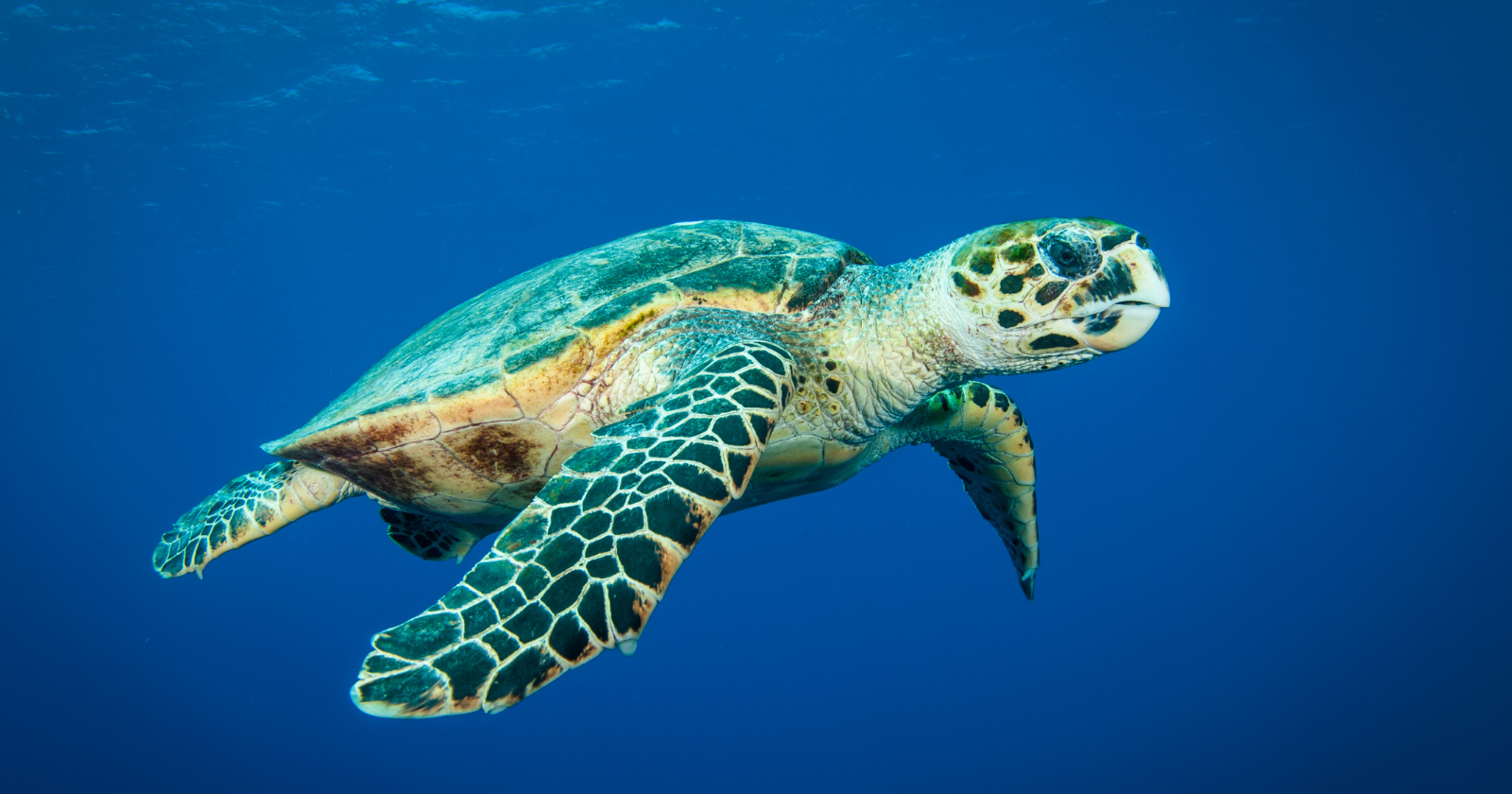
The revelation came during a camping excursion. Evan Budz, 15, from Burlington, Ontario, observed a snapping turtle gliding through the water, and he was struck by how little disturbance it caused — no wake, hardly a ripple, an animal traversing a pond while leaving it unchanged behind it.
Then he considered how a device designed to study that pond would operate: by spinning a propeller.
This discrepancy evolved into a science project. Traditional underwater drones propel themselves with a screw, which creates noise, creates turbulence, and stirs up sediment from the bottom — and the combination of disturbed silt and mechanical noise is exactly what drives fish away and muddles the water in the ecosystem the drone is meant to examine. Budz realized that the propulsion method works against the goal. Thus, he borrowed from the turtle.
BURT
His creation is known as BURT — Bionic Underwater Robotic Turtle — and it swims in the same manner as the snapping turtle: by flapping a pair of front flippers, not by rotating a propeller.
The design mimics the natural distribution of tasks in swimming turtles. The front flippers produce forward thrust; the smaller hind limbs maneuver and stabilize rather than push. Budz constructed the components using SolidWorks and 3D-printed them, centered around a transparent tube of electronics with a thumb-sized camera at the front. The entire apparatus weighs about 11 pounds — comparable to a sizable house cat — operates for up to eight hours on a lithium battery with a solar panel for extended use, and cruises at roughly half a mile per hour, approximately the speed of a real sea turtle. He says he can increase its speed by making the flippers flap more vigorously.
The essence of all this biomimicry is a singular trait: BURT traverses the water without disturbing it. That is the core purpose of the machine, and everything else is constructed around that principle.
The eyes, and the murk
BURT is not just a silent swimmer; it is a silent swimmer that actively seeks issues.
The forward-facing camera connects to an onboard Raspberry Pi — a computer roughly the size of a playing card — operating machine-learning models trained to identify signs of ecological distress: coral bleaching, invasive species, plastic pollution. The robot autonomously follows a predetermined search pattern, eliminating the need for tethers or remote control — it follows the pattern, documents its findings, and can transmit the information externally. An independent, quiet, self-guided observer.
Reality then influenced the design, which is the aspect most retellings neglect. When Budz tested BURT in murky water, current and fluctuating light hindered the camera’s performance — so he incorporated two elements that weren’t part of the initial design: lights on the front and an ultrasonic transducer that uses high-frequency sound to detect obstacles that the camera cannot identify. The realities of the water environment, rather than the tidy prototype, shaped the final product.
The 96 percent, honestly
This brings us to the figure in the headline, and it warrants a straightforward asterisk, because the candid version is more enlightening than the exaggerated one.
The 96 percent statistic is accurate, and it reflects precisely what your skepticism should expect: during testing, BURT accurately identified replicated coral bleaching 96 times out of 100. “Replicated” is the crucial term. The coral was modeled using 3D printing; the water was from his grandparents’ backyard pool, just over eight feet in depth; the lighting was consistent, the depth constant, and the machine had been pre-trained to recognize what bleaching entails. It later ventured into Lake Ontario — which is nothing like a pool — but the 96 percent pertains to the controlled testing, not the open lake, and certainly not an actual reef.
None of this represents a criticism. This is how a prototype should be evaluated. A 15-year-old established a clear baseline under controlled circumstances, achieved 96 percent accuracy, and subsequently took the machine to a complex environment to expose what the baseline did not capture — which is the true essence of real instrument development, just conducted in a swimming pool by a tenth grader.
The judges concurred that it was more than a standard school project. BURT claimed the title of Best Innovation Project at the 2025 Canada-Wide Science Fair, competing against a national pool of about 25,000 students, and later secured one of the top accolades at the European Union Contest for Young Scientists in Riga against numerous countries.
The idea underpinning the accolades is the lasting aspect, and it serves as a genuine critique of our approach to observing nature. We create noisy, wake-generating machines to study animals that flee from such disturbances, then rely on the data they collect from an environment they altered upon arrival. A teenager observed a turtle solve that dilemma 200 million years ago and simply replicated the solution. The most effective way to monitor a pond without altering it, it seems, was