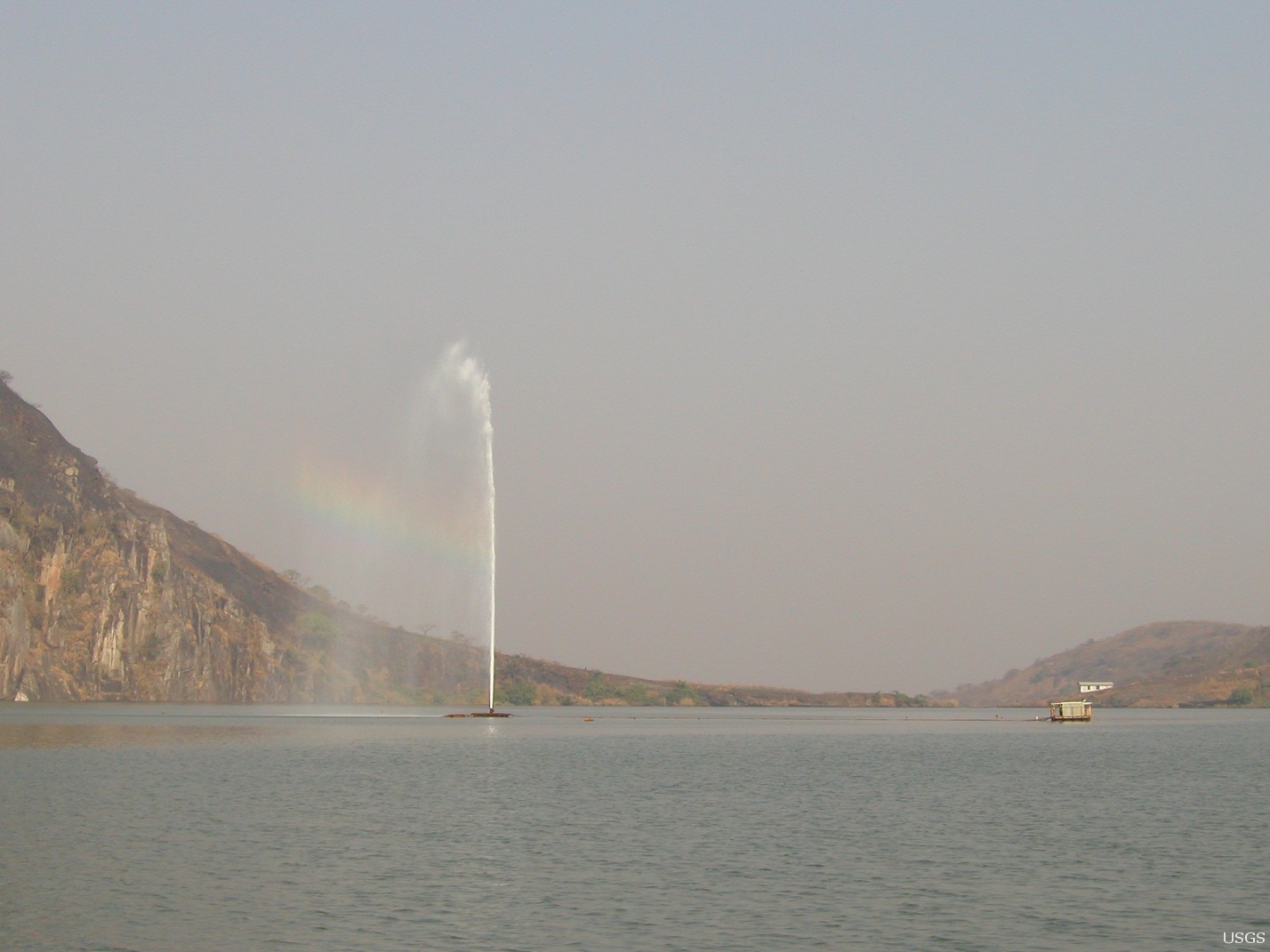
Lake Nyos, a crater lake located in northwest Cameroon, stands as a profound illustration of nature’s unpredictable force and the clever strategies humans utilize to handle such erratic events. In August 1986, Lake Nyos emitted a deadly plume of carbon dioxide, quietly suffocating more than 1,700 individuals and 3,000 animals overnight. This catastrophe, linked to a limnic eruption, occurred when a disturbance prompted the deep, gas-saturated waters to ascend, decreasing pressure and causing dissolved CO2 to escape rapidly.
The answer to avert a similar disaster arose through a method that is as ingeniously simple as it is effective. Engineers implemented a degassing system featuring a black polyethylene tube that extends deep into the lake, enabling a controlled discharge of the gas. Once set into motion, this self-operating system allows CO2-rich water to rise naturally, releasing gas in the process.
Originally put in place in 2001 with a single tube, the system has since been augmented with two additional pipes by early 2012, which aided in lowering gas levels to safe thresholds by 2015. This decrease has resulted in shorter jets, as the system depends on gas pressure to sustain its spray.
Nonetheless, the conditions of Lake Nyos necessitate ongoing vigilance. A solar-powered pump can provide continuous safety when natural degassing wanes. Complicating the situation is the lake’s vulnerable dam, made up of eroding volcanic material. Reinforcements through jet grouting have strengthened it against failure, thus reducing the risk of floods and possible gas emissions.
The management of Lake Nyos showcases a fragile equilibrium between utilizing natural mechanisms and technological solutions, ensuring that this formerly lethal lake remains stable and benign.