The UN’s newly appointed special rapporteur on toxics and human rights has categorized per- and polyfluoroalkyl substances (PFAS) as a systemic danger to ‘many, if not all, human rights’ and is officially advocating for an immediate global phase-out and prohibition of all non-essential uses.
‘PFAS hinder rights, encompassing the right to life, health, a healthy environment, a safe and healthy work environment, and access to information, justice, and remedies,’ stated Bethanie Carney Almroth, an ecotoxicologist at the University of Gothenburg in Sweden, during her address to the UN Human Rights Council on 14 September. She highlighted that several members of this family of synthetic compounds – estimated to number in the thousands – have been associated with malfunctions in hormonal, liver, and immune systems, in addition to other severe health issues such as cancers.
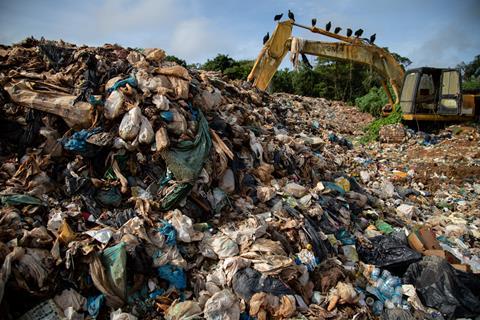
‘These substances are predominantly produced in industrial nations and disseminated worldwide through emissions – particularly via transboundary movements of waste laden with PFAS,’ expressed Carney Almroth, whose research focuses on the environmental impacts of plastics and plastic-associated chemicals. Once released, the robustness of the carbon–fluorine bond means that these compounds can persist in the environment for centuries, and currently, there are no effective, scalable technologies available to eliminate them from contaminated ecosystems, she added.
### What are PFAS?
PFAS – commonly referred to as ‘forever chemicals’ – comprise an estimated 15,000 synthetic chemicals that have been extensively utilized in consumer goods worldwide since the 1950s. They represent a category of chemicals containing at least one perfluorinated methyl (–CF₃) or methylene (–CF₂–) group. Their degradation in the environment is difficult because the carbon–fluorine bond is one of the strongest known. The distinctive characteristics of these substances bestow qualities like resistance to oil, grease, and water, along with resistance to temperature and reduced friction. This contributes to the creation of products that are non-stick and resistant to stains, for instance.
Nonetheless, PFAS are also extremely mobile in the environment and they bioaccumulate, as well as biomagnify, through the food chain. PFOA and PFOS – the most thoroughly studied of these substances – have been linked to significant health issues such as reproductive and developmental disorders, compromised immune function, and certain cancer types.
During the UN Human Rights Council gathering, Carney Almroth introduced a recent UN report that highlighted the need for an immediate ban on all non-essential PFAS usages. The report also called for ‘comprehensive national laws, regulations, policies, and plans’ to efficiently control and phase out PFAS as a chemical class.
‘The PFAS class showcases the potentials and risks associated with technological advancements, in numerous respects,’ the report concludes. ‘Chemists have produced innovative, synthetic substances that have transformed the material fulcrum around which global economies are structured.’
### Major PFAS manufacturers plan to expand production
In February 2024, nine UN human rights advisors released a statement accusing DuPont and Chemours of releasing hazardous PFAS into the environment along the lower Cape Fear River in North Carolina, US. This statement followed a formal request from a local community action group urging the UN to investigate several alleged human rights violations concerning Chemours’ discharge of PFAS from one of its local facilities into the river.
At the same time, most of the world’s leading PFAS manufacturers are intending to increase their production to satisfy rising demands for AI and data-center infrastructure, semiconductor manufacturing, and lithium-ion battery materials, as reported by ChemSec. This conclusion stems from the environmental organization’s survey of major PFAS producers, including Chemours, Arkema, and Daikin Chemicals.
‘The expansion plans of these companies indicate that, unless governments and regulators demand a rapid phase-out, we will confront a new surge of forever chemicals,’ cautioned Anne-Sofie Bäckar, ChemSec’s executive director. The organization notes that the only notable exceptions to this trend are the Swiss company Archroma, which is actively promoting PFAS-free alternatives, and the German multinational BASF, which has declared its intention to stop PFAS production by 2028.