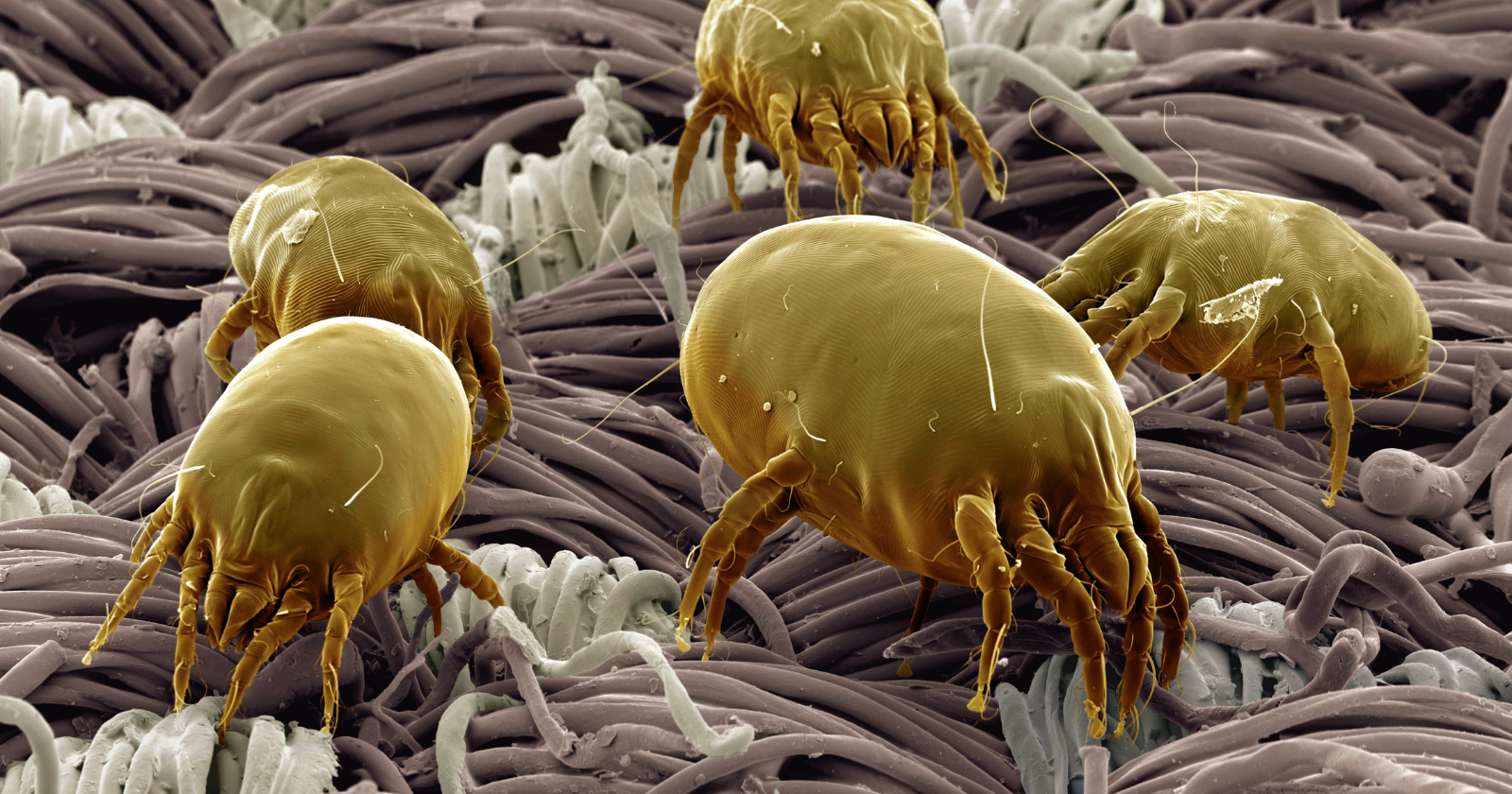
Household Dust Mites: Surprising Visitors and Their Health Effects
A recent investigation carried out in rural Poland revealed a surprising quantity of dust mites residing in homes. The study included 50 households, resulting in the collection of 5,340 mite bodies. The mites were primarily sourced from areas with significant human presence, such as beds, chairs, and floors, where skin flakes accumulate and serve as the mites’ food.
The research, led by Krzysztof Solarz and Celina Pająk, consisted of gathering 250 dust samples from 50 households. Utilizing a technique involving ethanol and saltwater, the mites were extracted and examined under a microscope. Results indicated that mites were found in 74.8% of the dust samples, with an average population of 29.9 mites per gram of dust.
Mite exposure is quantified by the count of mites per gram of dust. The study observed that surpassing 100 mites per gram considerably elevates the risk of sensitization and the onset of allergies. While rural homes had an average of 29.9 mites per gram, another study in Bytom indicated urban homes contained close to 200 mites per gram, which is alarming since the threshold for allergic responses is roughly 100 mites per gram.
The primary allergens are contained in minuscule fecal pellets made by the mites, which can provoke allergic reactions and respiratory conditions like asthma. Because these pellets settle quickly, activities such as making beds or sitting on sofas can lead to a temporary rise in airborne mite allergens.
Managing dust mite populations primarily hinges on regulating humidity levels, as mites thrive in moist environments. Suggested strategies include keeping indoor humidity between 35% and 50%, regular cleaning, using sealed mattress covers, and washing bedding on a weekly basis.
This finding highlights the importance of awareness and actions to lessen mite populations, which have only been recognized as a major allergen source since the 1960s. Despite many years of study, the most effective strategy continues to be controlling moisture levels to establish an unfavorable setting for house dust mites.