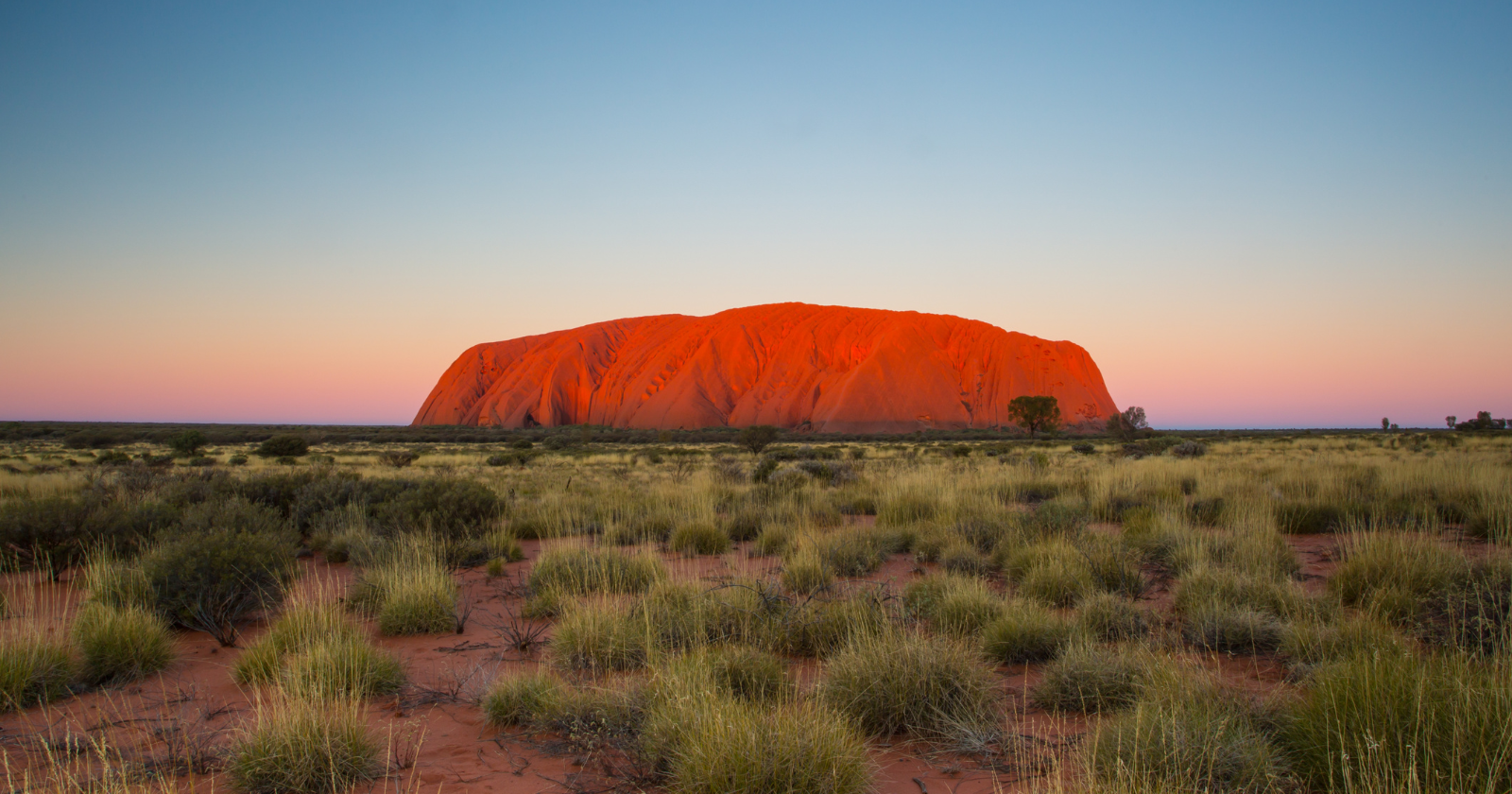
Before sunrise on October 25, 2019, hundreds assembled in the darkness at the foot of a colossal red rock in central Australia, some having arrived as early as 4am. They traveled from across the globe for one reason: to ascend Uluru for the final time, on the last day it would be permissible.
By the following afternoon, the climb was permanently closed. Within hours of the last climber descending, crews began the process of eliminating the route — starting with the chain.
The chain that facilitated the climb
For the majority of the twentieth century, climbing Uluru was a hallmark tourist attraction in Australia — a challenging scramble up the steep western facade of a 348-meter sandstone monolith that surpassed the height of the Eiffel Tower.
To ease the sheer incline, officials secured a chain handhold into the rock in 1964, with an extension added in 1976. The chain transformed a perilous ascent into merely a difficult one, enabling generations of visitors to pull themselves upward for the expansive view over the flat desert. For decades, Uluru was promoted globally as a summit to be conquered.
It was never perceived that way by its rightful owners.
The true owners of the rock
Uluru resides on the land of the Anangu, the Aboriginal traditional custodians who have inhabited this region for tens of thousands of years. For them, Uluru is not merely a landmark or a challenge; it is a sacred site intricately connected to Tjukurpa — the Anangu’s law, knowledge of creation, and ceremonial practices — with the climbing route bisecting land of profound spiritual importance.
The national park was officially returned to the Anangu in 1985, and since then, they made their wishes abundantly clear. Signs were erected at the base of the climb, voicing the sentiments of the Anangu: “This is our home. Please don’t climb.” Two significant concerns weighed heavily on their minds. One was the desecration of a sacred site. The other was their duty — under Tjukurpa, the Anangu bear the responsibility for the safety of visitors on their land, which meant that every injury and fatality on the rock was a source of genuine sorrow for them.
There had been numerous tragedies. Since the mid-twentieth century when climbing gained popularity, at least 37 people had lost their lives on Uluru — due to falls, but more frequently from heart attacks and heat exhaustion on the sun-baked stone — with hundreds more requiring rescue.
The decision, and the influx
For years, the Anangu had persistently requested, and gradually public sentiment shifted. As visitors became more aware of the culture, fewer opted to climb; by the late 2010s, over four out of five visitors were choosing not to. In November 2017, the park’s board of management — with an Anangu majority — unanimously voted to close the climb, scheduling the closure for October 26, 2019, the 34th anniversary of the handback. The timing was intentional.
Then came the part that was difficult to bear. Once the deadline was announced, tourists flocked to do the activity that was about to become impossible. Visitor numbers surged; individuals camped illegally along roadsides for miles due to fully booked accommodations. The Anangu found the final rush distressing — a last rush up their sacred site by those who had been asked not to climb for decades. A notable Indigenous academic reacted to the crowds with a single remark: a curse would befall all of them.
On that last morning, the desert itself seemed to express its discontent. Hundreds had lined up since 4am, but when the climb was due to open at 7, rangers kept it closed — standard protocol in high winds, which frequently renders the route unsafe. It finally opened around 10am, and the last climbers ascended.
Eliminating the route
The Anangu had communicated clearly about the fate of the climb once the last person descended: all traces of the climb would be removed.
Immediately after the final climber came down on October 26, teams began the task. The area was designated as off-limits, and the removal of the chain handhold — the fixture from 1964 that had enabled the entire endeavor — commenced, to be dismantled piece by piece. The signs, the painted markers, the infrastructure built over decades of tourism: all was scheduled for removal, allowing the western face to revert, as closely as possible, to bare rock.
The closure was definitive, with no review or exceptions. Uluru would continue to be one of Australia’s magnificent sights — nearly 400,000 visitors had come in the year prior — but going forward, it would be admired, circumnavigated, and comprehended, rather than conquered.
There’s an elegant symmetry to how it concluded, belonging to the people who have always regarded it as their rock. A handhold was affixed to a sacred site in 1964 so that outsiders could reach its peak; fifty-five years later