Revolver Therapeutics: Transforming Peptide Therapy
Jody Mason’s preferred Beatles album is ‘Revolver’. Similar to how the band’s seventh album signified a profound musical evolution, Mason and his team have created an innovative method for screening and evolving therapeutic peptides aimed at ‘undruggable’ proteins. This technology underpins the University of Bath spin-out co-founded by Mason, Revolver Therapeutics.
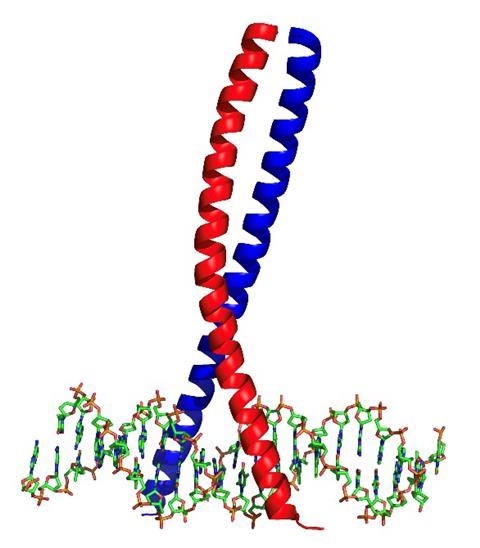
Mason focuses on transcription factors – proteins that attach to DNA strands to activate or deactivate genes. Dysfunction in transcription factors can cause over- or under-expression of specific genes, resulting in a range of diseases, including cancer, autoimmune disorders, and metabolic conditions. The human genome encodes more than 1600 transcription factors, yet many remain difficult drug targets. Mason notes that they frequently possess large, relatively flat interaction surfaces, complicating engagement with small molecule drugs. As they are typically located inside the cell, often within the nucleus, they are largely out of reach for standard antibodies.
‘Antibodies, as we know, can effectively recognize much larger surfaces, but penetrating the cell is quite challenging,’ remarks Mason, indicating that this creates a ‘therapeutic gap’. ‘Peptides can fill this niche between small molecules and antibodies’.
‘Nonetheless, discovering a peptide that attaches to a protein does not ensure it will inhibit its function,’ notes Mason. Traditional peptide-library screenings are typically undertaken against purified proteins outside of the cellular context and may uncover binders that have little to no functional impact. ‘That’s our entry point,’ he remarks.
Revolver’s innovation involves modifying E. coli with a genetic circuit that links the activity of a transcription factor to bacterial viability. The bacteria subsequently generate various peptide sequences within the cell. ‘If a peptide fails to bind to the target, or binds but does not obstruct its function, the transcription factor stays active, and the cell does not survive,’ clarifies Mason. Bacteria that produce functional inhibitors can proliferate and become enriched. ‘It’s fundamentally a Darwinian selection system that we employ in living cells,’ adds Mason.
The team can also introduce bis-alkylating reagents that penetrate the bacteria and interact with cysteine thiol groups on the peptide side chains. This process cyclises and conformationally restricts the peptides within the cells undergoing screening. Such restriction can enhance characteristics like potency, selectivity, and stability. Promising peptides can then be chemically synthesized and evaluated in human cancer cells, although optimizing their entry into mammalian cells continues to be a vital aspect of their development.
Mason proposes that computational techniques could initially assess billions of peptide sequences, refining the selection to a smaller, higher-quality experimental library. Revolver’s transcription block survival (TBS) platform can subsequently screen that targeted library for peptides that generate the desired functional outcome within cells.
Up to now, the team has been investigating various targets internally. Mason shares that they are collaborating with the UK’s Institute of Cancer Research, focusing on childhood gliomas. However, these present additional challenges, as targeting these brain tumors involves delivering peptides across the blood–brain barrier. ‘Our next phase is to refine the leads that we believe hold the most promise,’ states Mason.
‘We’re also seeking partnership and licensing possibilities where we can leverage our technology for transcription factors that may interest others,’ adds Mason. Such collaborations could utilize the TBS platform to identify and develop functional peptide inhibitors against specific targets.
Revolver secured the health category in this year’s Royal Society of Chemistry Emerging Technologies competition, after being a finalist in the event in 2025. ‘It felt like we were making progress and hadn’t reached a standstill,’ reflects Mason. In his perspective, Revolver’s technology differentiates itself from other biological assays. ‘We’re not just assessing if [a peptide] adheres to a purified protein in a test tube. We’re selecting for functional impacts inside a cell,’ he asserts.
Revolver Therapeutics:
Founded: 2023
Employees: 5
Origin: Spin-out from the University of Bath,