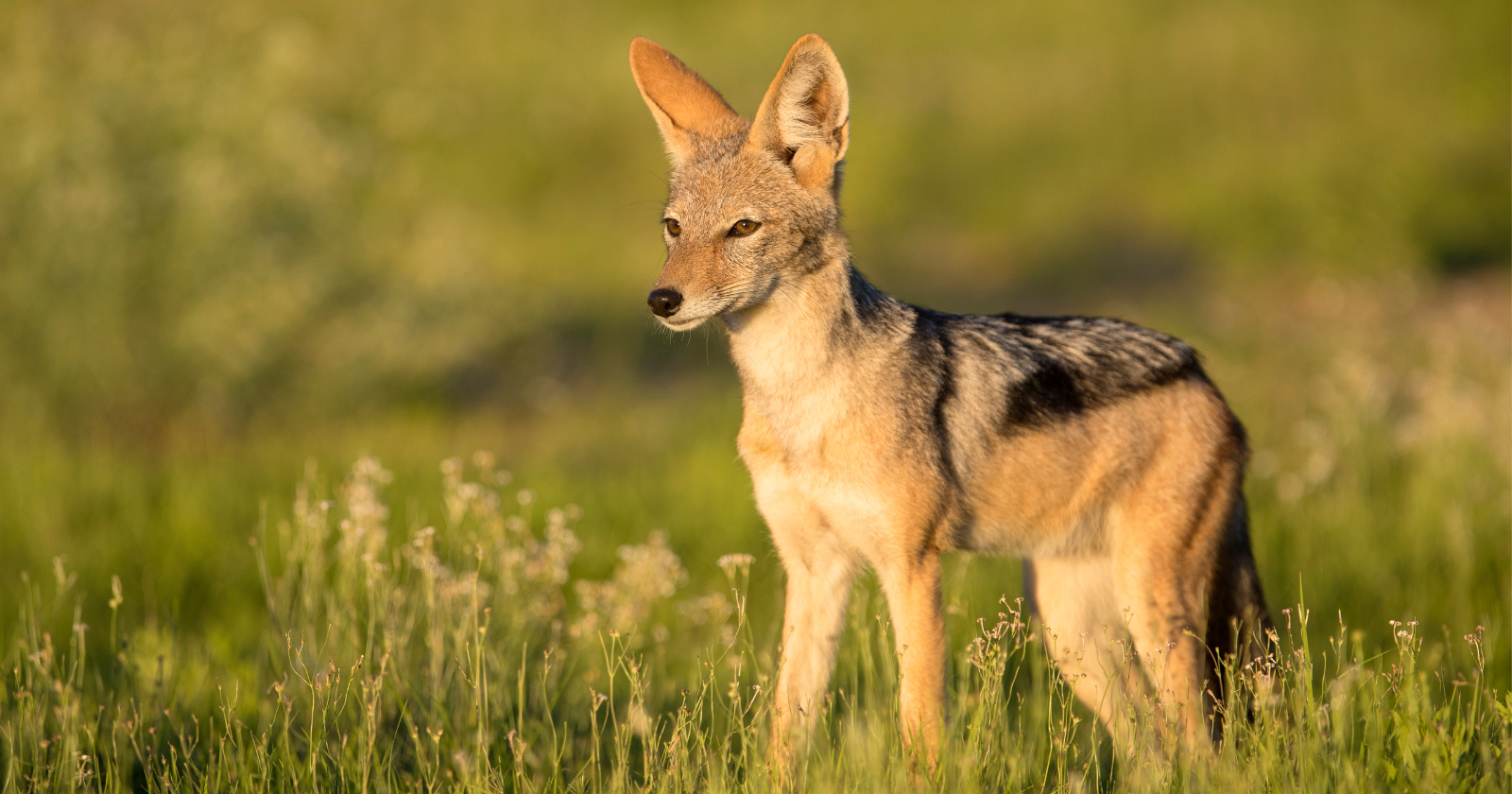
In August 2022, a camera trap positioned on a plateau between the Black Forest and the Swabian Alb in southwestern Germany captured a sequence of five images featuring four golden jackal cubs resting together in front of the camera. The day before, two adult jackals had been photographed in the vicinity, and a nursing female had been observed earlier that summer. This litter represented the second confirmed group of golden jackals ever recorded in Germany, following the first litter identified through genetic analysis of scat samples from the same region in October 2021. According to the research paper authored by Felix Böcker and his colleagues at the Forest Research Institute in Baden-Württemberg, published in Mammal Research in December 2022, this marks the westernmost successful reproduction of the species in its European history. In the 1980s, such a scenario was deemed unfeasible. The species was primarily limited to a few populations in the Balkans, notably Bulgaria, which maintained legal protections for the golden jackal amidst the overall decline of European canids throughout the twentieth century, and was by all accounts the last significant reservoir of the species on the continent.
## What truly opened the door
The migration of the golden jackal halfway across Europe over the past forty years is not mainly attributable to climate changes, although those factors play a role, nor is it due to intentional reintroduction efforts, as none have occurred. Instead, it is the result of the decline and fragmentation of European grey wolf populations during this same time frame. Golden jackals are significantly smaller than wolves, tend to steer clear of regions where wolves actively defend their territories, and have been historically excluded or kept at low densities in areas where wolves were plentiful. With the near extinction of wolves from most central and western Europe during the nineteenth and twentieth centuries, the mid-sized carnivore niche they occupied became available, allowing a smaller, more adaptable canid to fill that void without the risk of being killed by an existing pack. This ecological pattern is termed mesopredator release and has been observed in numerous contexts. A parallel can be drawn in North America with the coyote, which has spread across much of the continent during the same period that grey wolves were being eradicated from it.
Europe regained its predator without anyone orchestrating its return. In contrast, Yellowstone represents a different scenario, and the video elaborates on the events following the release of 14 wolves from crates in January 1995.
## The German case in detail
The Böcker study details the German breeding site extensively. It is located at the edge of a low mountain range in Baden-Württemberg, within a patchwork of bogs, reeds, and open oak and pine forests, adjacent to two nature reserves and close to the Danube River. The vicinity is home to red foxes, badgers, raccoons, roe deer, fallow deer, and wild boar, all of which provide the types of prey and scavenging opportunities that golden jackals exploit effectively. Importantly, the area lacks wolves and other large carnivores. Four camera traps distributed over approximately 20 hectares recorded 90 confirmed jackal sightings between October 2021 and August 2022. Scat samples identified through a trained detection dog and subsequent genetic analysis at the Senckenberg Center for Wildlife Genetics revealed five distinct individuals, likely siblings, as well as a probable father determined through DNA from saliva found on a scavenged sheep carcass. The biological significance of this case lies in the considerable distance from the nearest previously documented breeding sites, which the paper cites as around 400 to 500 kilometers for the closest Italian breeding event, 525 kilometers for a Czech location, 605 kilometers for an Austrian site, and 965 kilometers for the Polish site at Kwidzyn, which previously held the northernmost reproduction record in Europe. The animals that established the German population traveled that distance independently.
## How far the dispersers have traveled
The German situation represents the westernmost verified reproduction of golden jackals. Individual dispersers, lacking confirmed breeding status, have traveled even further. A 2024 study in Mammalian Biology by Ilpo Kojola, Heikki Henttonen, and colleagues from the Natural Resources Institute Finland details six verified sightings of golden jackals in Finland between 2018 and 2022. The first sighting was a camera trap image from east-central Finland in August 2018. The most northern sighting involved a male, weighing around ten kilograms and in good physical health, inadvertently captured in a fox snare in Lapland in March 2022, approximately 120 kilometers north of the Arctic Circle. His origin remains unknown, but the most likely source population for the Finnish sightings is Estonia, where a resident golden jackal population has been breeding since 2012 along the country’s western coast. The most likely route into Finland is via the narrow strip of dry land between Lakes Ladoga and Onega, as the urban spread of St Petersburg obstructs the more southern passage. In the Netherlands