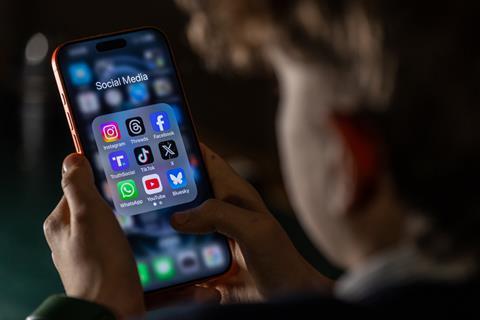
The UK government has introduced a new regulation prohibiting individuals under 16 from accessing social media platforms, effective March 2027, necessitating tech firms to enforce more rigorous age verification processes. This initiative aims to safeguard minors from potential risks, although social media sites will retain offerings for educational content and news without live interactions or streaming capabilities. Platforms designed for academic assistance will remain unaffected. Regardless, science communicators express concerns regarding limited access to educational resources for younger audiences.
Data from OfCom in 2025 indicated that children aged 4-15 dedicated an average of 8 hours and 45 minutes weekly to video-sharing services such as YouTube and TikTok, with 42% engaging with these platforms for educational purposes. This engagement varied among different socioeconomic demographics. Ben MacAdam Gorham, a creator of chemistry videos, contends that prohibiting long-form content on YouTube in the UK would be akin to obliterating the library of Alexandria. He highlights the significant educational effect his videos have had on youth.
On the other hand, Tamara Ewing, another educator on TikTok, asserts that a ban focusing on the inherently addictive aspects of such platforms could prove advantageous. She argues that short-form content is ineffective for communicating scientific concepts due to quality issues and that children could gain more from practical, hands-on experiences.
Kim Hilton, a YouTube educator in chemistry, concurs that the ban might not greatly hinder educational outcomes, underlining the necessity of experiential learning over screen-based activities. Paddy Crump from Flippgen, an organization aimed at youth, expresses concerns about access to science content and the educational inequalities exacerbated by this prohibition.
Educators like David Hillyard from Craig’n’Dave intend to adjust by utilizing alternative platforms that lack social interaction features, although this may restrict the visibility of their content. Ewing proposes a shift towards content designed for adult viewers for use in classrooms. While creators encounter obstacles, it is expected that flexible solutions will emerge.