The ocean bed off the coast of North Carolina is evolving into a key area for energy initiatives owing to its advantageous capacity for capturing renewable energy. Thick cables connect the seabed turbines to the mainland grid, with each installed device needing to validate the significant expenses of these links. Inactive wind turbines on tranquil days present a challenge to economic viability. Nevertheless, researchers from North Carolina State University suggest a groundbreaking answer: integrating wind turbines with underwater kites to establish a dual-system that guarantees uninterrupted energy production.
Their research, published in *Energy*, utilizes a complex computational model that not only identifies optimal sites but also engineers the combined devices. It considers the offshore arrangement like a well-balanced investment portfolio, aiming for effective utilization of the Gulf Stream, which could theoretically supply power to 207 million homes. This endeavor, however, necessitates the coordination of various technologies that function on different time frames.
### When Wind Reduces, Water Continues Flowing
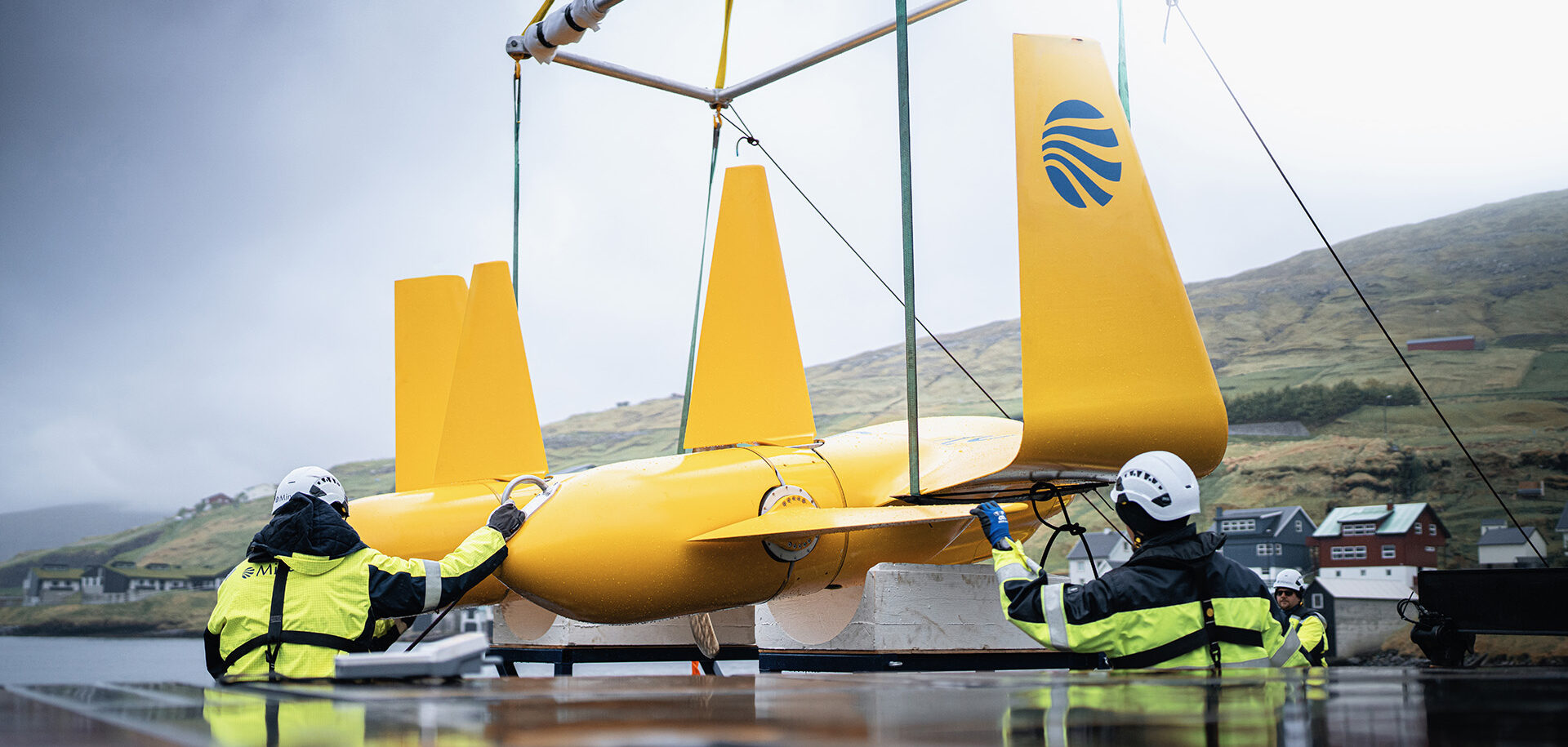
The underwater kites are anything but basic. Fitted with high-lift wings and onboard turbines, these kites navigate in figure-eight trajectories, harnessing ocean currents at speeds 5 to 10 times greater than the surrounding water, thereby extracting more energy than a fixed turbine. The researchers have produced open-source schematics for these kites to guarantee precise performance metrics for their model.
The model concurrently assesses numerous parameters, including wind velocities, ocean currents, water depth, distance from the shore, and transmission capability. It computes the levelized cost of energy, refining configurations to optimize power output within budgetary constraints. Certain locations may favor wind yet display weak currents, and the opposite can also be true. Optimal sites accommodate both technologies, facilitating infrastructure sharing and cost reduction.
> “We discovered that location significantly influences outcomes. Some locations are suitable for wind turbines, yet not for kites; while others work well for kites, but not for turbines.” – Anderson de Queiroz, Associate Professor, NC State
This co-location approach not only mitigates expenses but also stabilizes the power grid. Wind turbines can make up for changes in ocean currents, ensuring a consistent energy yield. This collaboration aids utility companies in effectively managing renewable energy provision.
### Creating a Smarter Grid
North Carolina’s ambition to decrease carbon emissions by 70% by 2030 underscores the importance of fully utilizing offshore resources. The model’s flexible framework can adapt to new marine technologies, regarding offshore projects as an interconnected system rather than standalone ventures.
For developers contemplating significant investments, the findings emphasize that achieving success in offshore energy isn’t merely about taking advantage of the most powerful winds or currents. It involves choosing locations where various renewable forces can be harmonized, where infrastructure can be shared, and where energy generation stays stable despite changes in weather conditions.
[Energy: 10.1016/j.energy.2025.139660](https://doi.org/10.1016/j.energy.2025.139660)