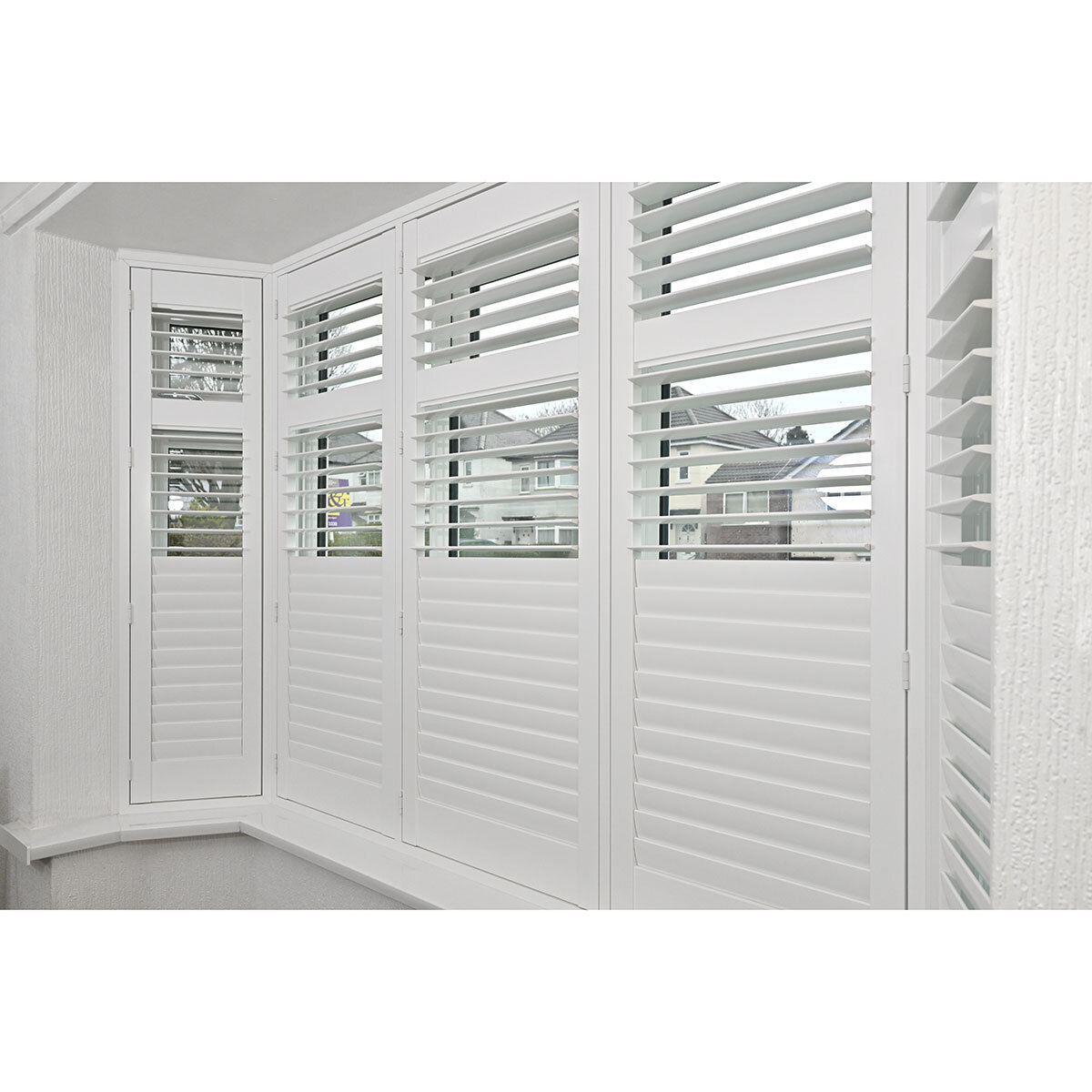
Should you have ever drawn the blinds against the afternoon brightness only to find yourself sitting in the shadows contemplating the reason for your action, you comprehend the fundamental issue with windows. They permit light that you desire and light that you don’t, warmth that is beneficial in January and intolerable in July, along with ultraviolet rays that gradually damage your furniture, whether you’re aware of it or not. For many of us, handling windows equates to navigating compromises.
A group of materials scientists in South Korea believes they have discovered a solution. They have created a transparent wood that transitions from frosted to clear as it heats up, blocking nearly all UV radiation even in its transparent state, and insulating nearly five times better than glass. No electricity. No sensors. No applications. The material autonomously reacts to temperature changes, akin to a plant orienting itself towards sunlight.
This research, published in Advanced Composites and Hybrid Materials, resulted from scholars at Hanbat National University and Kongju National University. They initiated their work with balsa wood, removed the lignin responsible for wood’s color and rigidity, and infused the remaining cellulose framework with liquid crystals suspended within polymer. At room temperature, the crystals scatter light, keeping the window cloudy. When warmed beyond roughly 40 degrees Celsius, the molecules align, allowing light to penetrate. The window becomes clear.
What Occurs When Your Window Operates on Its Own
The practical benefits are evident. Nighttime privacy without curtains. Daylight during warmer periods without the usual heat increase. In laboratory evaluations, the material exhibited a shift from 28 percent light transmission to 78 percent as it warmed, and reversed as it cooled. The transition occurred consistently, cycle after cycle.
However, here’s the aspect that deserves attention. Even when fully transparent, the wood obstructed nearly all UVA radiation — the type that ages skin and discolors fabrics over time. Most individuals don’t pay much attention to UV entering through windows, but dermatologists are aware. Glass blocks UVB, the harmful rays, yet allows UVA to pass through unimpeded. If you have ever observed that one side of your face has more sun damage than the other, your car window is likely the culprit. This material prevents both.
The insulation properties are impressive too. “With a thermal conductivity of 0.197 W m-1 K-1, our innovative bio-composite is nearly five times more insulating than standard glass, substantially reducing heat loss or gain in structures,” states Jin Kim, an assistant professor of materials science involved in the research. In experimental model houses, constructions featuring the transparent wood warmed and cooled more gradually than those with glass. That form of thermal buffering could be significant for heating and cooling expenses, although nobody has yet tested it in a real constructed environment.
Not There Yet
Before you engage your contractor, there are some considerations. The material only transitions to its clear form when warm, which is beneficial in hot climates but raises concerns for colder ones. What transpires in Minnesota in February, when you need every ounce of daylight available but the window stubbornly remains frosted? The researchers indicate that future iterations could be calibrated for various transition temperatures, although that work is yet to occur.
Balsa wood is lightweight and easy to work with but is not typically the material of choice for builders. While lab tests demonstrated that the material endured a week of continuous UV exposure, a week is not equivalent to a decade. Windows must be durable.
The researchers also experimented with thin sheets as wearable fever indicators — a patch that becomes transparent when skin temperature surpasses 38 degrees Celsius. Ingenious, though it remains far from a prototype patch that would be trusted by a nurse.
Nevertheless, the fundamental concept possesses genuine appeal. Traditional smart windows necessitate wiring, software, and maintenance. They address one issue while creating others. This method employs wood and physics, leaving everything else behind. For anyone who has ever longed for their home to automatically determine how to deal with sunlight — allowing it in when desirable, keeping it out when not, and halting the gradual fading of everything near the glass — that simplicity is the entire point.
Advanced Composites and Hybrid Materials: 10.1007/s42114-025-01481-0
If our reporting has informed or inspired you, please consider making a donation. Every contribution, no matter the size, empowers us to continue delivering accurate, engaging, and trustworthy science and medical news. Independent journalism requires time, effort, and resources—your support ensures we can keep uncovering the stories that matter most to you.
Join us in making knowledge accessible and impactful. Thank you!