**Comprehending Behavioural Fatigue and Epidemic Adherence**
The idea of “behavioural fatigue” gained significant attention during the early stages of the COVID-19 pandemic, particularly as the UK Government referenced it to justify postponing stringent public health measures. Central to this discussion was the question of whether individuals might become weary of upholding preventive actions like social distancing, consequently resulting in diminished compliance. While certain mainstream perspectives dismissed behavioural fatigue as lacking scientific backing, a detailed review of available research reveals a contrasting narrative.
**Scientific Inquiry into Epidemic Responses**
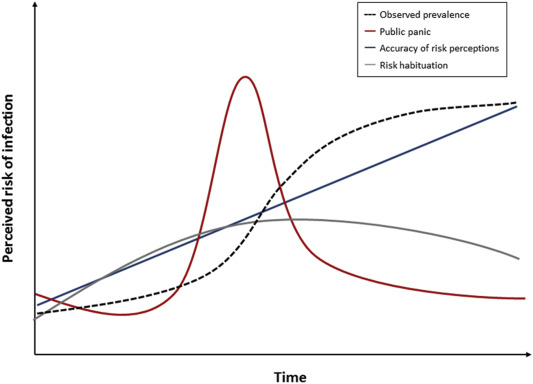
The response to epidemics has been extensively analyzed, especially concerning how risk perception shapes public conduct over time. Traditionally, as an epidemic progresses, risk perception often peaks initially but may decline as individuals adapt to a new normal, even when the actual threat remains significant. This phenomenon was thoroughly described in models from the 1990s and further examined in investigations during subsequent outbreaks, such as the 2009 H1N1 flu pandemic.
Investigations across diverse countries and situations have painted a multifaceted portrait of compliance. For example, research from Italy, Hong Kong, and Malaysia indicated a decrease in certain preventive actions as an epidemic advanced, although adherence to other measures continued to be robust. In the Netherlands during the 2006 bird flu incident, fluctuating levels of compliance reflected a variable trend rather than a straightforward decrease.
**Objective Assessments of Behavioural Shift**
In addition to self-reported data, research has employed objective indicators, such as television viewership and flight data, to gauge behavioural shifts during epidemics. During the 2009 H1N1 outbreak in Mexico, a rise in television consumption initially implied an uptick in social distancing, but as the pandemic unfolded, viewer numbers dwindled. Similar patterns were noted among airline passengers, where missed flights surged at first before declining.
**Qualitative Perspectives and Mathematical Analysis**
Qualitative research enhances our comprehension by revealing how social and economic factors can undermine adherence. Concurrently, mathematical models assessing previous epidemics, like the 1918 flu pandemic without vaccines, propose that fluctuations in epidemic severity might partially stem from waning preventive actions.
**Divergent Evidence and Compliance Dynamics**
Not all research endorses the concept of behavioural fatigue. In the Netherlands, steady increases in preventive actions were documented, and studies from Beijing revealed sustained adherence to low-effort measures alongside heightened acceptance of high-effort actions. During a chikungunya outbreak, comparable trends of improved compliance were observed.
**Wider Ramifications of Behavioural Research**
The vast array of studies suggests that while certain groups experience behavioural fatigue, others either sustain or even boost their adherence over time. This intricate interplay of behavioural factors is increasingly integrated into epidemiological models, economic analyses, and game theory explorations to enhance understanding and anticipation of public reactions during health emergencies.
**Key Insights for Researchers and the General Public**
For researchers, especially in times of emergency, the directive is evident: communicate findings responsibly, recognizing the subtleties and complexities of the discipline. For the public, the insight drawn from past epidemics is vital—public health adherence can dramatically influence the course of an outbreak. Committing to preventive strategies, even when they become habitual, is not only feasible but essential for saving lives. These sustained behavioural adjustments represent a collective endeavor that has historically reduced the transmission of infectious diseases.