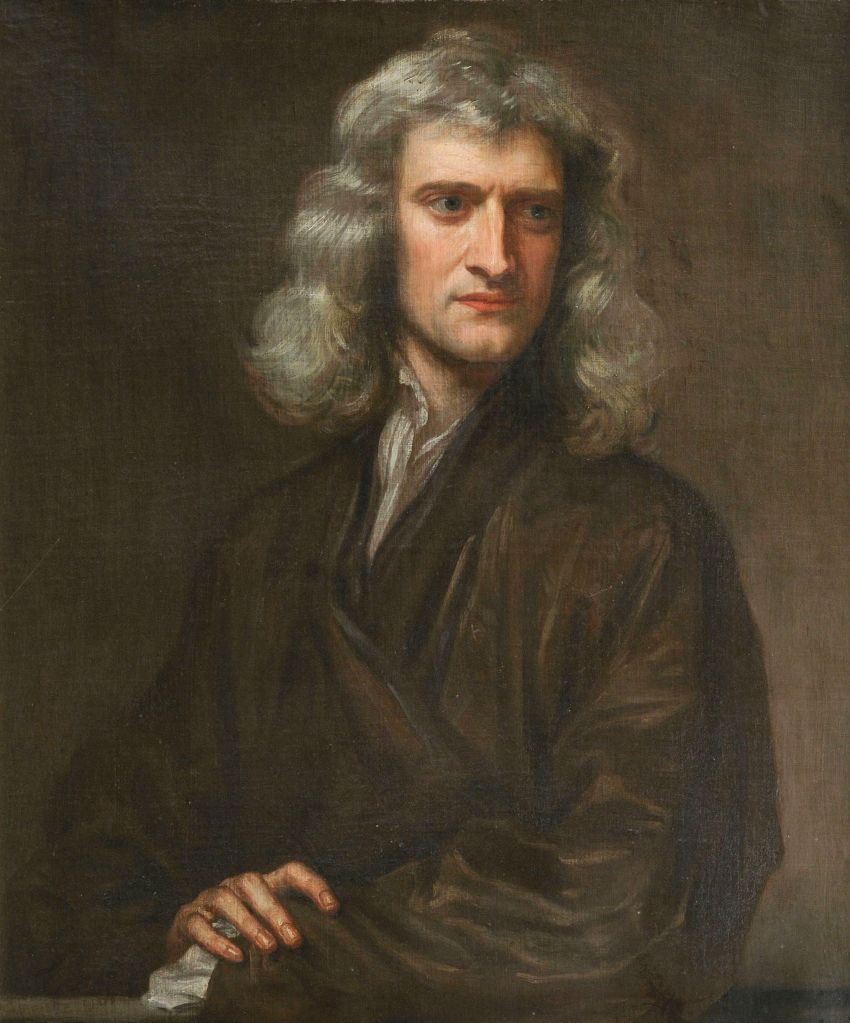
The path Isaac Newton took towards penning the Principia was anything but direct, shrouded in legends and extended setbacks. While mainstream history often implies that Newton formulated the concept of universal gravitation in the 1660s, the truth is that he spent many years refining his theories and documenting them. The well-known tales, including the apple legend and his reputed Annus mirabilis—a remarkable year—when he allegedly discovered calculus, optics, and universal gravitation, are overly simplistic accounts. Newton himself contributed to the continuation of these myths to establish his precedence in these revelations.
In Newton’s Waste Book, the young academic explored imperfect ideas of circular motion and gravity, drawing inspiration from Descartes. He even questioned the law of inertia during this period, yet gradually assembled concepts that would later mature into his revolutionary theories. His later insights were significantly shaped by a rivalry with Robert Hooke, who alleged that Newton had borrowed the idea of universal gravitation from him. Their heated interactions motivated Newton to refine his own concepts.
The iconic gathering in a coffee house in 1684 that included Hooke, Christopher Wren, and Edmond Halley acted as a catalyst for the composition of the Principia. Halley’s encounter with Newton prompted the latter to illustrate that an inverse-square law of attraction would yield elliptical orbits, consistent with Kepler’s laws. This insight inspired Newton to craft a brief manuscript, De motu corporum in gyrum, which delineated his innovative perspective on celestial mechanics.
With encouragement from Halley, Newton developed this work into the monumental Philosophiæ Naturalis Principia Mathematica, released in 1687. The Principia established the mathematical groundwork for classical mechanics, bringing together the physics of the cosmos and the earth under a unified theoretical framework, thus reshaping the scientific milieu. Despite the legends surrounding its creation, Newton’s contributions stand as a testament to his lasting impact in the fields of physics and mathematics.