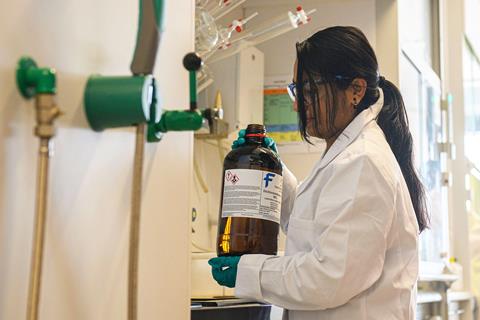
The recent extensive prohibition by the US Environmental Protection Agency (EPA) on the majority of industrial and commercial applications of dichloromethane (DCM) is triggering substantial alterations and obstacles for university chemistry departments nationwide. Also referred to as methylene chloride, DCM has been a widely utilized solvent in academic organic chemistry laboratories, prized for its polarity, low boiling point, and minimal flammability. Nonetheless, DCM presents serious health hazards, being neurotoxic and associated with heart and liver damage, as well as various cancers. The chemical’s application as a paint stripper and degreaser was tied to numerous fatalities, prompting the EPA’s firm regulatory response.
Even with exemptions for certain laboratory uses, the rigorous standards imply that numerous academic labs may opt to entirely eliminate the chemical. By 9 November 2026, research institutions are required to commence DCM exposure monitoring, ensuring adherence to the new EPA exposure threshold of 2ppm over an eight-hour period by 8 February 2027. This regulation replaces the older, more lenient limits established by the Occupational Safety and Health Administration (OSHA), accentuating discrepancies within governmental regulations.
In light of these complexities, university laboratories must maneuver through overlapping regulations, frequently bearing heightened financial burdens. Robert Clark, director of environmental health and safety at the University of Memphis, anticipates that these regulations will increase expenses at universities. Numerous institutions, including the University of Memphis, have found ways to manage some costs but necessitate labs to cover analysis expenses.
Implementing these alterations proves to be expensive, as shared by Tim Barton, chief safety officer at the University of Tennessee Health Science Center, who detailed the considerable resources dedicated to achieving compliance. This procedure often reallocates resources away from other vital activities, highlighting the broader implications for university operations.
Confronted with these challenges, many researchers are completely abandoning DCM. According to Clark, there has been a 40% to 50% decrease in DCM usage in certain labs as a result of the new regulations. The quest for suitable alternatives persists, as each alternative solvent frequently fits only specific applications. Nevertheless, a shift away from DCM is accelerating, particularly in settings where other options are already available.
For the chemical industry, the stringent EPA regulations demand a reduction in prohibited DCM applications, reinforcing the urgency for reformulating and identifying alternatives while upholding strict safety protocols for permitted uses. The American Chemistry Council recognizes the regulations, voicing support while stressing safe DCM application in essential situations.
In summary, the EPA’s initiative indicates a notable transition toward heightened safety and environmental awareness, prompting both academic and industrial sectors to reevaluate their reliance on DCM in favor of more sustainable and safer practices.