Pharmaceutical firm Gilead has recently taken over German biotech startup Tubulis for $3.2 billion (£2.3 billion). This agreement allowed Gilead to obtain two of Tubulis’ antibody–drug conjugates (ADCs) which have demonstrated promising outcomes in initial clinical trials.
One ADC addresses platinum-resistant ovarian cancer, while the other is directed at several types of solid tumors. Central to these drugs is innovative phosphorus chemistry that incorporates hydrophilic polyethylene glycol (PEG) polymers into antibodies, enhancing their solubility, stability, and pharmacokinetic characteristics.
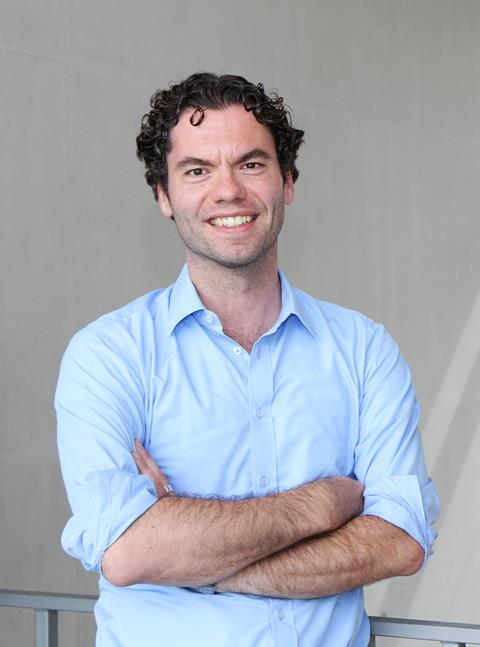
‘We were captivated by this domain, this emerging field of bioorthogonal chemistry and bioconjugation,’ states Christian Hackenberger, one of Tubulis’ co-founders at the Leibniz Research Institute for Molecular Pharmacology in Germany. He established the company in 2019, together with Heinrich Leonhardt from LMU Munich, along with two other researchers from their teams.
‘I was particularly intrigued by phosphorus reactions, especially Staudinger reactions,’ Hackenberger notes. Initially, his team employed these reactions to connect a phosphite with three PEG groups to azide-tagged proteins. Hackenberger details that his team then advanced this into a system known as P5-labelling, formulating phosphorus(v) compounds with various substituents – usually incorporating a lengthy PEG polymer, an alkyne group, and a drug compound. By cleaving disulfide bonds in antibodies, cysteine groups become accessible to interact with the phosphorus’ alkyne group to form an ADC.
‘With P5 labelling we were able to supply the chemistry and bio-conjugation and produce all the conjugates. Then in [Leonhardt’s] lab, the initial assessment of the cytotoxic activity was performed,’ he explains.
Hackenberger mentions that his team’s ADCs – those now obtained by Gilead – were significantly more hydrophilic compared to existing market options. This method also provided enhanced flexibility in selecting a payload drug and allowed for increased drug loadings on each antibody without affecting solubility and other features.
‘In hindsight, this all seems like an autobahn, like a fast track to success,’ Hackenberger reflects. ‘But, naturally, there were various challenges along the way.’
He recounts that their early attempts to secure funding for the company were unsuccessful as ‘it was not particularly a period where ADC research was trending’. A mix of fundamental research funding and backing from the German Science Foundation for nascent start-ups enabled Tubulis to launch. Investors later offered additional funding once the government’s two-year support program concluded. ‘We were very lucky that at each of these moments, we genuinely had the evidence to be persuasive,’ Hackenberger remarks.
He has since contemplated what the journey of commercializing foundational research has imparted to him: ‘I learned how to approach patents, how to consider publishing [studies] while still fostering innovation… [and] to think strategically regarding when is an advantageous time for funding the company and when it is not.’
‘To [now] reach the point where you clearly observe these clinical outcomes… it’s astounding,’ he adds, expressing that being able ‘to create something that has a true translational impact [is] a dream realized’.
‘The entire narrative emphasizes that fundamental research is more essential than ever,’ Hackenberger asserts. ‘When we combine strategic thinking, robust innovation, and the right team, we can create an impact. We should never forget that it is up to us as scientists to accomplish that.’