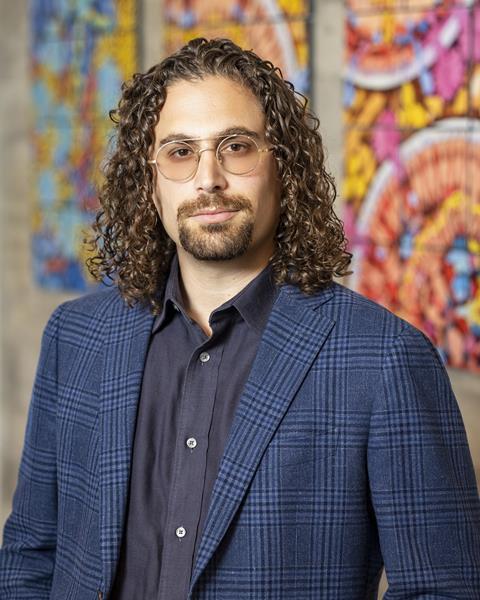
‘We are now effectively reshaping these highly intriguing DNA-targeting technologies into something that resembles a therapeutic much more,’ states Benjamin Oakes, CEO of Scribe Therapeutics – a genetic medicine company based in the US that is customizing Crispr editing technology to create both genetic and epigenetic therapies.
Oakes co-established Scribe in 2017 with three former peers from the University of California, Berkeley. Among them were Oakes’ postgraduate mentors – molecular biologist David Savage and Nobel-laureate Crispr trailblazer Jennifer Doudna – along with Brett Staahl, a past postdoc from the Doudna lab.
After previously researching DNA-targeting with zinc finger proteins, Oakes became part of Doudna’s research group in 2014, motivated by the ‘significant shift’ in genome targeting that her Crispr tools were poised to bring about. Upon finishing his studies, Oakes was committed to discovering methods to utilize the technology within the medical field.
‘The overarching ambition that we had at the inception of Scribe was that genetic medicine ought to be accessible to everyone, as we could all reap its benefits,’ Oakes shares. ‘The subsequent question is, how do you achieve that?’ Oakes elaborates that the answer would entail years of meticulous effort to gradually enhance the potency and precision of Crispr–Cas genetic editing systems – converting them from naturally evolved elements of bacterial defense into precisely calibrated therapeutic instruments. ‘I’m unlikely to publish another Nature Biotech paper, because I enhance the potency of a molecule by 10% every six months for seven years. However, when you accomplish this, you end up with a remarkably different molecule,’ Oakes observes.
A fundamental aspect of Scribe’s platform is the CasX enzyme family. As per Oakes, these ‘extremely rare, highly intriguing’ proteins perfectly meet the criteria ‘in terms of being functional, but also exceptionally specific, and small enough to be integrated into any delivery system’. From 2019 to 2021, Scribe dedicated three years to refining the CasX proteins into what it currently refers to as its X-Editor, which Oakes characterizes as ‘the industry-leading genome editor’ that exhibits high uptake into liver cells while minimizing off-target effects.
At that juncture, Scribe secured $100 million (£74 million) in funding to enhance the X-Editing platform and progress toward its aim of ‘making genetic medicine available to all’. Focused on impacting as many individuals as possible, the company has shifted its attention toward cardiovascular disease, the leading global cause of mortality.
This year, the organization is set to initiate a phase 1 human trial of an epigenetic editor designed to target ‘bad’ low-density lipoprotein cholesterol (LDL-C) – a significant factor in atherosclerotic cardiovascular disease (ASCVD). In doing so, Scribe joins a limited number of genetic medicine companies that are starting to explore the safety of therapies based on targeted epigenetic editing in humans. Instead of making permanent genetic modifications, these epigenetic editors modify chemical tags on DNA that control gene expression – either increasing or diminishing the rate at which particular genes are converted into proteins.
Scribe’s STX-1150 candidate therapy aims to epigenetically silence the PCSK9 gene, thereby diminishing the production of low-density lipoprotein cholesterol (LDL-C). The company initially created a gene editor targeting PCSK9, but subsequently also developed the epigenetic editor, as Oakes explains. ‘The epigenetic molecule turned out to be not only potentially a more universally applicable molecule, but one that yielded better data.’ Scribe’s editor is enhanced through the integration of an allosteric control loop, detailed in a recent preprint, which helps to further improve specificity for the target gene and minimize off-target methylation.
Preclinical studies demonstrated