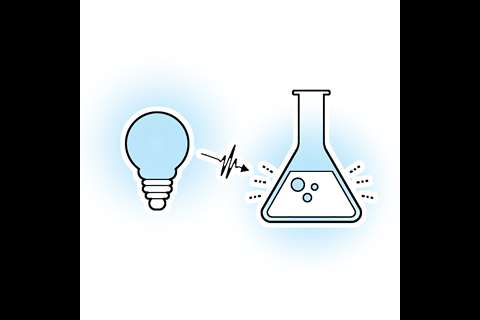
Ten years prior, an unforeseen scientific advancement challenged a long-held principle in photochemistry, a chemistry segment that investigates chemical reactions prompted by light absorption. This advancement, spearheaded by a team of researchers including Sarah Walden and Christopher Barner-Kowollik, disrupted the notion that light-driven reactions function optimally at the absorption maximum of a photoactive molecule, where it can absorb the most photons.
Historically, chemists held that utilizing the wavelength aligned with a molecule’s absorption maximum was ideal for reactions. Nevertheless, the research team uncovered that numerous reactions, such as [2+2] photocycloadditions and photopolymerisations, perform better when subjected to longer, red-shifted wavelengths.
The path to this insight was complex and required intricate experiments and international collaboration, engaging researchers like physicist Joshua Carroll from Queensland University of Technology. The team dedicated resources to advanced equipment and executed several replication experiments to substantiate their results.
A crucial moment transpired when David Fast, a member of Georg Gescheidt’s group in Austria, conducted a photopolymerisation reaction using visible light, challenging the conventional reliance on UV light. To their surprise, the results revealed enhanced conversion rates. This unforeseen finding propelled the researchers to undertake more thorough testing to eliminate any experimental inaccuracies.
Throughout their research, the team encountered skepticism from the scientific community, with some dismissive critiques enduring for nearly ten years. Nonetheless, their perseverance in substantiating their conclusions led to major advancements, including the acquisition of an expensive laser to guarantee precise control over experimental variables.
Despite initial doubts, the momentum began to shift in favor of their findings. Independent researchers, such as those in Richmond Sarpong’s team at the University of California, experienced similar outcomes in their experiments, enhancing the credibility of the absorption–reactivity mismatch notion.
The breakthrough additionally paved the way for innovative applications, presenting potential energy savings and broadened opportunities in areas like tissue engineering and 3D printing. Furthermore, it prompted a reassessment of previous low-yield photochemical transformations and inspired new research pathways.
In their exploration for an explanation, the researchers suggested that the ‘habitats’ or ‘microenvironments’ of molecules might account for these unforeseen reactivity behaviors. This concept, drawn from the red-edge effect in fluorescence spectroscopy, proposes that the distinct surroundings of molecules influence their excited-state lifetimes and reactivity.
This discovery offers significant promise for the future of photochemistry, urging chemists to reconsider established notions and fostering interdisciplinary cooperation. It highlights the necessity of maintaining an open perspective and employing innovative viewpoints on traditional scientific inquiries, ultimately expanding the frontiers of established knowledge.