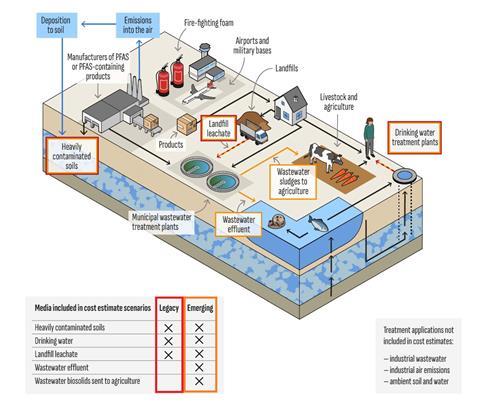
A recent study indicates that Europe might allocate more than €100 billion (£85 billion) each year for the remediation of PFAS contamination, yet this initiative would address fewer than 2% of current emissions. PFAS, synthetic compounds present in items such as fire retardants and non-stick cookware, are associated with health problems including cancer and thyroid disorders. Traditionally, the production of PFAS concentrated on long-chain molecules, but mounting regulatory pressures have prompted a transition toward short-chain PFAS, raising alarm over ultra-short-chain substances like trifluoroacetic acid (TFA), which are challenging to extract from polluted water due to their significant solubility and mobility.
A report from the European Commission projected costs of up to €80.2 billion each year for soil and water treatment and €39.5 billion annually in health expenses from 2024 to 2050, contingent upon preventive actions taken. Directed by Ali Ling from the University of St Thomas, a new analysis prioritizes PFAS remediation, proposing two scenarios: legacy remediation employing current technologies for past contamination and emerging remediation for ongoing discharges. Ling’s research team anticipates the costs of legacy remediation to be €1.8 billion annually, with emerging remediation costing €100 billion per year, only tackling a small portion of emissions as it does not include industrial wastewater, air emissions, and ambient treatment.
The study underscores the shortcomings of remediation in addressing emissions and stresses the importance of decreasing PFAS production and emissions at the source. Marta Venier, a specialist in persistent organic pollutants, advocates for enhanced regulations and foresees that both consumers and companies will incur the costs. The study urges for prompt action to avert future contamination instead of depending on expensive remediation efforts.