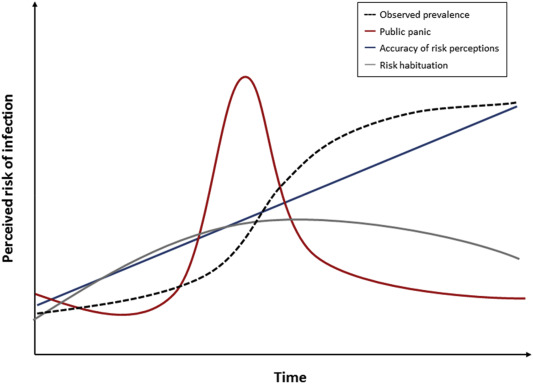
The concept of “behavioural fatigue” came to the forefront during the initial phases of the COVID-19 pandemic, as the UK Government referenced it as a justification for postponing rigorous public health actions. However, research literature implies a more intricate comprehension of public adherence during epidemics. While prominent articles may assert a lack of scientific foundation for “behavioural fatigue,” numerous studies have explored compliance trends during historical epidemics.
The response to health emergencies is multifaceted and involves shifting risk assessments. Research conducted during the 2009 H1N1 flu pandemic suggests that although early preventive measures such as social distancing and hand hygiene might be initially strong, they tend to fluctuate as the epidemic unfolds. Investigations from a range of countries, including Italy, Hong Kong, Malaysia, and Mexico, corroborate this finding, revealing initial surges in preventive behaviours that frequently wane over time due to various influences such as familial obligations and financial stresses.
The term “fatigue” itself may not be scientifically precise, as indicated by a model first introduced in the 1990s. This model suggests that while individuals typically overestimate risk at first, they may subsequently underestimate it once it becomes routine, even in the face of real increases in threat. As a result, alterations in behaviour over time are more accurately attributed to shifting risk perceptions rather than “fatigue.”
Conversely, research also reveals instances of stable or heightened compliance over time. For instance, studies in the Netherlands and Beijing during various outbreaks demonstrated either sustained or even rising adherence to preventive practices. This variation highlights the differing behavioural reactions across various contexts and the impact of situational elements.
Certainly, this domain goes beyond simplistic observations. Epidemiologists, economists, and game theorists are integrating behavioural responses into models of epidemic dynamics, exploring elements like “prevalence elasticity” and strategic choices made by individuals.
As the world confronts ongoing public health issues, the insights gained from previous pandemics are vital. Scientists must communicate carefully in crisis situations, acknowledging the complex nature of various scientific disciplines. For the public, it is crucial to uphold life-preserving behavioural changes despite an adaptation to risk. Historical evidence indicates that consistent adherence to health protocols can substantially influence public health results. By maintaining preventive behaviours, we emulate those who effectively safeguarded their communities in earlier outbreaks.