# Controversy Surrounds Altered Western Blot Images in Thermo Fisher’s Antibody Catalogue
## Researchers Express Concerns Over Edited Images
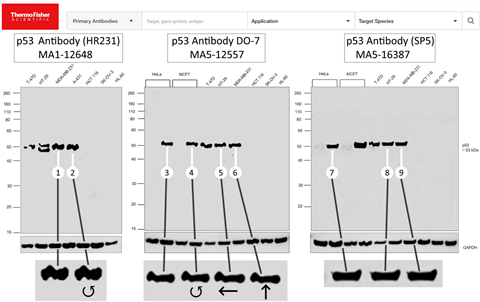
Scientists and image editing professionals have identified numerous altered images of Western blots in Thermo Fisher Scientific’s online catalogue, utilized to confirm the specificity of their antibody reagents. While Thermo Fisher is currently examining the issue, it asserts that the alterations are superficial and guarantees the effectiveness of their reagents. Nonetheless, the scientific community is calling for enhanced transparency in Thermo’s validation procedures.
## Overview of Thermo Fisher and Antibody Reagents
Thermo Fisher is a prominent global supplier and distributor of antibody reagents, crucial for biomedical research. These antibodies are anticipated to bind specifically to target proteins, validated through Western blots—visualizing protein bands on a blot. These blots are presented to demonstrate the effectiveness and specificity of antibody binding, essential for ensuring research credibility.
## Concern Over Image Alterations
Numerous specialists have documented over 460 altered images, showcasing methods such as painting over backgrounds or duplicating, flipping, and rotating protein bands to conceal the truth. Reese Richardson, a researcher at Northwestern University, points out financial limitations that hinder many from revalidating these antibodies independently.
## Community Response: Seeking Accountability
Richardson and other scientific professionals contend that altered images could suggest that antibodies may not function as intended or exhibit non-specific binding, potentially undermining research efforts. With evidence of recurrent alterations across various product images, concerns arise that experiments may not have been conducted as asserted.
## Thermo’s Reaction and Responses
Thermo Fisher initially stated that the image modifications were for clarity purposes, not affecting scientific data—a position that was later revised and condensed on their FAQ page. With confidence in their product quality, they promise support for customers seeking clarification. However, doubts remain among experts like Elisabeth Bik and Sholto David, who are urging for increased transparency and responsibility from Thermo Fisher.
## Consequences for Research Integrity
The controversy highlights broader concerns regarding research integrity and the validation of commercial antibodies, which an independent organization, YCharOS, emphasizes is essential but expensive. Accusations indicate a cultural issue within companies that prioritize sales over scientific integrity, possibly resulting in significant waste of research funding.
## Looking Ahead
The scientific community demands that chemical suppliers conform to publication standards, insisting on rigorous validation and transparency from companies like Thermo Fisher to restore trust and guarantee that reagents meet the expectations required in scientific research.