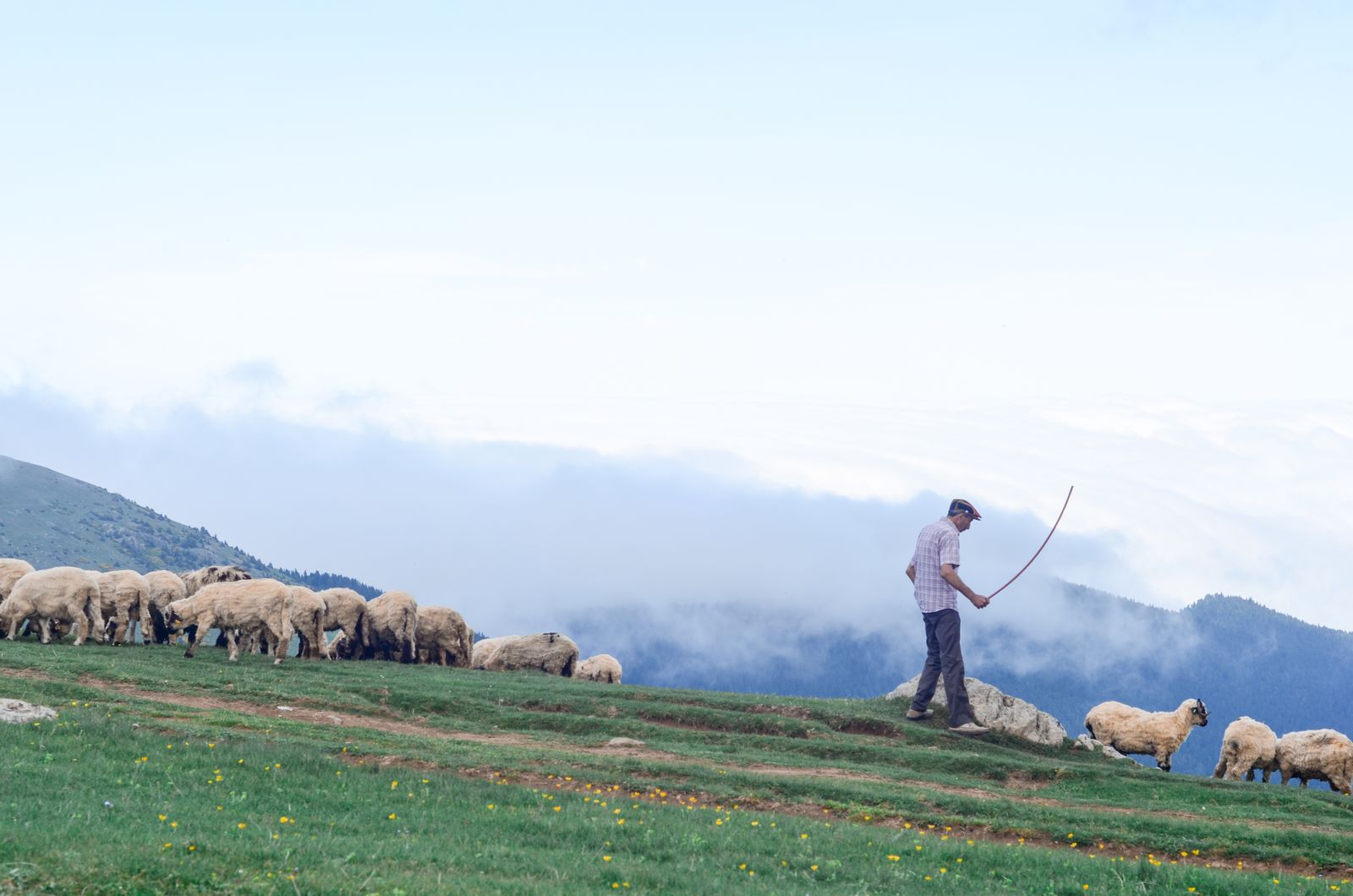
On the eastern side of Sardinia, within a grouping of villages known as the Ogliastra, a remarkable number of men have surpassed the age of 100 while herding sheep on limestone slopes that steeply ascend from the Tyrrhenian Sea. Villagrande Strisaili, one such village, has produced so many centenarians per capita that demographers marked it with a literal blue pen on a map — recognizing it as one of the original Blue Zones. The men in this area carry a Y-chromosome signature, haplogroup I2a1a-M26, which is prevalent in Sardinia yet exceedingly rare in most other regions of Europe. For two decades, geneticists have been trying to determine if that long-standing isolation, maintained for approximately 10,000 years since the island was first inhabited by farmers, is what makes this area a unique case of longevity.
So far, the answer is: partially. Additionally, the narrative of how researchers came to that cautious, qualified “partly” is more captivating than the simplified version promoted by the wellness industry.
## A Y-chromosome that remained local
Haplogroup I2a1a-M26 represents a paternal lineage — transmitted from father to son, unchanged, for numerous generations. It is found at low rates across most of Europe. In Sardinia, however, it constitutes a significant share of the male populace, and in certain inland communities, it rises even further. A [2015 examination published in the European Journal of Human Genetics](https://www.nature.com/articles/ejhg2015233?error=cookies_not_supported&code=694f88ee-5275-4574-87d9-b70de46d1436) analyzed the Italian genome in meticulous detail and identified Sardinia as a genetic outlier on the peninsula, with a lineage tracing back to the Neolithic settlement of the island.
This genetic signature persisted because Sardinia acts, in genetic terms, as a slow-moving vault. The Mediterranean Sea isolated it from gene flow coming from the mainland. The mountainous interior further separated the inland areas from the coast. Malaria, which was widespread in the lowlands until the 20th century, deterred outsiders from moving inland. Shepherds in villages such as Talana, Urzulei, and Arzana wed other shepherds from neighboring villages, leading to a recurring pattern of surnames — Cabras, Mereu, Piras — appearing in parish records for centuries.
The M26 lineage serves as the paternal mark of that isolation. It is not a gene responsible for longevity. Instead, it is an indicator that a population has remained stationary long enough for other factors — including any genetic variants that may influence lifespan positively or negatively — to develop at atypical frequencies.
## The significance of isolation for aging studies
Population geneticists value isolates for the same reasons chemists value pure substances. When a group has experienced reproductive closure over a long period, rare variants that would typically be diluted in a large mixing population tend to rise in frequency due to founder effects and genetic drift. If one of those variants impacts aspects such as cholesterol metabolism or DNA repair efficiency, its presence becomes simpler to detect.
For this reason, Sardinia has been a prime location for study since Luigi Luca Cavalli-Sforza’s team began charting the surnames on the island. That research, which was later formalized in [Nature and other journals](https://www.nature.com/articles/144055a0?error=cookies_not_supported&code=5e139b91-6ebf-42da-88d8-c5abb06e6883), demonstrated that the distribution of Y-chromosomes in Sardinia holds a classic signal of founder effect and prolonged isolation. The Ogliastra, nestled behind the Gennargentu massif, represents the deepest section within that region.
## The centenarian ratio that caught attention
In 1999, Sardinian demographers Gianni Pes and Michel Poulain marked concentric blue circles on a map to identify villages where an extraordinary proportion of men were reaching the age of 100. The epicenter was located in the Ogliastra. The centenarian male-to-female ratio in Sardinia reflects more balance than in most populations, while globally, centenarians tend to be predominantly female. This balance is one of the factors that brought fame to the island.
The Blue Zone designation remained, later spread, and subsequently faced scrutiny. Ongoing academic discussions revolve around how much of the centenarian trend in regions such as Sardinia and Okinawa is due to actual biological factors versus inaccuracies in record-keeping and pension fraud. Sardinian researchers assert that their parish registers, maintained by the Catholic Church since the 1500s, are among the most reliable longevity records available.
Regardless of any adjustments, the surplus of centenarians in Ogliastra is undeniable. It is less than what tourism advertisements suggest but more substantial than skeptics would admit.
## The genetic contributions to longevity
This is where the narrative becomes cautious. When Sardinian researchers sought specific longevity-related variants — those identified in centenarian studies conducted elsewhere