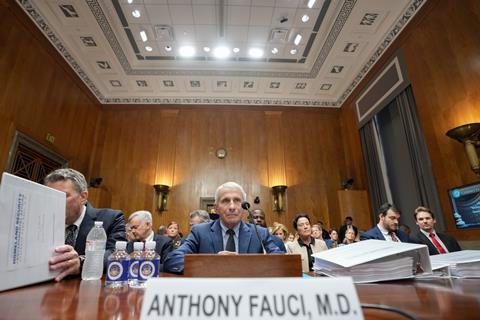
The US Senate Committee on Homeland Security and Governmental Affairs is set to make a decision next week regarding the potential contempt charge against Anthony Fauci for his purported refusal to respond to inquiries during a hearing on July 29. Fauci, a prominent figure in the US Covid-19 pandemic response, is accused of distorting information about the origins of the pandemic and deceiving Congress about NIH financial support for the Wuhan Institute of Virology. In light of these accusations, Fauci, who concluded his lengthy service as director of the NIH’s National Institute of Allergy and Infectious Diseases in December 2022, categorically denies any misconduct.
The hearing, triggered by a subpoena from the committee’s Republican chair, Rand Paul, saw Fauci consistently reference his Fifth Amendment rights. Paul and fellow Republicans contend that, owing to a complete pardon issued by former President Biden, Fauci is ineligible to invoke the Fifth Amendment. Conversely, Fauci argues that his legal protections are valid, emphasizing his previous willingness to cooperate in congressional inquiries.
Ahead of the contentious hearing, more than 150 scientific leaders expressed support for Fauci, denouncing the “vilification” directed at American scientists. This response highlights the increasingly charged political climate confronting the scientific community.
David Morens, a former senior advisor to Fauci, also came under legal investigation, prompting allegations of political motivations from the scientific sector. In light of these developments, Democrats like Gary Peters caution about the potential long-term effects on public health infrastructure. They worry that politically motivated proceedings, such as Paul’s hearing, may deter highly skilled individuals from pursuing careers in public service, consequently hindering national responses to health emergencies.
The committee’s forthcoming vote could result in serious repercussions for Fauci, possibly leading to criminal charges, fines, or imprisonment if the resolution is approved and passed by the Senate. This situation highlights the increasing politicization of public health leadership and brings to the forefront pressing issues regarding the convergence of science and governance in the US.