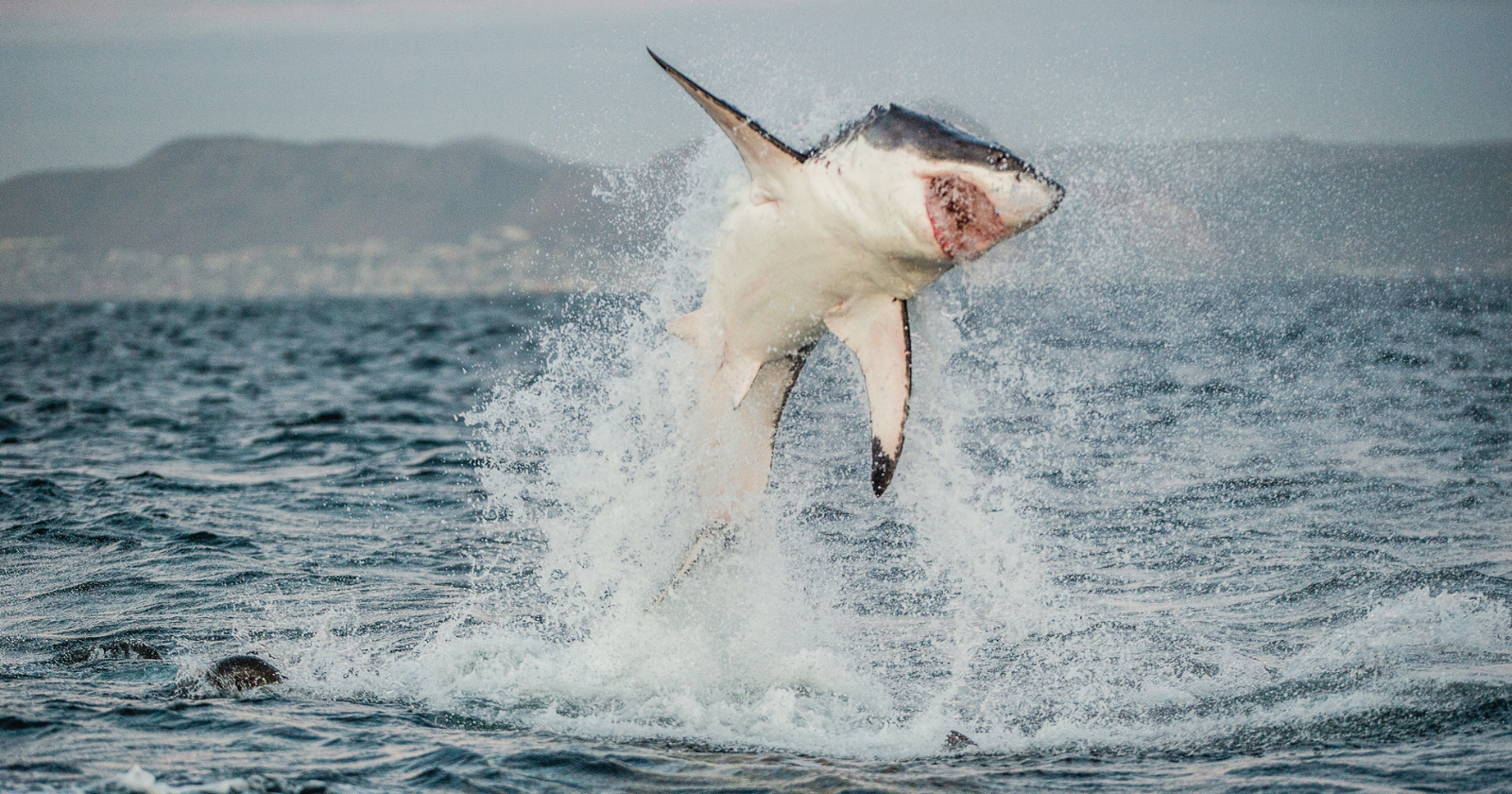
Sharks are primordial beings that have existed long before the first trees emerged on Earth. Around 450 million years ago, during the Late Ordovician period, small scales termed dermal denticles hinted at the early existence of sharks or their ancestors. Although fossilized jaws or skeletons are absent, these scales represent vital evidence for the ancient lineage of sharks. Emma Bernard from the Natural History Museum posits that these primitive forms might not have possessed teeth, although this remains a contentious topic among scholars.
During this timeframe, there were no tree-like flora or structures on land. Instead, the earliest terrestrial plants appeared roughly 469 million years ago, manifesting as liverwort-like and moss-like entities. These primordial plants were flat, soft, and greatly dependent on moist conditions, having minimal to no roots necessary for achieving height above ground.
The first recognizable plant with internal vascular systems, “Cooksonia,” emerged significantly later during the Silurian period, measuring only about six centimeters in height, resembling a basic green fork with spore capsules. In the meantime, sharks had already been prevalent in aquatic ecosystems for millions of years.
The Middle Devonian period witnessed the rise of the first genuine trees. Fossils unearthed in Gilboa, New York, uncovered stumps later recognized as the trunks of the organism “Wattieza,” which stood around eight meters tall, looking like tree ferns with fronds in place of leaves. This represents the oldest known forest in the world, estimated to be around 385 million years old.
More recently, fossilized trunks from “Calamophyton” were found along the Somerset coast, dating back 390 million years. These trees reached heights of two to three meters and played a notable role in reshaping the planet’s landscape by changing river dynamics through gathered debris.
The emergence of trees brought about substantial environmental transformations, particularly with “Archaeopteris,” a variety of trees that developed extensive root systems. These roots enhanced chemical weathering, significantly affecting the Earth’s carbon and nutrient cycles. The increased runoff from these roots nourished extensive algal blooms in aquatic environments, contributing to scenarios like the Late Devonian mass extinction.
Thus, while often deemed as unchanged and enduring survivors, sharks have undergone significant evolution over time, with most contemporary families tracing back around 100 million years. Conversely, trees have dramatically transformed Earth’s ecosystems and chemistry, illustrating their considerable impact on the history of the planet. Throughout this transition, sharks have continually evolved and adjusted to these shifts.