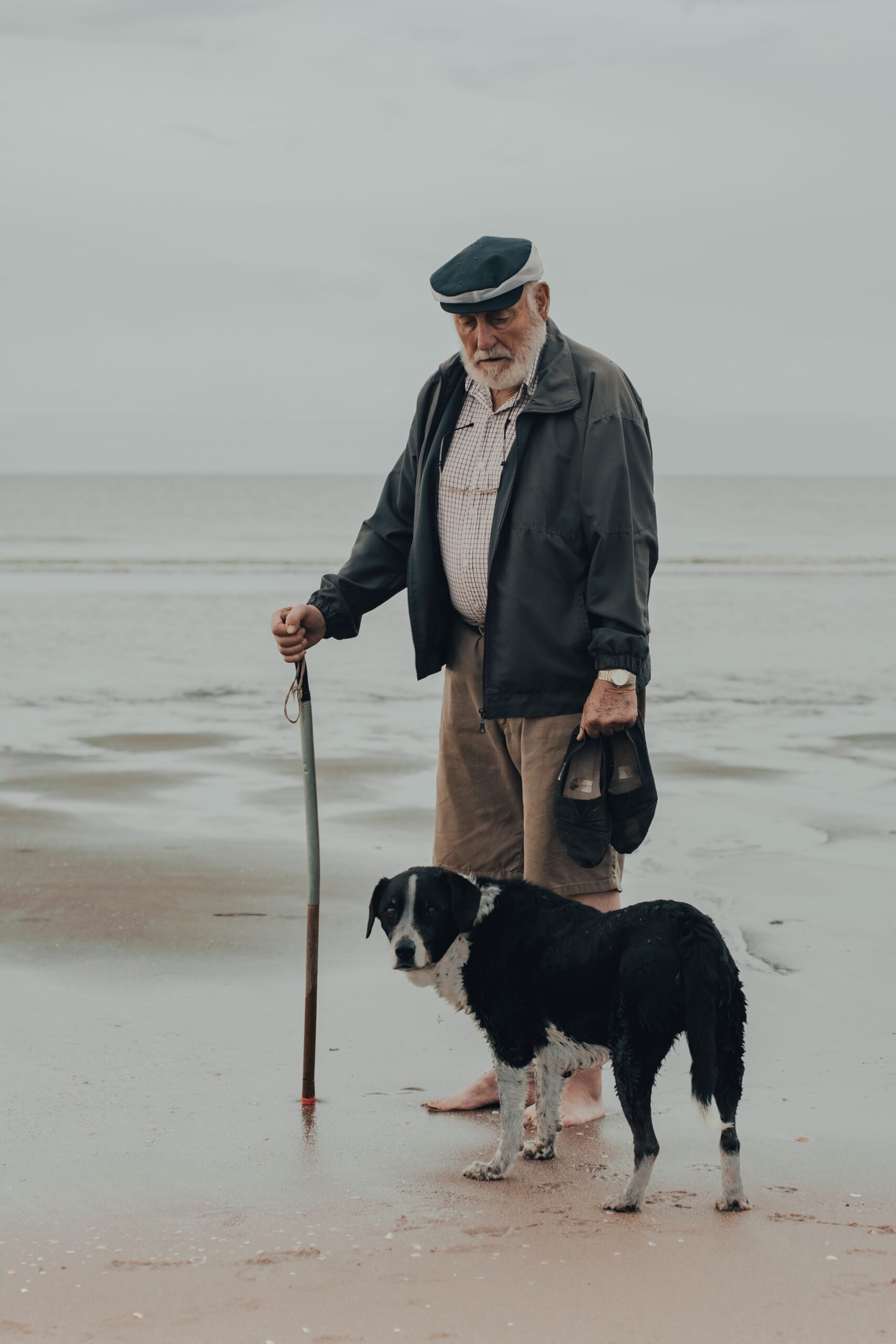
Jaining Li and Nichol Wong, from the Education University of Hong Kong, released a study in October 2025 in Scientific Reports that examined this exact trend, pet owners who rely on animals particularly in lieu of human interaction, and the impact on their wellbeing. The findings weren’t as comforting as I had anticipated at the outset. This is a summary of that research and related findings, not guidance, and if feelings of isolation or loneliness have been prominent for some time, a healthcare professional or counselor is a more suitable resource than an article.
Insights from the study
Li and Wong contrasted pet owners with non-owners, focusing on living situations and loneliness as the link connecting pet ownership to wellbeing. Among individuals residing alone, pet owners reported experiencing less loneliness compared to non-owners, and this decrease in loneliness accounted for most of the wellbeing advantage that pets seemed to offer. Thus far, that aligns with the comforting narrative that many people already believe.
However, the researchers also assessed a more specific aspect: how much a person’s bond with their pet acted as a surrogate for human relationships, rather than an enhancement to them. This dimension of interpersonal substitution did not correlate with improved wellbeing. Instead, it correlated with poorer wellbeing, with the overall effect manifesting through heightened loneliness. Relying on an animal instead of people did not serve as a solution for loneliness; rather, in this data, it was linked to increased feelings of loneliness. The study is cross-sectional, presenting a single snapshot rather than a longitudinal study, so it indicates that substitution and loneliness are correlated without establishing which precedes the other.
Focusing on later life
This pattern frequently arises in discussions surrounding individuals over 60 rather than those in their twenties due to specific reasons. Retirement eliminates the incidental daily interactions that a workplace naturally provides without effort. Widowhood, when it occurs, abruptly removes the most crucial relationship in a person’s social life. Adult children relocate, old friends transition to care facilities or pass away, and the circle of individuals available for low-effort, regular contact that alleviates loneliness diminishes in ways largely beyond anyone’s control. The presence of a pet requires nothing from an increasingly limited social schedule. It is consistently there, on a timetable independent of anyone else’s availability, which is precisely what makes it attractive but also what cannot replace what a dwindling human network once offered.
Diverse experiences of the trade-off
Another study, published in 2025 in BMC Public Health, involved 232 pet-owning adults over 45 in Taiwan and determined that the advantages of time spent with a pet significantly vary depending on the individual. For those with lower neuroticism, additional time spent with their pet was linked to increased wellbeing. Conversely, for individuals with higher neuroticism, more time with their pet was associated with decreased wellbeing, the contrary effect. Anxious attachment style also served as a similar moderator. The researchers observed that individuals who are high in attachment avoidance often maintain some distance from their pets from the outset, a point worth considering if the evolving image here is “socially withdrawn individuals simply replace humans with an animal.” Those most inclined to feel uncomfortable with intimacy do not consistently project that discomfort onto pets either.
Pets serve beyond mere withdrawal mechanisms
A significant study complicates the substitution narrative from the opposing perspective. Lisa Wood and collaborators, publishing in PLOS ONE in 2015, surveyed 2,692 residents across four cities in Australia and the United States and discovered that pet owners were considerably more likely than non-owners to engage with individuals in their neighborhood. Specifically, dog owners were about five times more likely than owners of other types of pets to have met someone through their animal, and roughly a quarter of pet owners who met people in this way later considered one of those individuals a true friend, not merely an acquaintance. In that context, a pet acted as a conduit to more human interaction, not a substitute. This sits uncomfortably with the substitution finding, and I believe the honest reconciliation is that a pet can function in both capacities, as a bridge or a replacement, and which role predominates likely hinges on the individual and the relationship, rather than pet ownership being a singular, uniform classification.