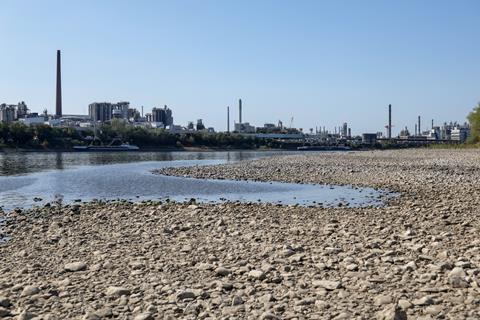
Severe droughts have drastically impacted Europe, leading river water levels to drop to historic lows, particularly affecting the Rhine River. This scenario has greatly impeded the transportation of chemicals and other goods, posing considerable challenges for chemical companies such as BASF, Covestro, and Evonik. These businesses operate large facilities along the Rhine and rely on barges for the transport of chemicals and the provision of cooling water for their operations.
The Rhine’s water level at Kaub, Germany, recorded a historic low of 14 cm above the local zero point in early August, significantly lower than the previous 2018 drought’s record of 25 cm. Kaub, which is the narrowest and shallowest point of the Middle Rhine, presents a significant risk for barge operations at these diminished levels. The resulting restrictions particularly jeopardize the BASF Ludwigshafen site, rendering barge traffic to key ports like Rotterdam and Antwerp precarious.
Logistics consultant Hans Vermij from Haskoning emphasizes that what were once exceptional circumstances have become commonplace due to climate change, making it essential to develop a long-term strategy for managing the Rhine. Low water levels limit freight volumes well before they obstruct traffic, as vessels must lighten their loads to operate safely at reduced draught depths, ultimately driving up transport expenses.
BASF, along with others, is exploring alternative transport methods, including road and rail, to alleviate supply limitations. However, shifting the workload of nearly 1,080 barges (equivalent to 360 freight trains or 5,500 trucks daily) onto roads and railways poses significant challenges and is not cost-effective, especially for commodity chemicals such as methanol, ammonia, and naphtha, which face cost, safety, and regulatory issues when transported by road.
Analysis of previous low water occurrences indicates that sustained low levels could trigger a downturn in industrial production. The 2018 drought resulted in notable shifts toward alternative transportation methods but continued to disrupt long-term supply chains. BASF has reacted by implementing innovative low-water tankers to navigate moderate low water conditions, but maintaining record low water levels remains a significant challenge without a holistic solution.
To prevent future interruptions, authorities are encouraged to actively maintain waterways and consider measures that stabilize flow, sediment transport, and ecology for a resilient Rhine. Furthermore, the drought impacts the energy sector, prompting adjustments in power generation and potential blackouts due to reduced hydropower and cooling limitations at power plants.
BASF’s operations at Ludwigshafen illustrate this struggle, with low Rhine levels and high temperatures necessitating operational changes. With no rain anticipated, the long-term prospects for river levels are uncertain, raising concerns about manufacturing unit shutdowns, affected profit margins, and the exacerbating triple threat of climate-induced crises, rising energy costs, and geopolitical tensions affecting the European chemical industry.