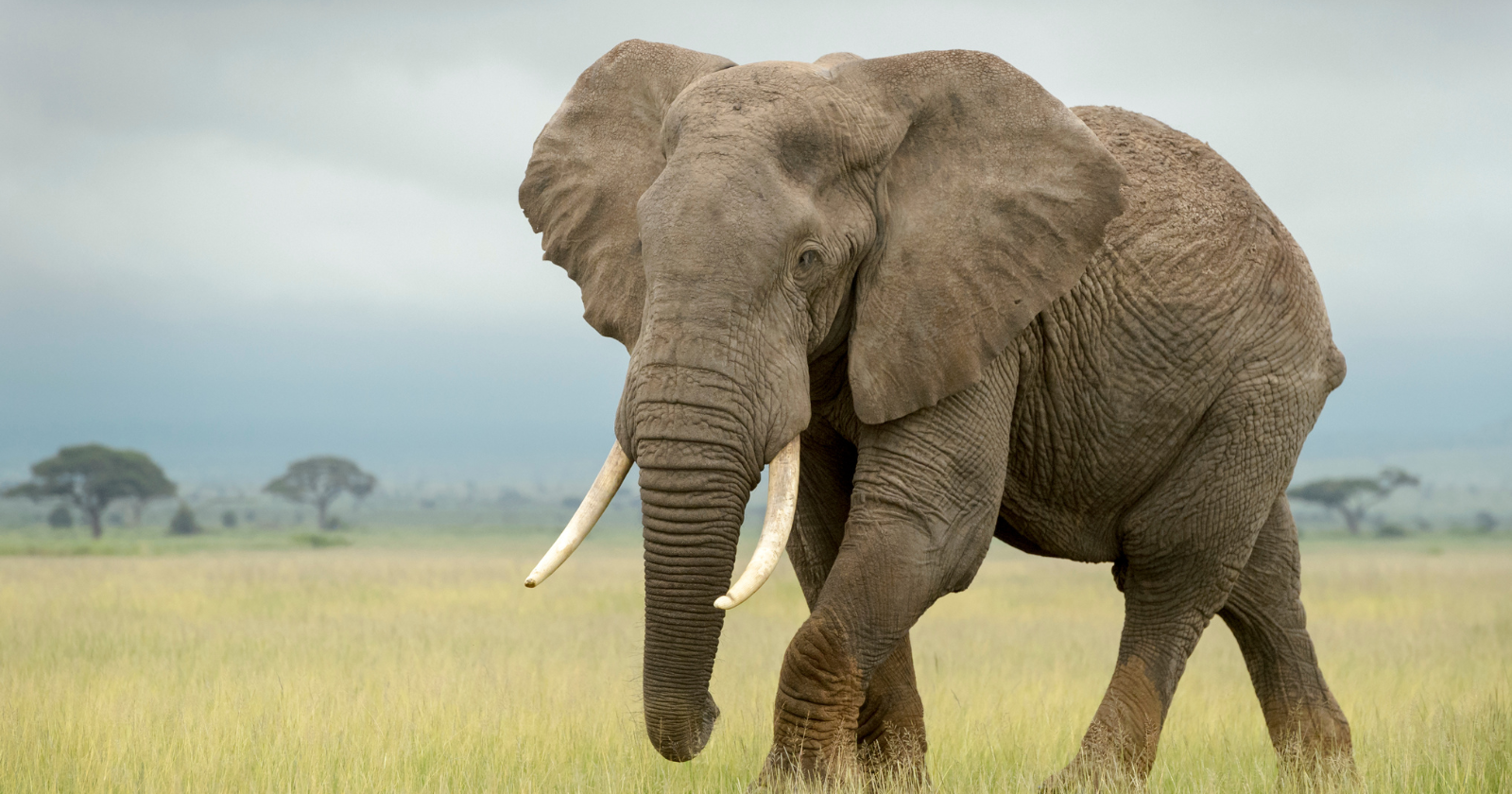
In two national parks in Kenya, a group of biologists devoted 14 months to tracking elephants using a vehicle while documenting every rumble made by these creatures. Throughout the four years of the broader project, they assembled a particular dataset containing 469 distinct calls. For each call, they identified the elephant that produced it and, influenced by the specific social context, which elephant was being addressed.
Upon inputting the recordings into a machine-learning system, the algorithm detected something extraordinary. Each elephant’s calls possessed a unique acoustic signature that varied depending on the intended recipient. When those recordings were replayed through a concealed speaker in the field, the elephant whose “name” was called became alert and responded, while others nearby, not addressed, largely disregarded the sound.
This represents the closest documentation, outside of human language, of one animal calling another by its name.
### The researchers’ actual work
The study, which appeared in *Nature Ecology & Evolution* in June 2024, was spearheaded by behavioral ecologist Michael Pardo. Pardo conducted the research as a postdoctoral fellow at Colorado State University, in collaboration with the conservation organizations Save the Elephants and ElephantVoices.
The team utilized decades of field recordings collected in Kenya’s Amboseli National Park as well as the Samburu and Buffalo Springs National Reserves, covering the years 1986 to 2022. From this repository, they isolated 469 calls from 101 unique emitters and 117 unique recipients.
Elephants primarily communicate through low-frequency rumbling sounds, many of which fall within the infrasound range — below 20 hertz, too low for humans to detect. Infrasound offers a distinct advantage in the elephant’s environment: low-frequency sound waves travel significantly further than higher-frequency ones, enabling elephant rumbles to be heard up to 10 kilometers across open savanna.
The team examined the acoustic structure of the calls with the aid of a machine-learning algorithm. If elephants utilized names, the algorithm ought to identify the intended recipient of a call based solely on the sound, without prior knowledge of the social context. It accomplished this.
### The playback experiment
While machine-learning analysis is one facet, what the elephants recognized themselves was another matter.
To evaluate whether the acoustic signatures acted as genuine names — recognizable and significant to the elephants — the team conducted playback experiments in the field. They approached specific elephants with a portable speaker, playing either a call that had originally been directed at that elephant or a call from the same caller aimed at a different elephant.
The elephants reacted differently to the two playback types. Upon hearing a call originally meant for them, they became attentive and moved toward the sound, vocalizing in response more promptly and frequently. When they heard a call from the same individual that was originally addressed to another, they largely ignored it.
This specific pattern was consistent across multiple test subjects, demonstrating that elephants were, based on measurable behavioral criteria, capable of recognizing when a call was meant for them.
### The difference from dolphins and parrots
For decades, scientists have acknowledged that some non-human species employ vocal identifiers. Bottlenose dolphins create unique whistles known as signature whistles that serve as individual identifiers. Parrots mimic the calls of specific individuals within their flock.
However, both dolphins and parrots operate through imitation. A dolphin identifies another dolphin by replicating that dolphin’s own signature whistle. A parrot signals another by imitating that individual’s distinctive call. In both instances, the “name” is essentially the animal’s own signature reverberated back.
Elephants, conversely, seem to be engaging in something structurally distinct. The acoustic signatures identified by Pardo’s team are not imitations of the recipient’s own calls; they are separate, unique vocal patterns produced by the caller and directed precisely at the receiver.
In essence, elephants appear to invent arbitrary vocal labels for one another, akin to the manner in which humans create arbitrary names. This positions elephants, according to the research team, as the first non-human species documented to utilize non-imitative names for specific individuals.
This distinction is significant. Imitative naming represents a specific type of vocal mimicry many species employ for various purposes. In contrast, non-imitative naming suggests a more profound complexity: the cognitive ability to associate an arbitrary sound with a specific individual and utilize that sound to communicate with them.
### Implications for elephant cognition
The study on elephant naming contributes to a broader understanding of the social intelligence of elephants that has gradually emerged over decades.
Elephants exist within intricate matriarchal societies, forming individual relationships that can last a lifetime. They recognize the voices of particular herd members, remember individuals not seen for years, and discern between calls from family and strangers.
The finding regarding naming provides a fresh dimension to this understanding, indicating that elephants possess the cognitive infrastructure necessary to retain a specific arbitrary label linked to each individual in their social network and to retrieve it.