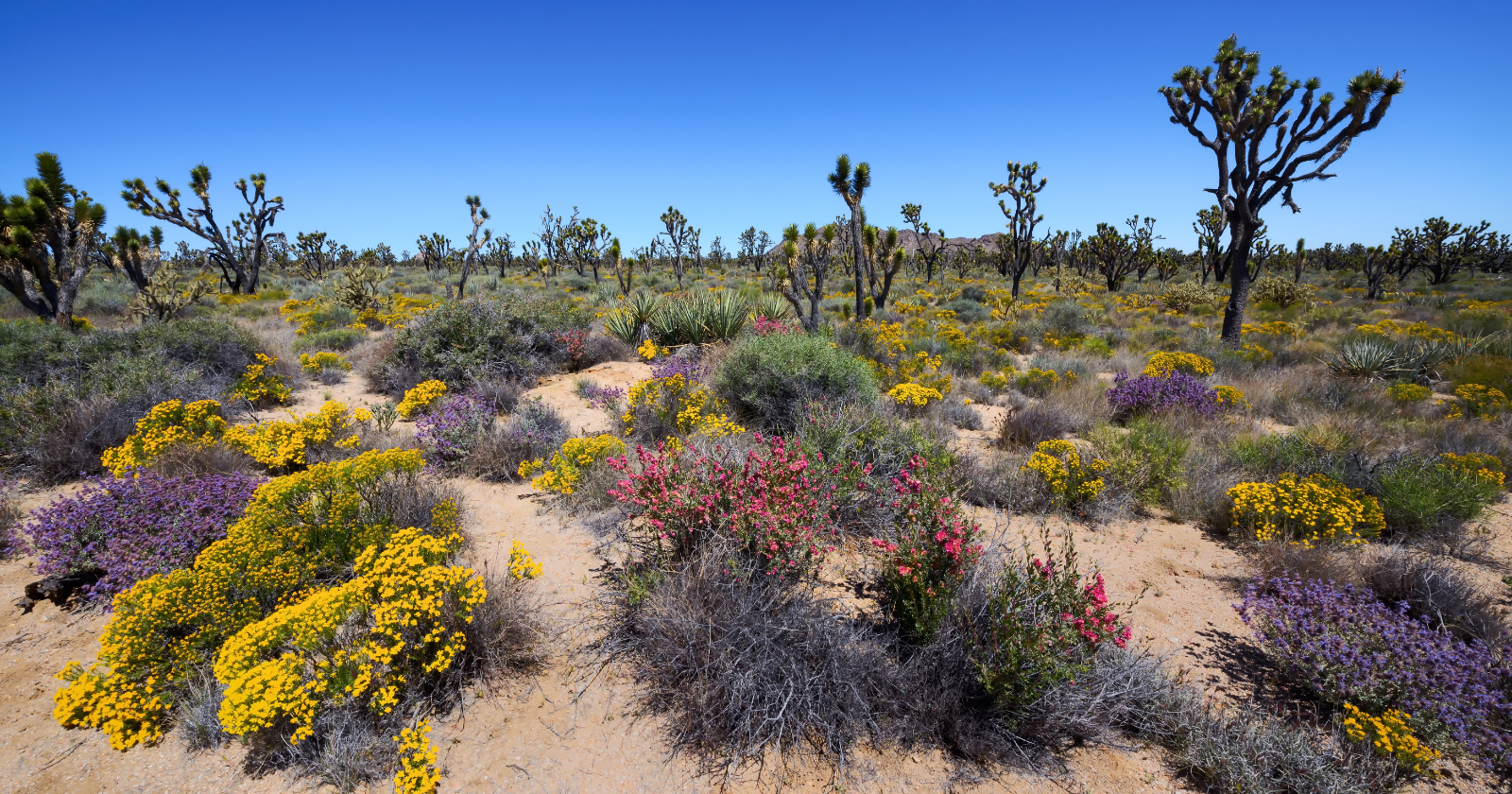
Before construction of the Gemini Solar Project, botanists surveyed the 20 square kilometers of Mojave Desert located northeast of Las Vegas and identified exactly 12 specimens of a plant known as the threecorner milkvetch. Twelve. This species, a small, sprawling member of the legume family named for its unusual three-sided seed pods, is rare enough to be under evaluation for the U.S. Endangered Species Act, and it thrives in the loose desert sands that are exactly the sunny, gently sloping terrain favored by solar developers. The anticipation, when 1.8 million panels were installed in its habitat, was far from positive.
Follow-up surveys revealed that the plant had not just endured the establishment of the solar farm; it had adapted and flourished. By 2024, two years post-construction, ecologists recorded 93 threecorner milkvetch plants within the fenced area, nearly eight times the original twelve, and the individuals growing amidst the panels were exceeding their wild counterparts on every critical plant metric.
The experiment set by the desert
The comparison was straightforward because the researchers structured it intentionally. A team led by Tiffany Pereira from Nevada’s Desert Research Institute tagged and monitored milkvetch plants both inside the solar array and at an undisturbed population on adjacent federal land, experiencing the same rains, sands, and Mojave sun, tracking them throughout the growing season, and publishing the findings in Frontiers in Ecology and Evolution.
The plants within Gemini exhibited increased width and height. They began fruiting almost three weeks sooner. By the end of the season, the difference had become immense: the solar-farm plants yielded approximately eight times as many flowers and ten times as much fruit as those outside, while survival rates remained statistically equivalent between the two populations. For an annual plant with an evolutionary strategy of rapidly growing after rainfall, reproducing abundantly, and dying, a tenfold increase in fruit signifies more than a detail; it is crucial for the species’ future, stored in the seed.
The impact of the panels on rainfall
The underlying principle is desert arithmetic. A Mojave annual’s life cycle hinges on how long the moisture from a rain event remains accessible to its roots, and in open terrain, the answer is: not for long. Direct sunlight and wind deplete water from exposed sand within days, resulting in the plants outside the fence being small, fast-growing, and conservative.
Within the solar array, the arrangement of panels altered the water budget without modifying the rainfall. The shade cast over the ground for portions of each day reduced evaporation, wind speeds between the rows decreased, and the soil retained moisture well into spring, allowing tagged plants to continue growing, flowering, and setting pods for weeks after the open desert had dried out. The panels also redirect rainfall, concentrating runoff at the edges of the rows. The outcome was a landscape that absorbed Mojave rain yet conserved it like a more temperate region.
The plant’s own preferences, recorded across thousands of microsites, tell the story accurately: 94 percent of the milkvetch at Gemini flourished in the sunny spaces between panel rows, benefiting from the enhanced moisture without sacrificing the sunlight vital for a desert annual, while nearly none, just one plant, thrived in the constant shade directly below a panel. The ideal condition was not complete shade; it was being adjacent to shade.
The additional aspect of the outcome
The milkvetch benefited from assistance, and this is the transferable lesson. Gemini was constructed under guidelines to minimize disruption in milkvetch habitat, and its developers moved away from the industry’s standard practices of blading and grading, which involves stripping a site to bare, flat soil that destroys the desert’s seed bank along with everything else. Throughout much of the project, vegetation was either preserved or flattened rather than removed, panels were elevated above undisturbed soil, and the dormant seeds of the original 12 plants, along with decades of their ancestors’ seed rain, survived construction and germinated in the improved microclimate. This study is among the first to quantify the benefits of this gentler approach, which its proponents term ecovoltaics, and the outcome at Gemini was a rare plant population proliferating within an operational power station.
The researchers are cautious about the study’s limitations. One species, one location, two years; other desert plants may require different light conditions, and a wetter or drier set of years could alter the dynamics. The geometry of the panels is significant enough that the paper also serves as guidance for design, with taller panels and wider rows being highlighted as habitat specifications. However, the primary observation persists, aligning with the same principles that solar developers rely upon. The Mojave sun is unyielding; that is precisely why 1.8 million panels are installed there. The unexpected finding is that capturing a portion of that sun benefits the land just as it does the grid, reclaiming something the desert would otherwise squander. The panels gather the light, the soil retains the rain, and a plant with only twelve survivors looked at the situation and produced a ten-year seed supply in a single growing season.