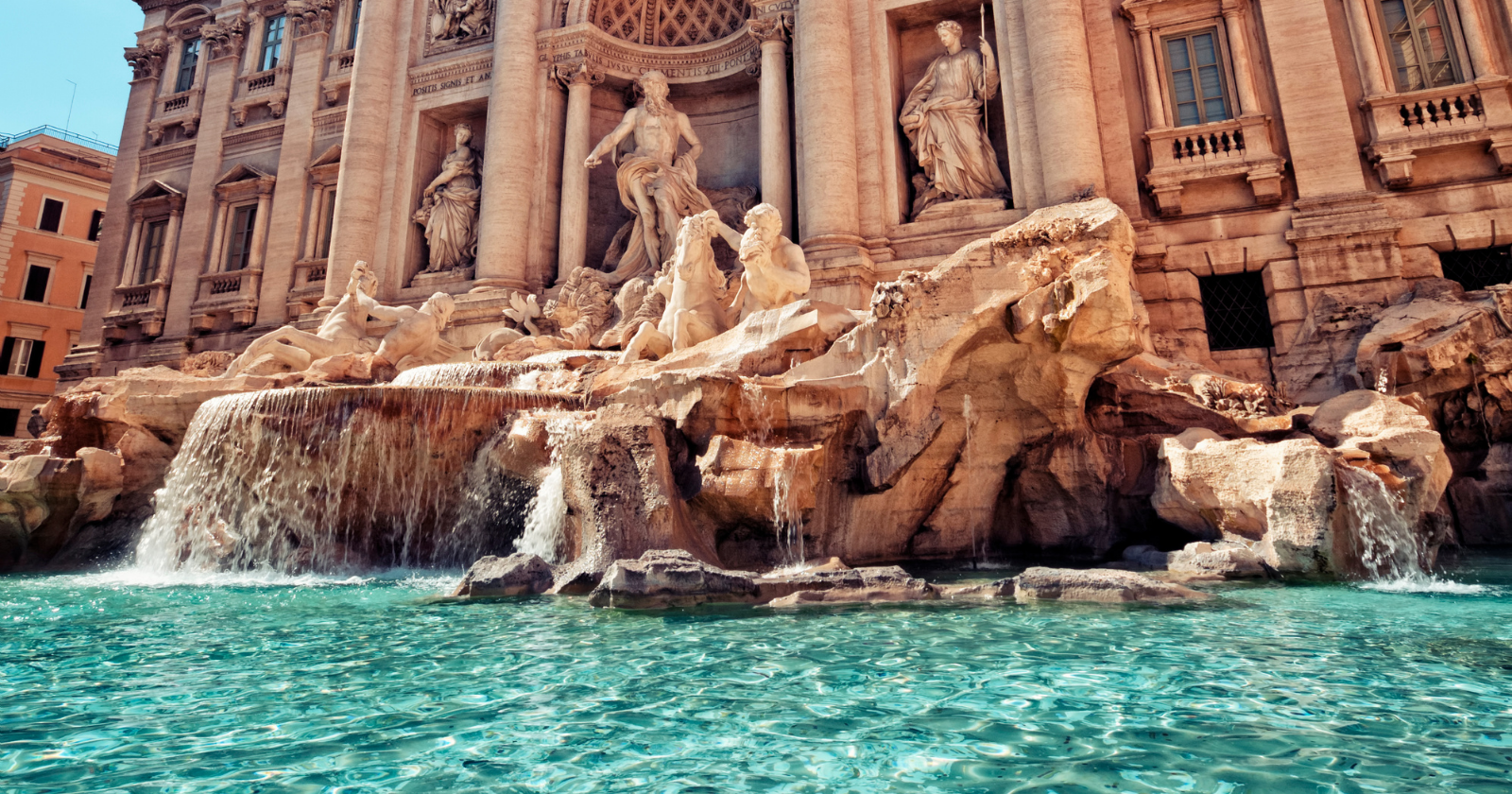
Each day, visitors throw approximately three thousand euros into the Trevi Fountain to make a wish. That loose change accumulates quickly. About €3,000 a day totals nearly €1.5 million annually. However, none of it remains in the basin. The city collects it and donates it to a charity that provides food for those in need.
Most individuals tossing in a coin don’t consider this. The action is purely a matter of superstition. The consequence is funding for welfare.
Where the figure originates
The specific amount fluctuates slightly from year to year. In 2022, the charity garnered €1.4 million from the fountain and anticipated more for the following year. An earlier estimate recorded the 2016 total at nearly $1.5 million. Over the years for which we have data, the range hovers around €1.4 to €1.5 million each year.
The tradition is older than many tourists are aware of. It gained notoriety from the 1954 movie Three Coins in the Fountain: toss one, and you’ll return to Rome eventually. Sufficient people believe in it or simply enjoy the spectacle, ensuring the basin keeps getting filled week after week.
How the team retrieves it
The coins don’t gather themselves. The regional utility ACEA empties the fountain and dispatches a small crew to collect the money. The collection occurs twice weekly with up to four workers, and the fountain receives a thorough cleaning a few times each month.
The tools are straightforward. Workers balance on the edge of the basin, sweep the coins into piles using long brooms, and then vacuum them with suction hoses. Speed is crucial since a dry fountain isn’t much of a landmark. As Francesco Prisco, a manager at ACEA, stated, “The collection and cleaning operations are done as swiftly as possible to minimize the fountain’s downtime.”
Coins aren’t the only items that appear. Alberto Colajacomo, a spokesperson for Caritas, once detailed some unusual finds: “Among the coins, we frequently discover other objects, such as glasses, religious medals, and even a few dentures.”
Where the funds go
After being bagged, the money is handed over. Colajacomo described the transfer: “The [city] council gives us bags full of coins thrown into the fountain.” It goes to the Rome branch of Caritas, the Catholic charity that has been receiving these coins since 2001, when then-mayor Francesco Rutelli formalized the agreement and ended the previous freelance coin collecting.
The funds support tangible initiatives. The money operates a food bank, a soup kitchen, a budget supermarket known as the Emporium, and various other welfare projects. It constitutes about 15 percent of the charity’s yearly budget. A significant portion of a genuine charity’s revenue comes, quite literally, from wishes.
The charity’s representatives express it in more heartfelt terms than a financial statement would. Rev. Benoni Ambarus, who leads the charity, remarked, “The offering from the Trevi Fountain in Rome is a rain of coins that generates a sea of goodness.” And some visitors are aware of where their coin is going. Yula Cole, visiting from Brazil, told reporters, “But I also know that this coin isn’t just staying there but will assist needy individuals.”
Whose coins are they, really?
There’s an underlying question: once a coin is thrown, does it remain yours? Legally and practically, no. The city considers the money as its own to distribute, and the arrangement to funnel it to Caritas has been in place for over twenty years.
Others have had their own interpretations of ownership. The most infamous was Roberto Cercelletta, dubbed “D’Artagnan,” who extracted coins from the fountain for 34 years before being apprehended in 2002. During peak tourist season, it was reported that he removed 22 kilos of coins in just 15 minutes. Rutelli’s 2001 reform ended the free-for-all and ensured the money went to charity permanently.
What we repeatedly return to is the simplicity of the individual act. One person, one coin, one half-remembered movie superstition, cast and forgotten before the ripples fade. Multiply that by thousands each day throughout a full year, and the wish transforms from a mere desire. It evolves into a shelf of groceries, a hot meal, a supermarket that a family can realistically afford to shop in. A worthwhile return on a coin most people don’t anticipate seeing again.