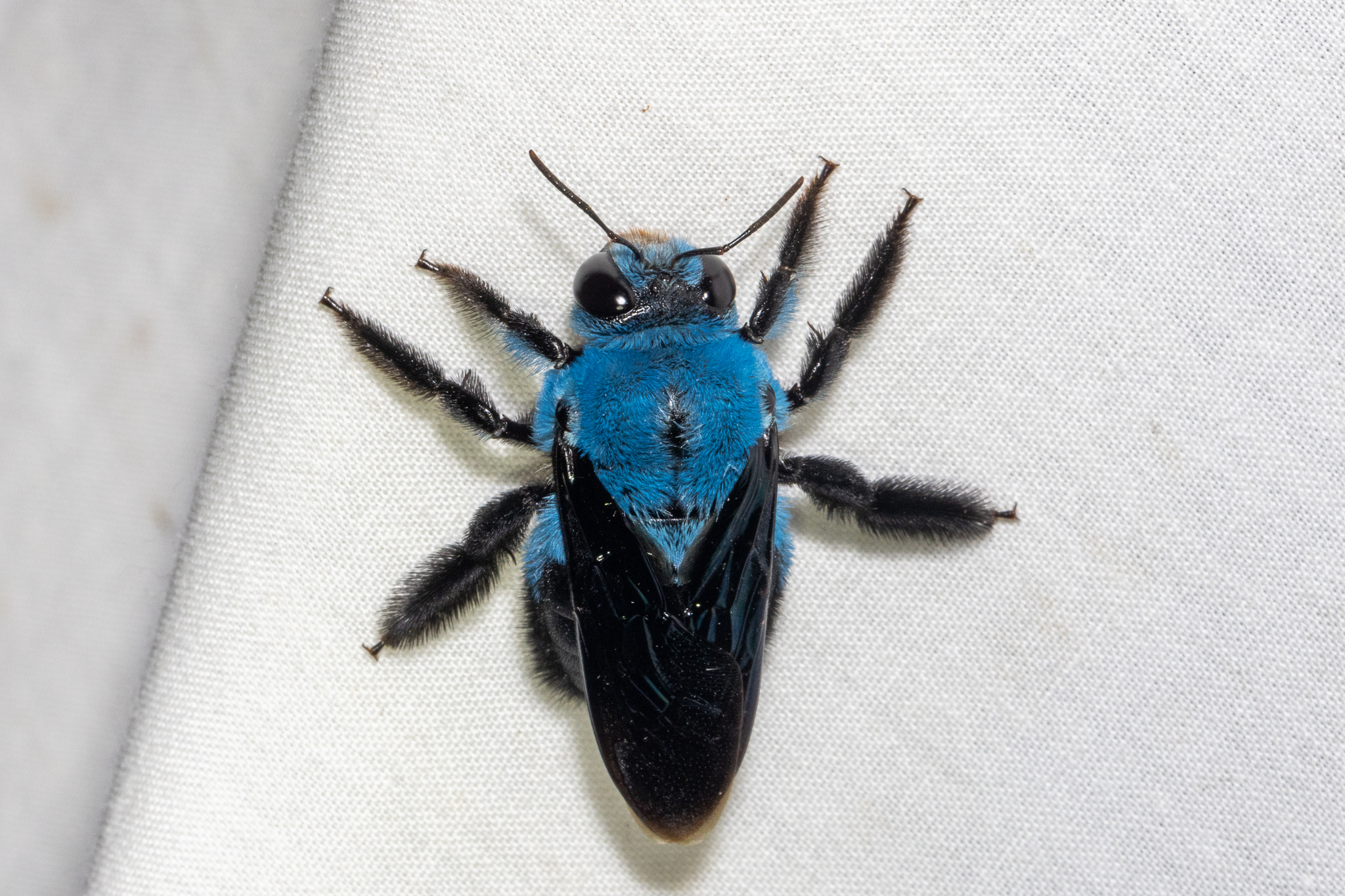
### The Blue Carpenter Bee: A Solitary Creator of the Tropics
In the verdant terrains of Southeast Asia, India, and Southern China, the blue carpenter bee, scientifically referred to as *Xylocopa caerulea*, hovers like a piece of the sky come to life. In contrast to the complex social systems typically linked with bees, each female of this species operates independently, taking on the roles of designer, builder, and nurturer. This solitary behavior dispels prevalent misconceptions, providing a window into the varied lifestyles of the bee community, where the norms of colony hierarchies are rare.
#### A Visual Wonder
The blue carpenter bee is about 28 mm in size, significantly larger than the 17 mm European honey bee. This size contrast creates a striking presence as the bee glides through tropical gardens, its vivid color drawing attention. The blue hue, instead of being a metallic shine, appears as a soft, velvety texture, similar to velvet sprinkled with chalk, primarily exhibited by the females. This unique look is not just a visual trait but a rare optical occurrence in the insect kingdom, where blue is rarely seen in coloring and more frequently results from microscopic structures.
#### The Existence of a Blue Carpenter Bee
The life cycle of the blue carpenter bee centers around individual craftsmanship. The species name, *Xylocopa*, translating to “wood-cutter,” reflects their wood-boring habits. A female bee employs her mandibles to carve tunnels in decayed or weathered wood, including tree trunks, branches, and bamboo. She carefully constructs her nest, not by consuming the wood but by forming a protective passageway for her upcoming progeny.
Within these tunnels, the solitary bee exhibits her independence. Pollen and nectar are gathered and blended into a thick, peanut butter-like substance known as “bee bread,” which serves as sustenance for the growing larva. Each chamber in the gallery contains a single egg laid atop this bee bread, encased by a wall of chewed wood pulp. The entire process, from gallery excavation to provisioning, is carried out without any social aid, highlighting a sharp contrast to the collaborative efforts witnessed in honeybee colonies.
#### Challenging Beliefs
The blue carpenter bee challenges the conventional image of bees’ social frameworks, illustrating that the social hive and queen hierarchy typical of honeybees are exceptions rather than the standard. With over 20,000 bee species globally, the majority, including the blue carpenter bee, live solitary lives. Their existence highlights a crucial truth: personal resilience and adaptability can lead to success in the natural world.
Australia, while not home to *Xylocopa caerulea*, has its own species like the peacock carpenter bee (*Xylocopa bombylans*) and the green carpenter bee (*Xylocopa aeratus*), further showcasing the geographical diversity and adaptability of these solitary builders. For those in search of the blue carpenter bee, a visit to its native Asian habitats offers a unique opportunity to observe this vibrant creator in action.
The charm of the blue carpenter bee lies not only in its captivating color but also in its embodiment of independence and creativity in nature’s design marvels. Through their solitary pursuits, they redefine success in the bee kingdom, demonstrating that sometimes, the most significant achievements arise from individual determination.