The Final Freight Train and the Evolution of Manhattan’s High Line
In 1980, the final freight train on Manhattan’s High Line transported three carloads of frozen turkeys, signaling the conclusion of an era for the elevated rail structure. This moment, documented in the park’s historical records, serves as a poignant reminder that the High Line, now associated with urban gardens and leisurely walks, was once a vital element of New York City’s distribution network.
The High Line first opened in 1934 as an elevated freight line, linking factories and warehouses on Manhattan’s West Side. It was established to mitigate conflicts between street traffic and freight trains by replacing the ground-level tracks that ran along Tenth Avenue. This industrial function shaped the route of the railway, closely intertwining it with the nearby buildings it once directly served.
Nonetheless, with the advent of interstate trucking in the 1950s, rail activity on the High Line started to wane. As portions of the line were dismantled, the remaining elevated route ultimately ceased operations, reaching a conclusion with the frozen-turkey delivery in 1980. This marked the end of service, but it did not immediately prompt the development of a park.
In the years that followed, plant life began to establish itself along the dormant track bed. Seeds blown by the wind and carried by birds found spots of growing medium on the railway, despite the adverse conditions of shallow soils, drought stress, and exposure. By the time the first section of the park opened in 2009, this organic landscape had flourished, making a strong case for the preservation of the structure.
Preservation initiatives, however, needed more than just the incidental ecosystem. Friends of the High Line, established by Joshua David and Robert Hammond in 1999, led the campaign to protect the railway. In partnership with the Design Trust for Public Space, they confronted practical issues about ownership, structural safety, and visitor access. With city support secured in 2002, construction commenced in 2006.
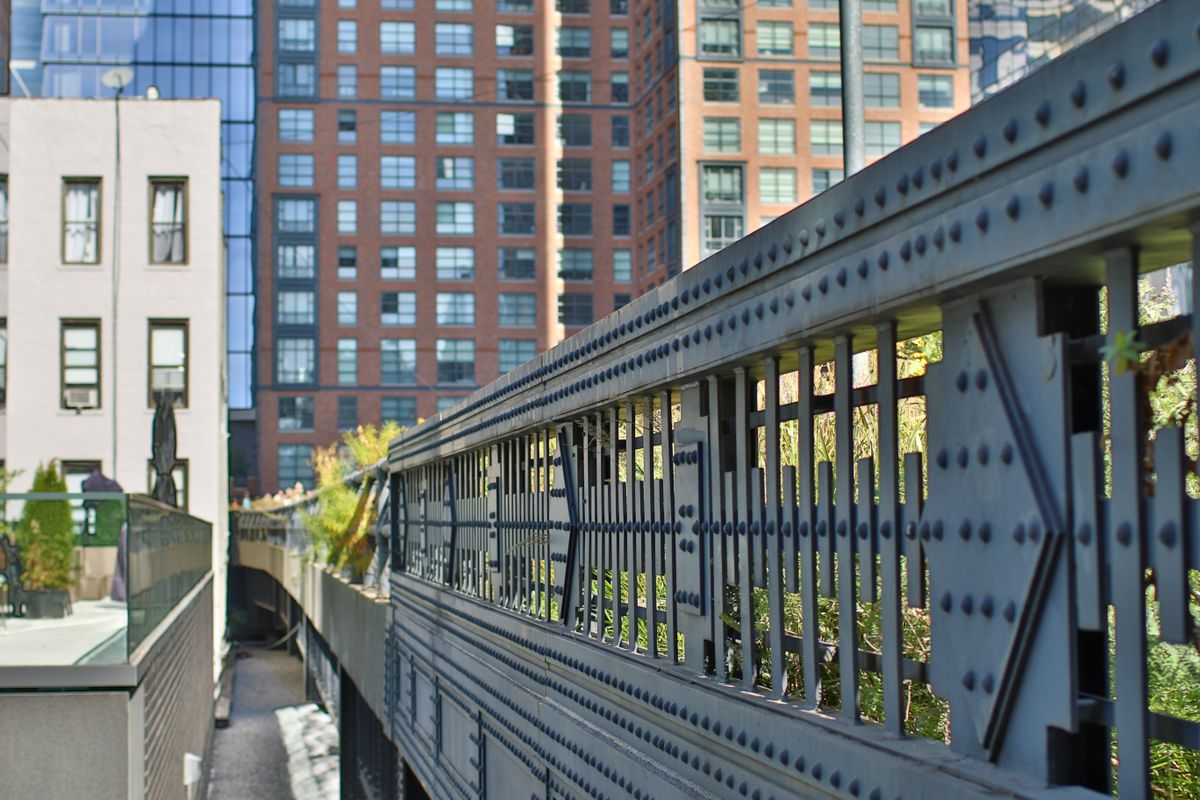
Transforming the High Line into a public park required significant engineering, including structural restoration, steel and concrete repairs, lead-paint removal, waterproofing, and drainage enhancements. The new park, designed by James Corner Field Operations, Diller Scofidio + Renfro, and planting designer Piet Oudolf, drew inspiration from the self-seeded landscape while establishing a cultivated garden. Rail tracks were incorporated into the planting areas to pay homage to the structure’s historical function.
Currently, the High Line provides a distinctive urban experience along its 1.45-mile stretch. Its gardens, cared for by a committed team of gardeners and maintenance personnel, showcase a variety of resilient plants with a focus on native species. As visitors navigate this elevated refuge, the park continues to represent a harmonious fusion of nature, history, and urban creativity.