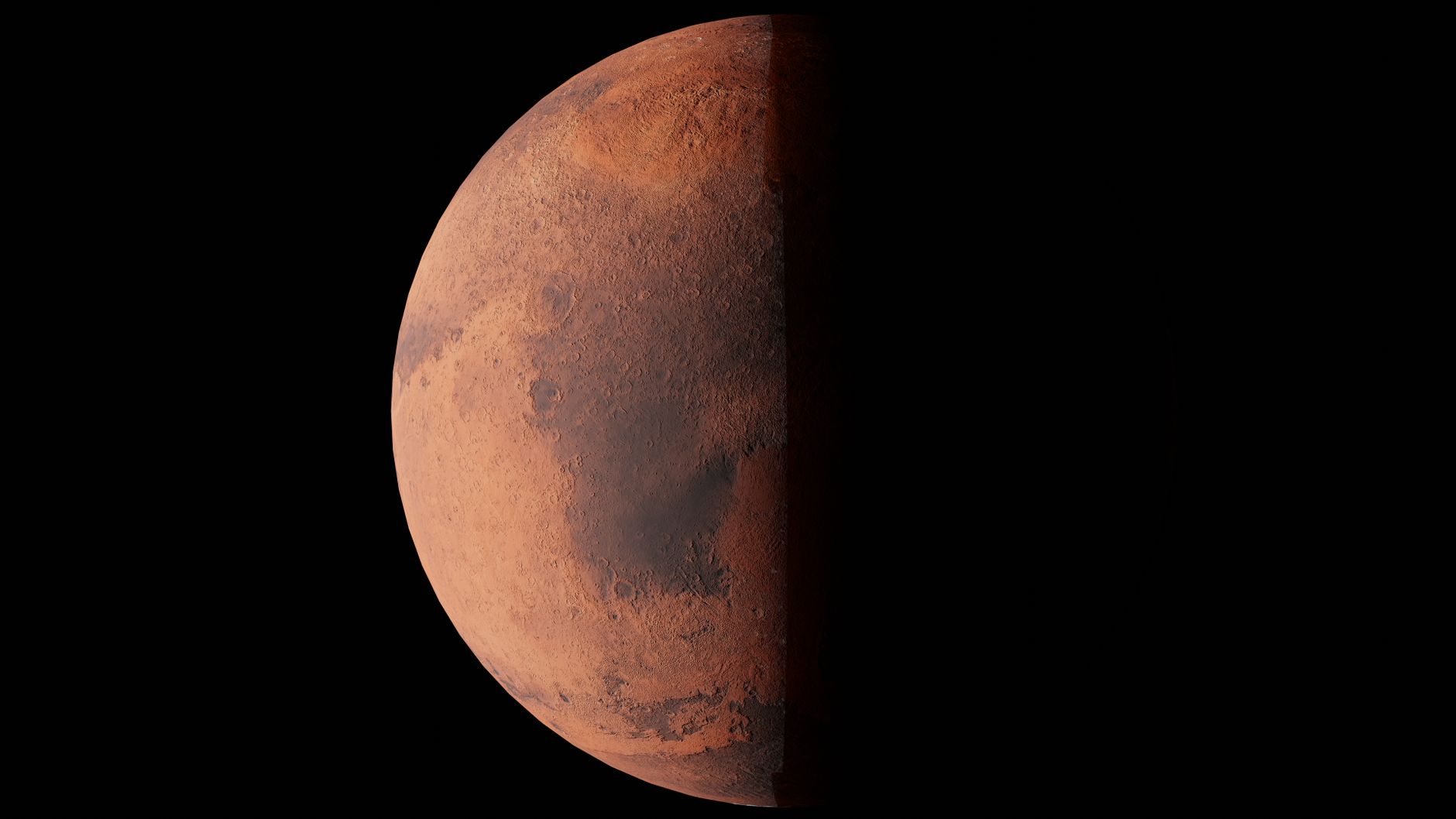
No spacecraft has managed to bring back a purposefully gathered sample of Mars to an Earth laboratory. China’s upcoming Tianwen-3 mission aims to change that by executing a series of operations that no other mission has completed in succession at Mars: gathering material, sealing it, launching it from the surface, rendezvousing with another spacecraft in orbit, and transporting it back to Earth.
A 2025 article in Nature Astronomy, led by Tianwen-3 chief scientist Hou Zengqian, outlines a goal of returning at least 500 grams by around 2031. The China National Space Administration confirmed the plan to launch around 2028 and return samples circa 2031 in an agency announcement made in April 2026.
This represents a mission timetable, not a record of hardware that is ready. The document details the planned architecture and scientific program; it does not assert that every rocket, spacecraft, and containment system is prepared for flight.
Mars rocks are already on Earth but lack their original context
Martian meteorites have arrived on Earth autonomously. Their composition confirms them as fragments of Mars, but a collision ejected them from locations that were not documented before they traveled through interplanetary space and descended through Earth’s atmosphere. Scientists can scrutinize these rocks, but they often cannot link a meteorite to a specific outcrop, adjacent layer, or sampling decision on Mars.
Robotic laboratories have analyzed Martian soil and rock on Mars. Curiosity has heated powdered samples using onboard instruments. Perseverance has drilled chosen cores and sealed them in tubes for potential future return. None of those tubes have left Mars.
Bringing back a documented sample expands the scope of potential research. The European Space Agency’s overview of sample return emphasizes that Earth laboratories can utilize instruments that are too large or complex for a rover, compare results across different facilities, and preserve material for techniques that are not yet developed. The field context of the sample is what allows those measurements to become a geological history instead of just a catalog of chemical abundances.
Tianwen-3 divides into two launches: a surface mission and a return mission
The displayed plan involves two spacecraft stacks. The Orbiter-Returner Combination would journey to Mars and remain in an approximately circular orbit roughly 350 kilometers above the planet. The Lander-Ascender Combination would carry the landing platform, a Mars ascent vehicle, and a small helicopter.
On the Martian surface, a robotic arm would gather material within approximately 1.5 meters of the fixed lander. A drill is designed to reach two meters into the ground, while the helicopter would collect rocks that lie beyond the arm’s reach. The mission team suggests these three methods to acquire surface material, subsurface material, and samples from multiple locations near the landing zone.
The container would subsequently be placed into the ascent vehicle. This rocket must depart Mars and enter an orbit accessible to the waiting spacecraft. The orbiter-returner must locate the ascending vehicle or sample container, approach it, capture the sealed material, and transfer it into the system that will return to Earth.
None of those stages can be replaced by another. A successful landing without a successful ascent leaves the sample on Mars. A clean launch into the incorrect orbit may leave both operational spacecraft unable to rendezvous.
The rendezvous must be autonomous
Mars is too distant for real-time piloting. Radio signals take minutes to traverse the distance, and the delay varies as the planets move. By the time a ground controller detects an error during close approach and sends a correction, both vehicles would already be elsewhere.
Hence, the rendezvous relies on onboard navigation, sensing, and guidance. The vehicles must determine their relative positions, safely decrease the distance between them, and accomplish the capture without ongoing control from Earth. NASA’s description of its own proposed architecture refers to the same type of Mars-orbit capture as an autonomous operation and illustrates why Mars Sample Return has been approached as a campaign rather than just an ordinary mission.
China has pertinent experience from the Chang’e lunar sample-return missions, which employed ascent vehicles and automatic rendezvous in lunar orbit. However, Mars alters the challenge: it is further away, the surface launch follows atmospheric entry and landing, and the hardware must remain operational throughout a mission that exceeds three years.
A sealed container safeguards the science and Earth
The material brought back must be shielded from contamination by Earth. A stray terrestrial organic compound or microbe could muddle the quest for Martian chemistry, especially when assessing whether a faint signal might be of biological origin.
Containment also functions in the opposite direction. Material from Mars must not be released into Earth’s environment prior to evaluation. The Tianwen-3 team asserts that returned samples would be processed at a designated facility featuring ultraclean and biocontainment zones. A 2026 mission presentation categorizes Tianwen-3 as a Category V restricted Earth-return mission under the planetary-protection framework set by the Committee on Space Research.
This presents a challenging equilibrium. The container must prevent terrestrial material from entering, stop any unassessed Martian material from escaping, and maintain the integrity of the material.