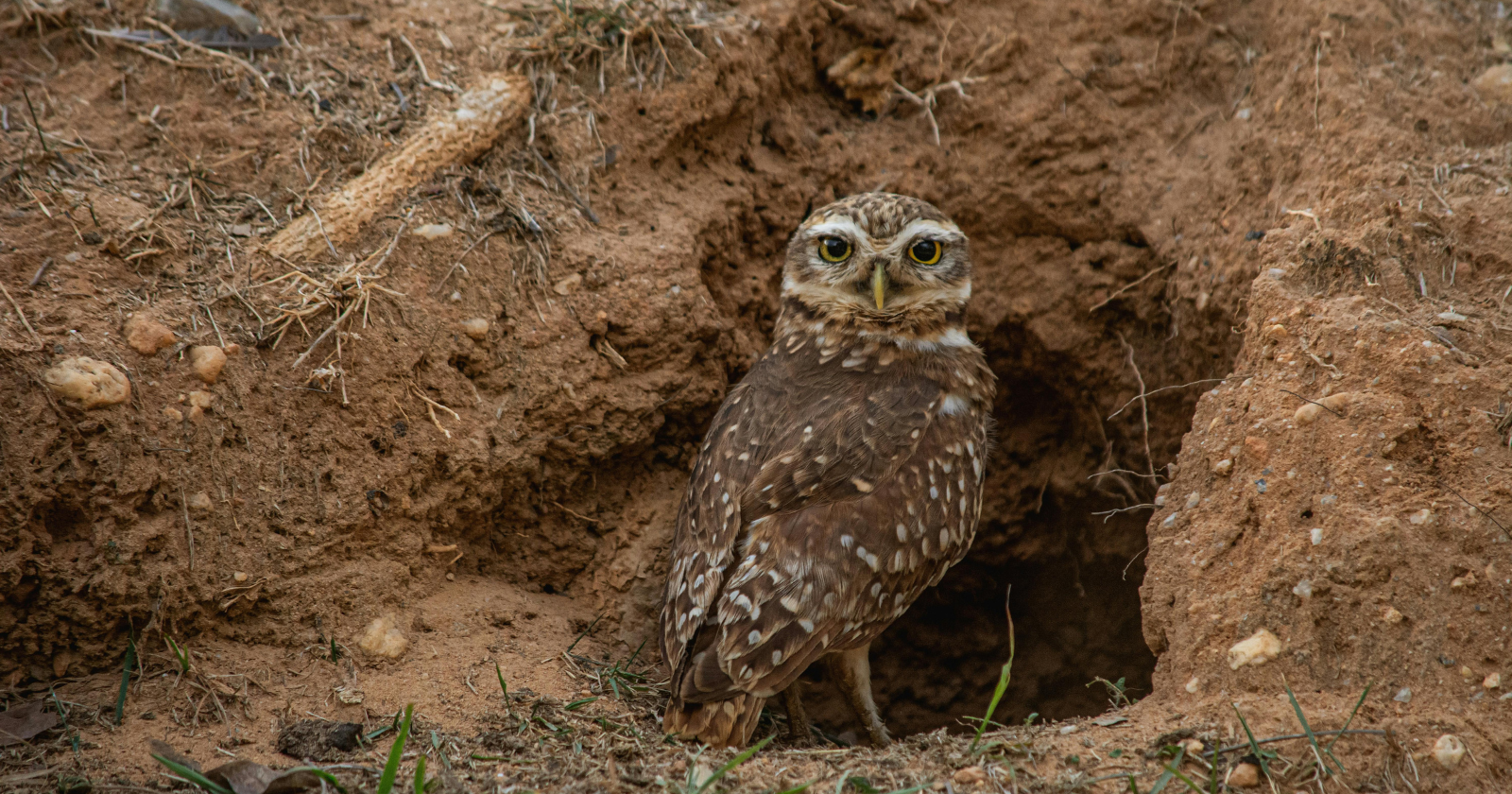
The burrowing owl is an exceptional species that challenges conventional owl perceptions. Measuring only nine inches in height, with elongated legs, it flourishes underground rather than in trees, utilizing tunnels created by animals such as ground squirrels and prairie dogs. This owl is diurnal and prefers flat, open terrain for its habitat, ensuring unobstructed sightlines to detect potential dangers.
For over a century, Arizona has systematically diminished these habitats, starting with the extermination of burrowing mammals, followed by the conversion of farmland, and now the paving over of deserts for residential developments and solar farms. When a housing project in the Phoenix area endangered a colony’s habitat in 2025, the organization Wild at Heart Raptor Rescue confronted the task of securing a new home for the displaced owls. Their standard relocation destinations—farmlands—were also disappearing.
A surprising solution emerged from Longroad Energy, which made available approximately 250 acres within its Sun Streams solar complex near Tonopah. Greg Clark, the burrowing owl coordinator for Wild at Heart, took the chance for a large-scale relocation.
In March 2025, the rescue team moved nine pairs of owls and one solitary male from the housing project site to the new area. The owls were placed in 40 artificial burrows, crafted according to Wild at Heart’s specifications, featuring the four-inch entrances preferred by the owls.
Relocating a burrowing owl is difficult due to its robust homing instincts. Thus, the new relocation strategy mirrored a witness-protection program: pairs were initially kept under netting to prevent them from returning to their previous homes, nightly lights attracted insects for nourishment, and thawed mice were provided daily, with Longroad financing the feeding and monitoring throughout the breeding period.
The relocation was a success: within a month, all female owls had laid eggs. By June, 36 chicks had hatched, with 29 eventually fledging. This marked a record-breaking achievement for the nonprofit regarding such a scale of relocation. The owls gradually became self-sufficient, as indicated by droppings loaded with insect remains.
The solar farm location proved to be perfect for burrowing owls thanks to its open, flat, and minimally vegetated landscape, which provides vast visibility. Additionally, the solar panels offer shaded spots, and the surrounding vegetation attracts insects, creating an appealing habitat for the owls. The drip lines from the panels further promote the growth of plants, sustaining insect populations that the owls consume.
The initiative has grown to include advanced monitoring, employing motion-activated cameras to observe the active burrows, while a pilot project called the Mesquite Wildlife Oasis is being developed to establish natural food sources for the owls through gravity-fed irrigation to cultivate desert flora.
Despite the achievements in 2025, long-term sustainability remains unproven. While the development of solar farms is contributing to habitat loss for the owls, it also offers a possible solution. The difficulty lies in balancing the ecological effects of solar installations with the conservation prospects they offer. If successful, solar farms could evolve into sustainable habitats for owls, transforming these energy projects into vital asset in the preservation of burrowing owls in the West.