A newly identified coronavirus found in a Brazilian bat adds further evidence to the hypothesis that the Sars-CoV-2 coronavirus, responsible for the Covid-19 pandemic, naturally evolved in bats, negating the debated assertion that it was produced in a Chinese laboratory.
One of the pivotal traits of Sars-CoV-2 that contributed to its high transmissibility is the presence of a furin cleavage site (FCS) on its spike proteins. This characteristic allows the spikes to attach to the enzyme furin protease, which is ubiquitous in the body, facilitating the cleavage of spike proteins – a mechanism that aids the virus in merging with and infecting cells.
Although the FCS had been identified in other coronaviruses, some scientists deemed its occurrence in Sars-CoV-2 atypical. The prevailing theory posited that Sars-CoV-2 transitioned from bats to humans, potentially within the Wuhan wet markets, yet the FCS had not been documented in other bat-derived Sars-related coronaviruses previously. In early 2021, this spurred the alternative “lab leak” theory, positing that the virus may have emerged from a Chinese laboratory.
‘It is easy to see why doubt persists,’ comments Markus Hoffmann, one of the researchers who highlighted the significant role of the furin cleavage site for Sars-CoV-2 infection at the German Primate Center. ‘The outbreak originated in Wuhan, a city with a virology laboratory specializing in bat coronaviruses. Furthermore, earlier research proposals considered augmenting bat viruses with multibasic [made up of various amino acid residues] cleavage sites. However, these circumstances might be coincidental rather than indicative of engineering.’
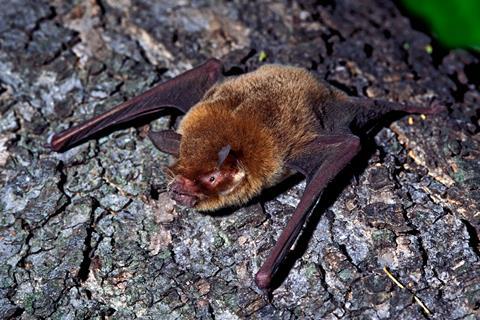
Currently, an international research team has unveiled a previously unrecognized coronavirus in a Parnell’s moustached bat (Pteronotus parnellii) native to the Americas. Upon sequencing its genome, they classified it as a betacoronavirus, which is among the main families of coronaviruses, including Sars-CoV-2 and Mers-CoV, known to infect humans.
Nevertheless, while the Brazilian coronavirus species is phylogenetically unique from recognized betacoronaviruses, residing in its own subgenus and only distantly related to Sars-CoV-2, the team found that it also possesses an FCS. Notably, the four-amino-acid sequence of its FCS varies from that in Sars-CoV-2 by just one amino acid.
‘What our research indicates is that there remains a vast array of diverse coronaviruses in nature that we know very little about,’ states Kosuke Takada from the University of Osaka, Japan. ‘Our discovery merely demonstrates that a functional furin cleavage site can exist in a bat betacoronavirus found in nature that is phylogenetically remote from Sars-CoV-2.’ However, the researchers emphasize that definitive conclusions cannot be drawn from their findings regarding the origins of Sars-CoV-2.
‘While this study does not offer direct evidence for or against a natural origin of Sars-CoV-2 in relation to the multibasic cleavage site in the spike protein, it underscores that multibasic cleavage sites in spike proteins can naturally occur in various coronaviruses from different phylogenetic groups,’ explains Hoffman, who did not participate in the study. ‘Based on our knowledge of Sars-CoV-2 and other coronaviruses, I find a natural origin to be a plausible scenario. To me, there is currently no convincing evidence that Sars-CoV-2 was engineered in a laboratory.’
At the same time, it remains uncertain whether the newly discovered coronavirus poses any threat to humans. Although it has an FCS, this trait alone does not guarantee that it can infect humans and propagate, as noted by Takada. Other coronaviruses with FCSs are incapable of infecting humans.
Further experimental work is necessary to evaluate the zoonotic potential for the newly identified Brazilian coronavirus to transmit from bats to humans, according to Hoffman. ‘This includes tests to establish the capacity of the spike protein to bind to receptor molecules on human cells,’ he elaborates. ‘While numerous coronaviruses have been discovered in bats over the last 25 years, only a small proportion of them has spike proteins adept at binding to receptor molecules on human cells.’