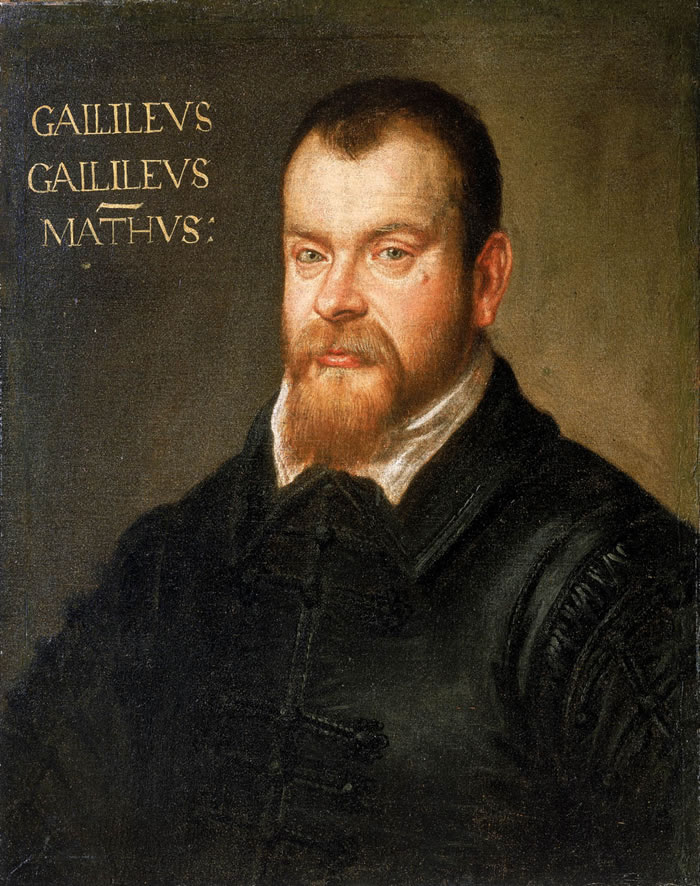
Before *Sidereus Nuncius* was published in 1610, catapulting him into the spotlight of European science, Galileo Galilei (1564–1642) was a relatively obscure mathematics professor at the University of Padua. He was recognized in Northern Italy as an exceptionally clever, somewhat proud, and contentious academic with a clear penchant for the finer things in life. The position of mathematics professor ranked low in the hierarchy of academia and offered modest compensation. Galileo had always lived above his financial means, and funds were limited. This situation worsened in the early 1600s when he had to provide for his mistress, Marina Gamba, and their three children—Virginia (b. 1600), Livia (b. 1601), and Vincenzo (b. 1606). Nevertheless, his financial troubles predated the establishment of his family.
Upon starting his role in Padua in 1592, Galileo was already facing economic strain. After his father, Vincenzo Galilei, passed away in 1591, Galileo, as the eldest surviving son, became the head of the family and was financially accountable for his three younger siblings. His youngest brother, Michelangolo, was a professional musician who was often broke and depended on his elder brother for support. Both of Galileo’s sisters needed dowries to get married, prompting Galileo to provide the necessary funds. The young professor found himself in a precarious financial position.
To alleviate his monetary issues, Galileo adopted a common practice among academics by taking in the sons of affluent families as lodgers, offering them room, board, and private lessons for appropriate payment. In 1597, he embarked on a new venture, creating and producing a proportional compass, also referred to as a military compass or a sector in England, which he successfully marketed for a substantial profit.
While the design originated from Galileo, the actual manufacturing was executed by instrument maker Marc’Antonio Mazzoleni (b.?–1632). Galileo recruited Mazzoleni from the Arsenale in Venice to be his personal instrument maker in 1597. By 1599, Mazzoleni, along with his wife and daughter, moved into Galileo’s home, with his wife taking on the roles of cook and housekeeper. Mazzoleni remained with Galileo for four years but continued to assist him with instrument making even after relocating. He maintained this collaboration after Galileo returned to Florence in 1610. Mazzoleni contributed to the production of various instruments, such as hydrostatic balances, air thermometers, magnets, and assorted drawing compasses for engineers and architects, reportedly crafting at least one hundred proportional compasses for Galileo.
The creation and distribution of his proportional compass turned out to be a highly profitable venture for Galileo. In addition to selling the instrument at a handsome profit, he provided buyers with instruction on its numerous uses. He also authored a handbook on its operation for the new owners. This manual was a handwritten manuscript lacking illustrations and was essentially ineffective without a reference instrument. By selling the manuals alongside the instruments instead of publishing a printed edition, he ensured that no one could easily access his designs and jeopardize his business. However, in 1606, Galileo did release a limited printed version of the manual titled *Le operazioni del compasso geometrico et militare*, igniting one of Galileo’s first of many fierce disputes.
Baldassarre Capra (1580–1626), the son of Count Marco Aurelio Capra, an impoverished noble, was a physician and astronomer who had studied medicine in Padua. Capra received private math lessons from Simon Marius (1573–1625) and they observed the 1604 supernova together. Capra criticized Galileo in his pamphlet *Consideratione astronomica circa la nova et portentosa Stella che nell’anno 1604 a dì 10 ottobre apparse* for failing to recognize Capra’s precedence in observing the supernova during his three university lectures on the subject. Galileo retaliated anonymously in his characteristic vigorous manner. The scene was set for a significant confrontation.
In 1602, Capra and his father assessed Galileo’s proportional compass, and in 1605 he borrowed an instrument from his neighbor, Giacomo Alvise Cornaro, an aristocratic intellectual and friend of Galileo. Capra also visited Mazzoleni’s workshop, where he dedicated time to studying the instrument. In 1607, Capra published the tract *Usus et fabrica circini cuiusdam proportionis, per quem omnia fere tum Euclidis, tum mathematicorum omnium problemata facile negotio resolvitur*, effectively a Latin translation of Galileo.