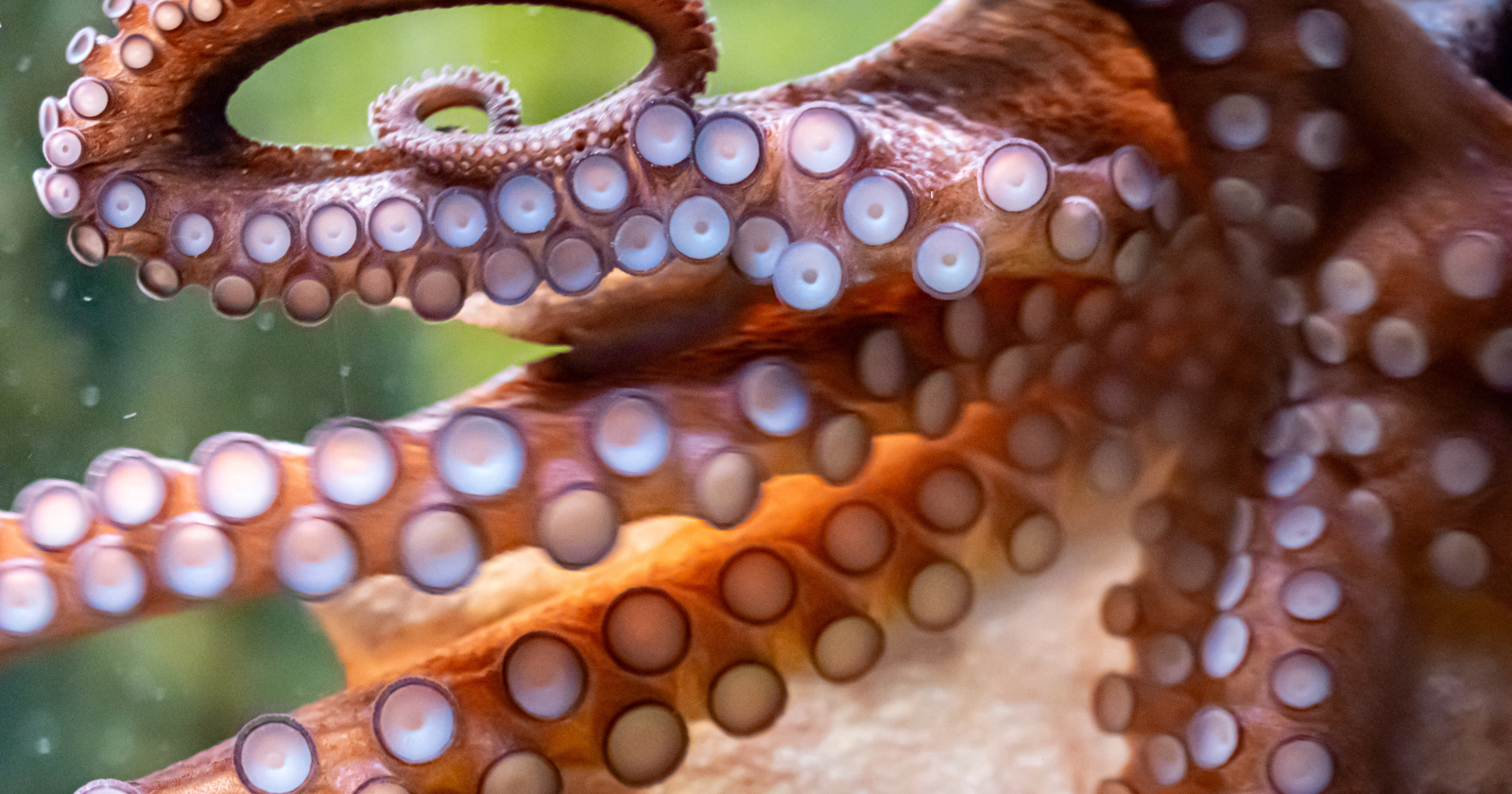
About 130 kilometers to the southwest of Monterey, California, a gentle ridge on an extinct underwater volcano known as Davidson Seamount features one of the most concentrated populations of octopuses ever recorded. This location, referred to as the Octopus Garden by researchers at the Monterey Bay Aquarium Research Institute, lies 3,200 meters—or approximately 10,500 feet—beneath the Pacific’s surface, positioned at a depth where sunlight is absent and the water stays just above freezing.
In a single high-definition video survey of the area, 5,718 octopuses were counted within a 2.5-hectare area of the seafloor. Scientists at MBARI estimate that the entire nesting region, encompassing about 1.29 square miles, could contain more than 20,000 individuals simultaneously. Senior scientist Jim Barry has labeled it the largest known congregation of octopuses found anywhere on the planet, whether in deep-sea or shallow waters.
Streams of octopuses in the shadows
The discovery of the garden was almost serendipitous. In October 2018, an expedition organized by NOAA’s Monterey Bay National Marine Sanctuary and the Ocean Exploration Trust deployed a remotely operated vehicle from the research vessel Nautilus over a section of seafloor adjacent to Davidson Seamount. The pilots noted shimmering water above a crack, a visual indicator of warmer fluids mixing with the nearly freezing water, and moved in for a closer examination.
According to Scientific American’s report on the finding, they initially spotted a pair of octopuses, followed by “streams of 20 or more octopuses nestled in cracks” along the rocky surface, each female curled protectively around a clutch of eggs. Subsequent dives by MBARI’s ROV Doc Ricketts verified that this clustering was more extensive across the ridge.
A warm refuge in the icy darkness
The surrounding water temperature near Davidson Seamount is approximately 1.6 degrees Celsius, or 34.9 degrees Fahrenheit, which is typically cold enough to slow biological processes significantly. However, within the rock crevices where the octopuses reside, temperatures were recorded at nearly 11 degrees Celsius, or roughly 51.8 degrees Fahrenheit, warmed by fluids seeping through cracks in the extinct volcano.
This pattern was intentional. Female pearl octopuses, Muusoctopus robustus, consistently congregated in the warmest available crevices rather than being evenly spread across the ridge, a discovery published by the research team in Science Advances in August 2023, titled “Abyssal hydrothermal springs — cryptic incubators for brooding octopus.” Led by Barry, the authors positioned the warm seeps as a previously unrecognized aspect of deep-sea octopus reproduction.
How warmth enhances octopus egg development
Octopuses, like all cephalopods, are ectothermic: their metabolic rates and the development speed of embryos in their eggs correlate with the surrounding water temperature rather than being internally managed. In the typically frigid water of the abyssal seafloor, this relationship hampers a brooding octopus. Using comparative data from other cold-water octopus species, MBARI researchers estimated that eggs at Davidson Seamount’s temperature would take approximately five to eight years, “if not longer,” to develop and hatch.
Conversely, eggs located in the warm seep crevices were observed hatching in less than two years. Researchers note that the seep water appears to accelerate the octopuses’ metabolism, subsequently hastening the biochemical growth of embryos, significantly reducing the time that eggs are vulnerable to predators on the seafloor. This five-to-eight-year estimate is comparative, not a direct measurement taken at the same location without the warm water—an important distinction emphasized by MBARI’s own release regarding the 2023 findings. The foundational biology linking temperature-dependent metabolism in cold-blooded species is well established in cephalopods in general, yet the precise hatching timeline this specific population would encounter without the seeps has not been observed directly.
Observing the same mothers over three years
Verifying any of this required more than a single dive. MBARI’s monitoring program revisited the site multiple times over about three years, employing a 4K camera mounted on Doc Ricketts to take detailed pictures of individual brooding females, enabling researchers to recognize them on subsequent visits by their scars and other distinguishing features. This allowed scientists to monitor how long specific mothers remained with a clutch and approximately when the eggs vanished, likely after hatching.
Temperature and oxygen sensors installed directly within the nesting crevices provided the seep-water data necessary to support the mechanism, while a specially designed census system counted and mapped nests throughout the core area of the site. Some inquiries remain unresolved, including how the octopuses initially identify suitable warm crevices before beginning to brood. Barry has suggested the