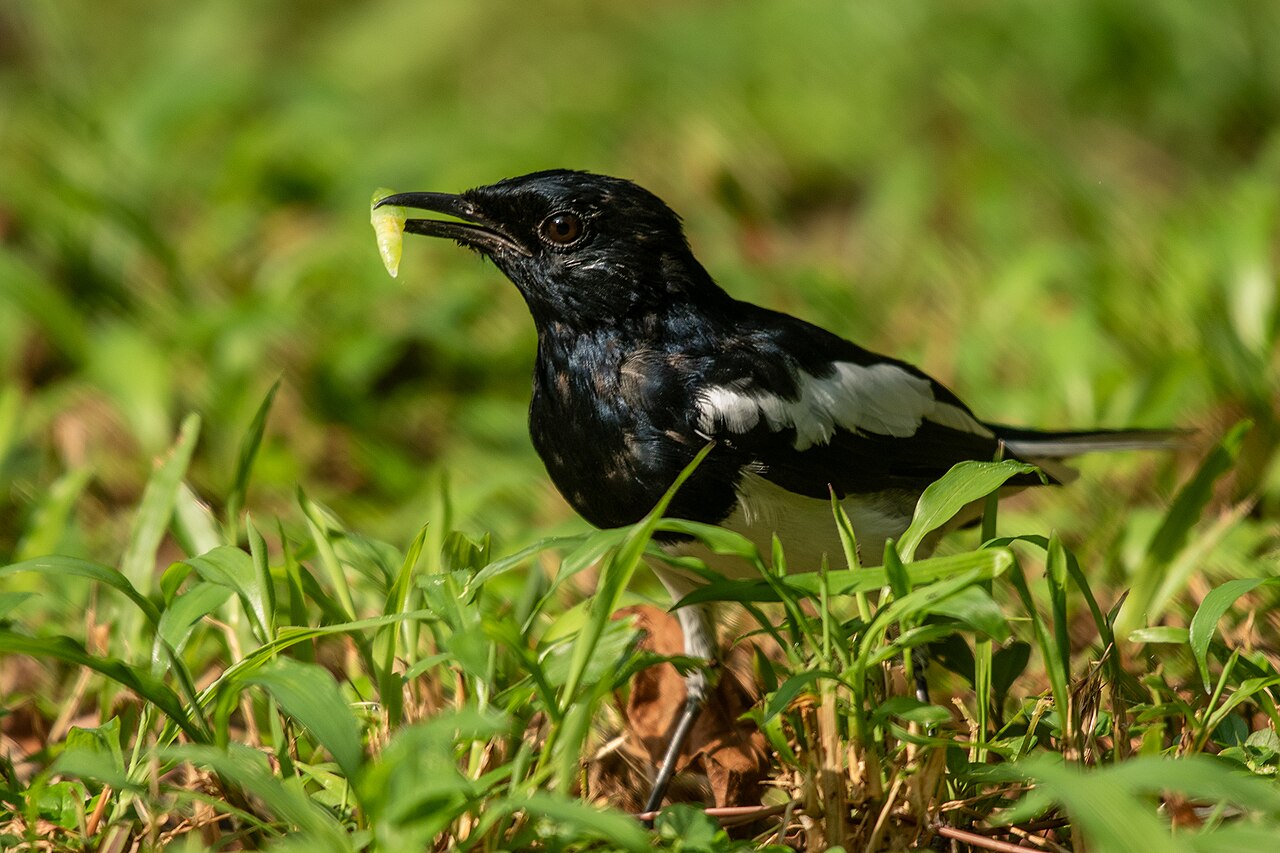
**Chatham Island Black Robin: A Success in Conservation with Continuing Challenges**
In 1980, the Chatham Island black robin faced a dire situation with only five birds left, including a lone breeding pair known as Old Blue and Old Yellow. Jump ahead 46 years, and roughly 350 adults now reside on two predator-free islands in the Chatham archipelago. All of these robins are descendants of Old Blue, who is key to the survival of the species. This incredible recovery led to the Chatham Island black robin, or Karure, being awarded the honor of New Zealand’s 2026 Bird of the Year, revealed by Forest & Bird on September 21, 2026. The Chatham Islands Landscape Restoration Trust led the initiative to celebrate the robin’s extraordinary return. The Chatham Islands, located around 800 kilometers east of New Zealand’s mainland, are home to 20% of the country’s threatened bird species. Currently, the black robin’s population is restricted to two nature reserves within this group.
**A Minuscule Population on the Edge of Extinction**
The decline in the black robin’s population was carefully recorded as it was small enough to permit individual tracking. Human settlers brought invasive species like rats and cats to the area, pushing the black robins to near extinction by 1900, with their survival limited to Little Mangere Island. A survey conducted in 1972 identified merely 18 black robins remaining, dwindling to seven by 1976. These remaining birds were moved to Mangere Island, where an afforestation project introduced 120,000 trees to create a suitable environment. Yet, by 1980, the population had shrunk to just five individuals, including the sole fertile female. The species’ future rested on the fate of Old Blue and Old Yellow, their only breeding pair.
**Cross-Fostering: A Groundbreaking Conservation Method**
To enhance reproductive success, the New Zealand Wildlife Service staff applied cross-fostering techniques, transferring black robin eggs for incubation and rearing by Chatham Island tits. This innovative conservation strategy established a model for saving endangered birds worldwide. The program’s achievements stemmed from the collaboration between the breeding couple and the foster species, significantly bolstered by Old Blue’s 14-year lifespan. This prolonged reproductive span was crucial for the species’ revival, with all current black robins tracing their lineage back to her.
**Challenges Remain Despite Population Increase**
Despite an upturn in the population to about 350 individuals, the black robin is still classified as Threatened–Nationally Critical. Three main obstacles hinder further improvement in their status:
1. **Restricted Habitat:** The two small islands are nearly at full capacity. Expanding requires identifying a new habitat that fulfills specific needs—lowland coastal forest, adequate canopy cover, plentiful invertebrate food, and free from predators like cats, rats, and possums. A previous effort to establish a population on Pitt Island was unsuccessful, likely due to competition from introduced mice.
2. **Predation Threat:** An accidental introduction of predators to the current islands could lead to disastrous consequences, a considerable risk given the historical context that nearly eradicated the species.
3. **Genetic Vulnerability:** The limited genetic diversity resulting from their near extinction presents a concern; a singular disease outbreak could obliterate the population. This genetic homogeneity reveals a continual vulnerability that is not easily addressed.
The designation of Bird of the Year to the Chatham Island black robin highlights both a conservation victory and the ongoing necessity for habitat protection and genetic diversification. This species’ survival story shows that while recovery from a critical bottleneck is feasible, persistent efforts are vital for ensuring its future.