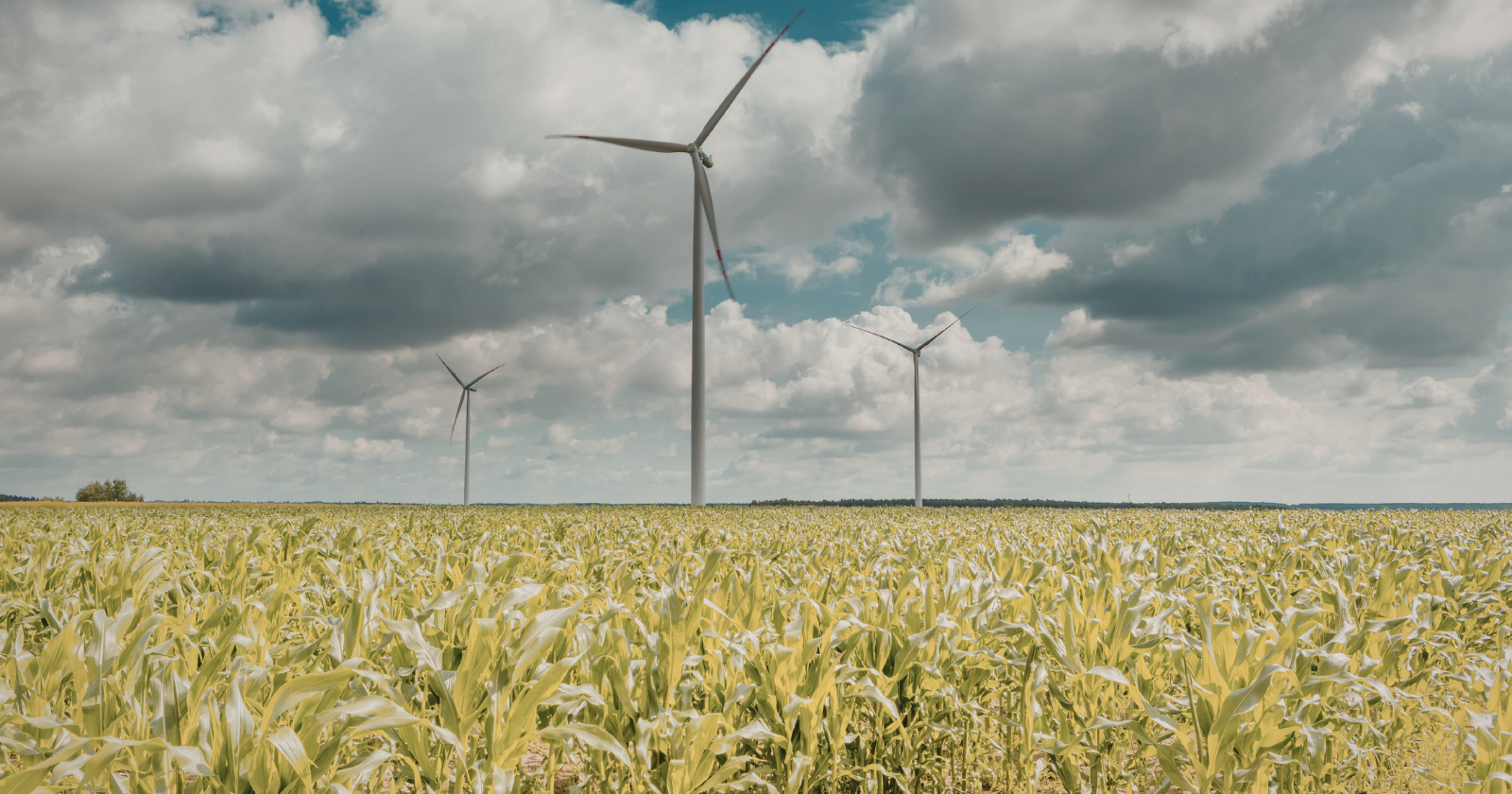
Drive through northern Iowa, and the skyline is dotted with slowly rotating blades — over 6,000 turbines now populate the state’s corn and soybean regions, with Iowa sourcing roughly 60 percent of its electricity from wind, a larger proportion than anywhere else in the nation.
Beneath those turbines, the meaning of farming has quietly evolved. For an increasing number of Iowa landowners, the most dependable yield from their land isn’t cultivated but rather harvested from the sky.
The mathematics that shifted
The driving force behind this shift is harsh mathematics, which every farmer in the state can articulate.
Commodity prices can fluctuate drastically and frequently remain lower than production costs — some years, it costs more to produce a bushel of corn than the market price. A wind turbine, however, overlooks all these complications. A landowner leasing space for one generally earns between $7,000 and $10,000 annually per tower, with contracts lasting from 20 to 40 years and typically increasing slightly with inflation.
Moreover, the turbine makes minimal impact on the farm. Each occupies merely an acre or two — about the size of a couple of garages — leaving the remainder of the field fully cultivatable. Thus, the land can, in theory, perform both functions simultaneously: crops grow below, electricity generated above.
Why some abandon crops altogether
Here’s the twist that transforms an additional income source into a career shift. Once the turbine revenues are sufficiently substantial and reliable, farming may begin to seem like the precarious, low-profit burden it has truly become — prompting some landowners to cease farming themselves.
Instead, they lease the farmland to other farmers, generating two income streams: turbine payments from the energy company and ground rent from those planting corn. The fifth-generation farmer transitions from being an active farmer in the day-to-day, sunrise-to-tractor sense to becoming a landlord for both the wind and a neighbor. Some nonchalantly refer to themselves as “wind farmers,” with the wind being the crop they actually cultivate.
The self-identifications differ by region and are quite revealing. In wind-rich areas of Kansas, farmers are said to refer to the turbines as their “second wife,” since the consistent turbine income fills the gap that a farm wife’s town job once did — bridging the divide between the land’s earnings and the family’s necessities.
The funds that preserved the farm
For many families, wind income isn’t merely an improvement in lifestyle; it’s the reason their farm still exists.
This pattern repeats consistently in Iowa. Landowners have utilized turbine payments to settle equipment loans, eliminate old debts, and sustain themselves during downturns — the drought years, the tariff years, the periods when crop prices plummet — that have historically led to foreclosures. One widow in central Iowa, burdened with hundreds of thousands of dollars in farm debt after her husband’s passing, has been gradually reducing it with approximately $35,000 annually from just a few turbines on her property. Statewide, wind leases funnel around $20 to $30 million a year into the pockets of private landowners in Iowa.
This is income that arrives regardless of weather conditions, China’s tariff policies, or commodity market fluctuations. In a profession characterized by elements beyond the farmer’s control, the turbine is among the rare sources that offer consistent payments whether in a drought or a bumper crop year.
What “farmer” signifies today
An authentic debate is simmering beneath all this, warranting serious consideration. Critics express concerns over turbines dividing productive farmland, the aesthetic of the terrain, long leases that can bind land for decades, and who genuinely reaps the benefits when a distant energy company owns the turbine. Not every farmer desires a turbine, and not every county welcomes a wind farm; these disputes unfold at rural zoning meetings throughout the Midwest.
However, for the farmers who consented, the allure is difficult to contest, as it addresses the oldest challenge in agriculture: reliable income. Farming has always involved taking risks against the elements — too much rain, too little, excessive heat, excessive cold. The wind farmer has, in a way, made peace with the elements by selling it a task. The same open, windswept plains of Iowa that can make the weather harsh are precisely what allows the turbines to spin.
Thus, the fields continue to produce corn, primarily — just not always for the individual whose name appears on the deed. That individual might be engaged in an endeavor their great-great-grandfather could never have envisioned when he first cultivated the prairie: standing at the boundary of the family land, observing another’s tractor tending to the rows, and being compensated, primarily, for the wind.