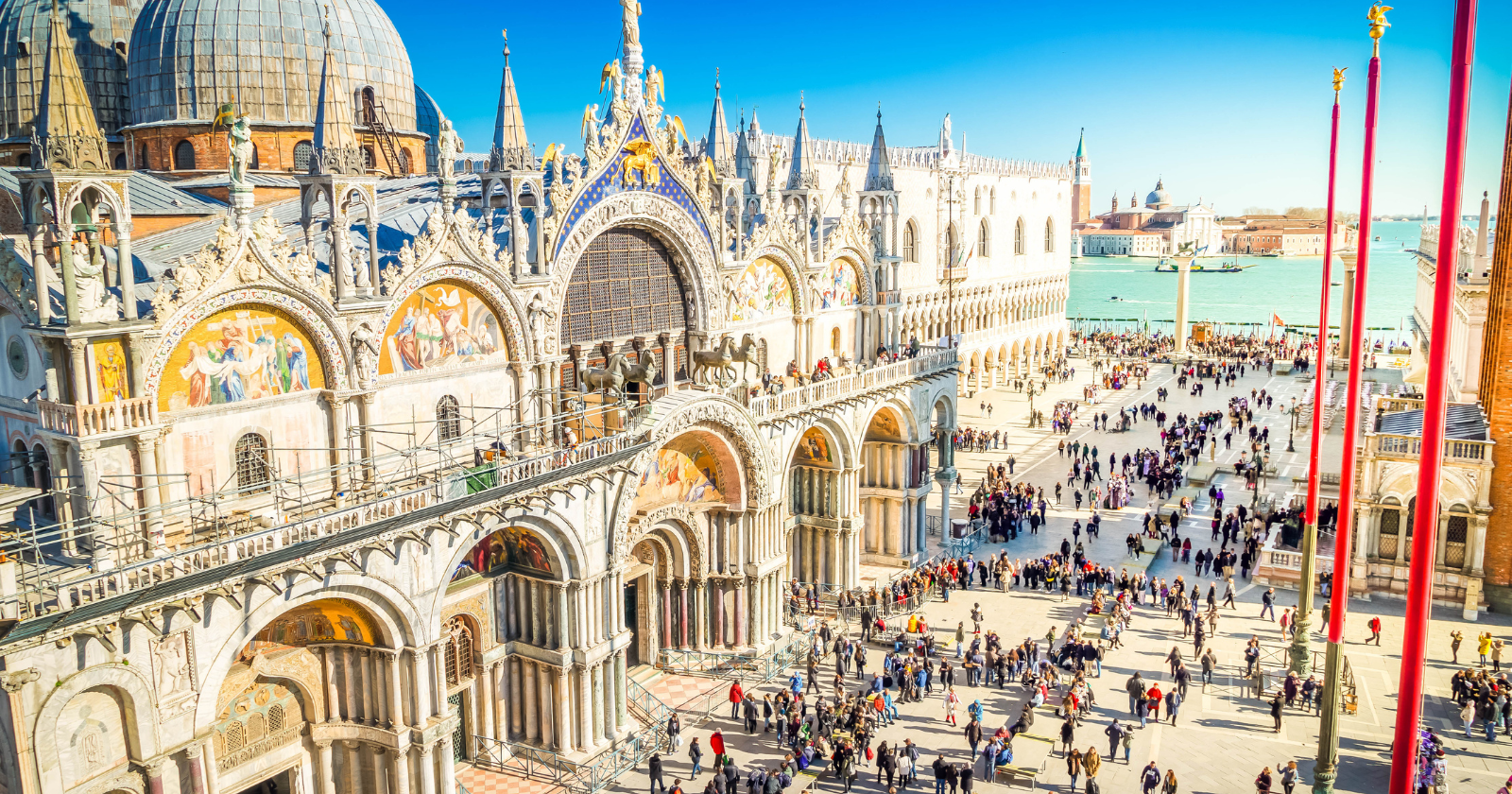
On the morning of April 25, 2024, visitors disembarking from the train at Venice’s Santa Lucia station encountered a unique requirement: to enter the city, they needed a ticket — not for a museum or a site, but for the streets.
Attendants in bright yellow vests were present at the station to verify QR codes. Day travelers who hadn’t paid a 5-euro entry fee, and couldn’t demonstrate an exemption, were out of compliance. Venice had arguably become the world’s first city that mandates a reservation for entry.
A city with a greater number of beds for tourists than residents
The fee was introduced in response to a truly alarming statistic. The previous year, Venice reached a concerning benchmark: the quantity of tourist accommodations in its historic center surpassed the number of local inhabitants for the first time.
The figures are striking. Fewer than 50,000 individuals currently reside in the old city of canals; on an average day, it attracts approximately 40,000 tourists, and throughout the year, an estimated 25 to 30 million visitors flock in — mostly day-trippers who come, snap photos of St. Mark’s Square, indulge in gelato, and depart without spending the night. Locals witnessed their neighborhoods becoming desolate: the neighborhood butcher shuts down, family homes transform into short-term rentals, and the city drifts toward becoming, as one resident observed, a theme park.
The entry fee was designed to counter this trend — to gently dissuade day-trippers from visiting on the busiest days and, at the very least, to properly account for their presence.
How the entry system functions
The initiative is more limited than “pay to enter Venice” might suggest, and the specifics are important.
The fee applies solely to day-trippers, only on select peak days (29 of them in 2024, predominantly weekends and holidays), and only from 8:30 am to 4 pm — arrive in the evening and entry is free. Anyone staying in a hotel is exempt, as they are already subject to a nightly tourist tax; the same goes for residents, property owners, students, workers, and individuals from the surrounding Veneto region. Everyone over 14 who does not meet an exemption downloads a QR code as verification, and inspectors conduct random checks at entry points. Those caught without one face fines ranging from 50 to 300 euros.
This complex web of exemptions is why only about 15,700 individuals actually paid on the launch day, while more than 97,000 downloaded exemption codes. The paying day-tripper represents a specific, and relatively small, segment of the crowd.
The figures and the uncomfortable reality
Throughout the 29 days of the 2024 pilot program, around 485,000 individuals paid the fee, generating about 2.4 million euros. In 2025, the city extended the initiative to 54 days and increased the fee to 10 euros for anyone reserving less than four days in advance — resulting in over 723,000 paying visitors and 5.4 million euros collected.
Then comes the portion the city is less eager to publicize: it was ineffective, at least in achieving its stated goal. Venice’s own monitoring indicated that on fee days in 2024, the city actually welcomed about 7,000 more visitors daily compared to the same days the previous year. An opposition council member termed it a clear failure; a tourism economist at a local university described the fee as “completely ineffective” in reducing crowds, hindered by an excessively low price and overly broad exemptions. The entry system counted the influx. It did not mitigate it.
What the fee did accomplish was generate revenue — designated for the burdensome costs of maintaining a city built on water — and provide precise data on day-tripper numbers for the first time. It positioned Venice as a global case study. Officials report significant interest from other over-touristed locations, from Barcelona and Amsterdam to other Italian art cities, all observing to see if the first bookable city could inform their own futures.
The precedent, regardless of its effectiveness
There exists a substantial debate surrounding all this, and it is not going to dissolve anytime soon. Detractors, including many of Venice’s own residents, contend that charging admission to a living city is both disrespectful and a diversion — it treats a home as a tourist attraction, monitors arrivals through cameras and QR scans, and does nothing to address the real cause of the crisis, which is housing: the short-term rentals continually converting residents into tourists’ accommodations. By placing a ticket on the entrance, they argue, it signifies the final step in transforming Venice into a museum of itself.
Proponents counter that Venice is an exceptionally extreme case — a delicate UNESCO site with fewer than 50,000 residents hosting tens of millions of visitors — and that someone must embark on experimentation first, imperfectly, in public, while others observe. Both perspectives hold truth simultaneously.
In any case, a line has been crossed that will not be easily redrawn. For