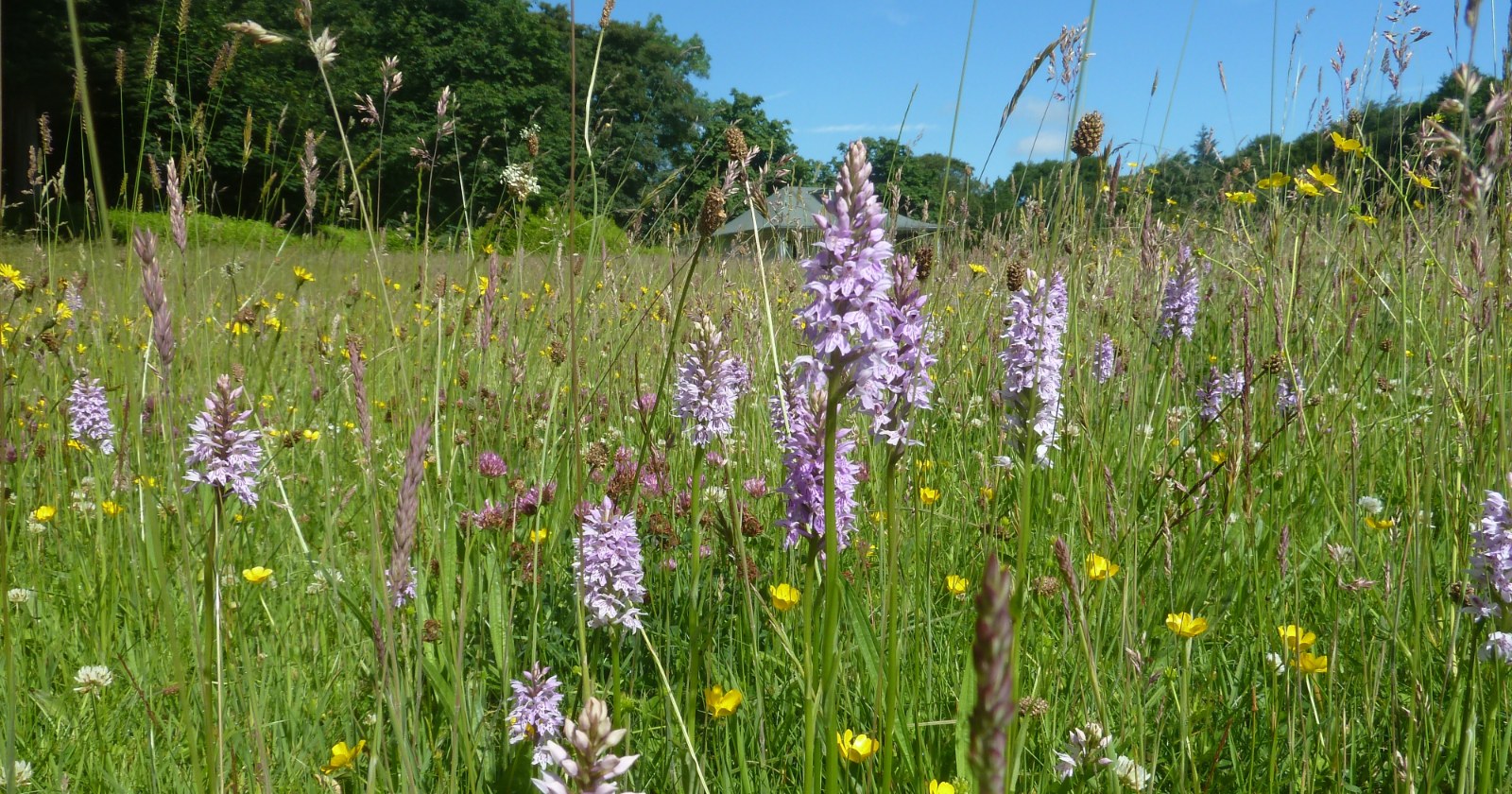
A small plot of land in North Norfolk has evolved from conventionally farmed arable ground into a vibrant wildflower meadow without any deliberate seeding, as outlined in a recent publication in Restoration Ecology. The area, known as Sayer’s Old Meadow, remained uncultivated for six years following its last harvest in 2005 and began receiving annual cuts for hay in 2011. The diversity of plants surged remarkably from 63 species in 2011 to 86 species in 2022, with new additions like orchids and yellow rattle.
The investigation, spearheaded by Carl Sayer of University College London, emphasizes a natural restoration approach that relied solely on yearly hay cutting and manual removal of ragwort. Over time, orchids flourished and yellow rattle, a parasitic species, made its appearance, affecting the ecosystem by curbing the prevalence of dominant grasses such as Yorkshire fog.
The research indicates a different recovery method without the need for seeding. The emergence of varied plant species challenges conventional practices involving seed sowing and soil alteration for meadow rehabilitation. Despite the field’s remote location, uncommon plants arrived, likely carried by the wind or animals.
This shift, occurring without clear seed sources in the vicinity, raises questions about the necessity of intervention in meadow rehabilitation and advocates for approaches that allow nature to play a more significant role. The results provide insights into cost-effective, genetically diverse restoration practices in contrast to traditional methods. Although focused on a single site, the study parallels similar natural recoveries witnessed throughout Europe, suggesting the possibility of wider ecological implications.