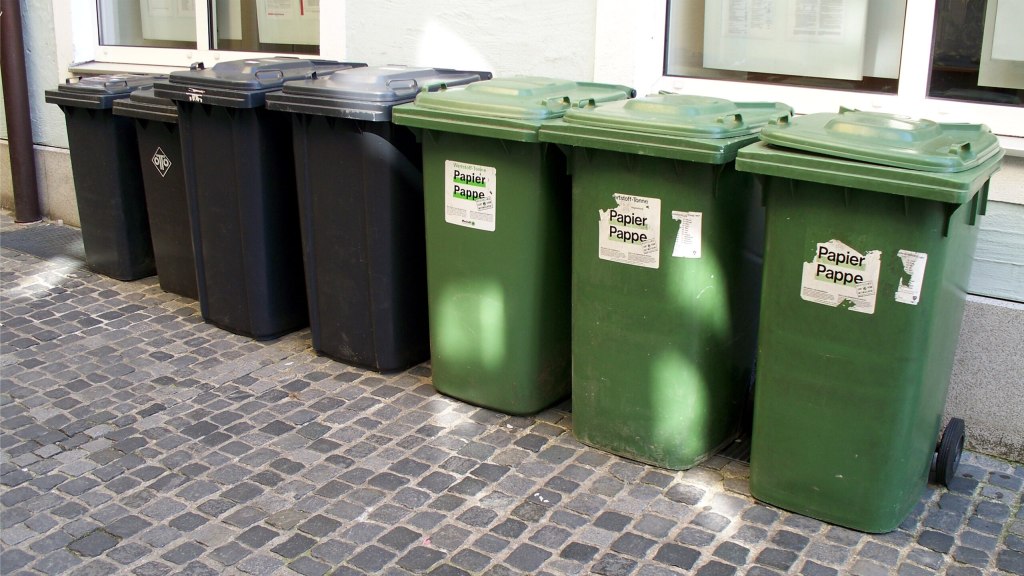
Throughout my life, the wheelie bin has transformed into the typical container for discarding household waste. With their ample capacity and ease of maintenance, these bins present a relatively sanitary choice. Their design also streamlines and decreases the expenses of collections for municipal services, necessitating only one garbage truck and one operator.
On collection days, these bins are positioned by the curb or on sidewalks. The garbage truck comes along, utilizing its mechanical arm to lift the bin and empty its contents, then sets the bin back down on the sidewalk. This presents a challenge.
I have been managing a degenerative spinal and pelvic girdle orthopedic/neurological condition for over thirty years. For the past fifteen years, walking has become progressively more challenging. As of last year, I could walk about five hundred meters with hiking poles before needing a significant break. A further decrease in mobility last autumn means that, on a good day, I can walk about ten meters unaided with considerable instability and a risk of falling. When using hiking poles or a rollator, I can cover roughly fifty meters, possibly even less. In my small apartment, I rely on my rollator over ninety percent of the time. For longer distances, I depend on my electric wheelchair. I lack the arm strength for a conventional wheelchair due to similar limitations.
My electric wheelchair, affectionately named the Mathematicus Mobile, offers a maximum speed of 6 kph and excellent maneuverability. It has greatly improved my mobility, even enabling me to travel on buses where drivers have kindly operated the ramp for access. However, challenges remain, especially on refuse collection days.
On these days, separate collections for household waste, recyclables, and waste paper take place, with bins lining the sidewalks. When positioned properly at the edge of the sidewalk, wide pathways usually do not present an issue for navigating my wheelchair. However, if bins are carelessly scattered by the garbage truck driver, maneuvering becomes problematic. I have become skilled at pushing bins aside with one hand while steering my wheelchair with the other, a technique I also apply when clearing shopping carts at supermarkets.
Major difficulties occur when sidewalks are narrow, such as the side street where I live. Bins positioned here, even if correctly at the edge, leave inadequate room for passage, forcing me onto the road. This constitutes a minor inconvenience faced by those with mobility challenges.