**Investigating the Global Renaissance Through the Perspective of Jerry Brotton**
Jerry Brotton, a prominent figure in Renaissance scholarship, is a Professor at Queen Mary University of London. His extensive portfolio exceeds conventional limits, illuminating the worldwide character of the Renaissance and its intercultural influences extending beyond Europe. Brotton’s acclaimed book, *The Renaissance: A Very Short Introduction*, encapsulates this perspective by highlighting the crucial role of global connections in shaping the Renaissance, challenging the idea that it was solely a European event.
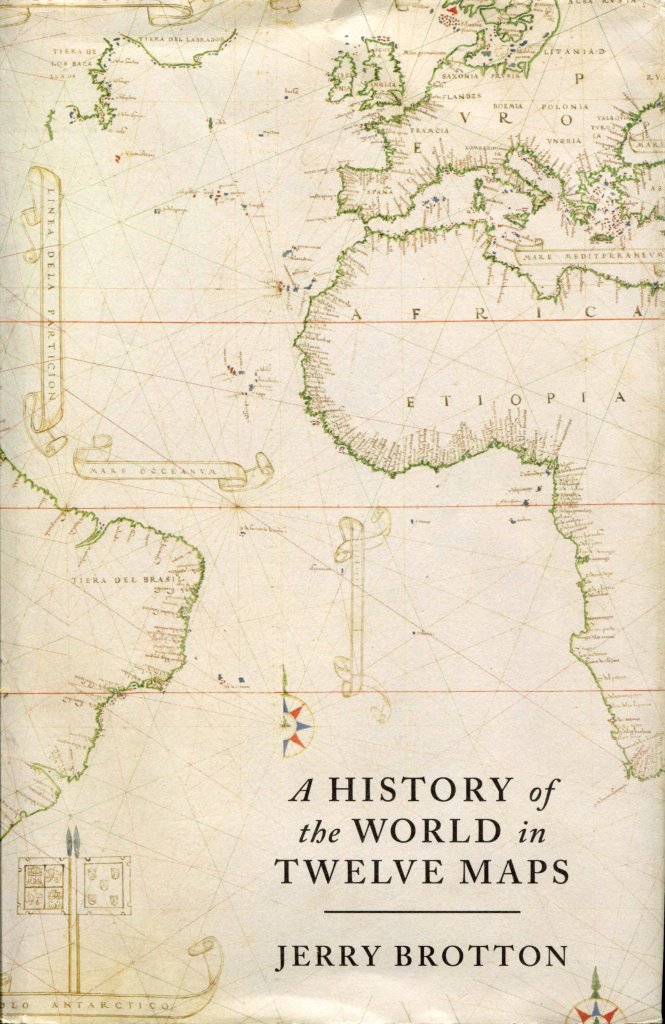
Brotton’s extensive career encompasses diverse fields, including literature, history, material culture, and commerce, with a particular emphasis on east-west interactions during the sixteenth and seventeenth centuries. His cross-disciplinary method examines these subjects through lenses of art, politics, history, and travel writing, expanding the standard interpretations of these periods. Among Brotton’s notable works is *A History of the World in Twelve Maps*, which not only achieved commercial success but also reached global audiences through its translation into twelve languages and its transformation into a BBC Radio 4 series.
One of Brotton’s significant contributions is his investigation of cartography and its historical narratives. A particularly engaging aspect of his work is his critique of the conventional map orientation with north at the top, a concept that transformed throughout history and cultures. His analyses clarify how medieval European and Islamic maps displayed different orientations — medieval maps often placed east at the top, whereas Islamic maps preferred a southern direction.
Brotton’s latest publication, *Four Points of the Compass: The Unexpected History of Direction*, builds on these ideas, initially inspired by a BBC Radio 4 series. The book begins with an intriguing reassessment of NASA’s famous Blue Marble image and evolves into a larger discussion on the historical and cultural meanings of cardinal directions. Brotton clarifies how these directions are arbitrarily defined yet inherently shaped by the sun’s path, providing insights into how these navigational concepts extended beyond geography, discovering metaphorical meanings in various cultures.
Through a Wittgensteinian perspective of “language games,” Brotton illustrates how cardinal directions acquire unique significances across differing contexts. His book explores the blend of connotations these directions hold, investigating their significance from historical, linguistic, and cultural angles. Each chapter carefully analyzes the cultural interpretations associated with east, south, west, and north, offering a wealth of historical instances, such as how the west evolved from a domain of death to a representation of new beginnings after the discovery of the Americas.
Brotton wraps up *Four Points of the Compass* by contemplating the effects of digital navigation on our perceptions of direction and location, introducing the notion of Apple’s “blue dot” as a contemporary navigational tool. The book’s visual storytelling is enriched by its vibrant illustrations, although some readers may find the artistic choice of glossy black pages contentious.
In conclusion, while Brotton’s work represents an outstanding achievement in academic commitment, the intended readership is somewhat unclear. His intricately detailed narrative provides an enthralling exploration for readers fascinated by the connections among geography, culture, and history, yet it prompts inquiries regarding the overarching aim and scope of such an academic journey. Regardless, Brotton’s approachable writing style guarantees that readers from diverse backgrounds can appreciate the profundities of his academic endeavors.