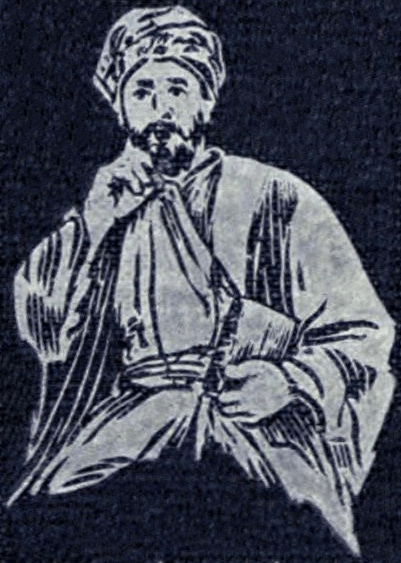
Medieval Islamic science is frequently recognized for its remarkable contributions and subsequent decline, with historians working to clarify these events. Nonetheless, myths endure, such as the notion that Al-Ghazali’s “Tahāfut al-Falāsifa” stifled Islamic scientific progress. Neil deGrasse Tyson has perpetuated this misconception, yet historian Tim O’Neill and others have refuted it. Evidence countering this fallacy includes the fifteenth-century Samarquand observatory of Ulugh Beg, which demonstrates a vibrant scientific community after Al-Ghazali. Sally P. Ragep highlights extensive student engagement in mathematical sciences during this era, with around 120 authors producing 489 treatises on astronomy, among other topics. This factual evidence showcases the persistence of Islamic scientific endeavors long after Al-Ghazali’s era. Therefore, the account of scientific stagnation attributed to Al-Ghazali is erroneous.
Sally P. Ragep’s research is featured in the book “Before Copernicus: The Cultures and Contexts of Scientific Learning in the Fifteenth Century,” published by McGill-Queen’s University Press in 2017.