### The Enigmatic Portraiture of Johannes Kepler
In the chronicles of science, few figures echo as significantly as Johannes Kepler (1571–1630). Yet, in spite of his remarkable contributions to both astronomy and physics, the visual legacy of Kepler is enveloped in obscurity. The tale of Kepler’s portraits is one marked by doubt, speculative attributions, and occasionally, blatant forgery.
Kepler’s formative years did not lend themselves to the commissioning of portraits. Born to a daughter of an innkeeper and a mercenary who abandoned the family, the typical socio-economic conditions that would encourage portraiture were lacking. Hence, the known depictions of Kepler are limited, and many raise questions regarding their authenticity or provenance.
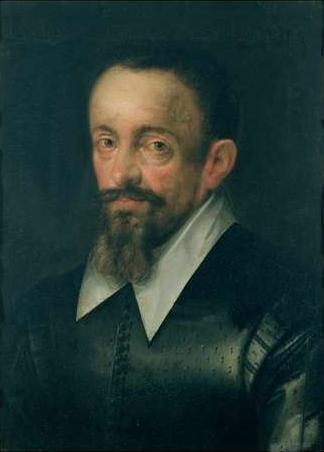
The most renowned potential contemporary likeness attributed to Kepler is by Hans van Aachen (1552–1615), a noteworthy Northern Mannerist painter. This artwork, characterized as a portrait of a young man believed to be Kepler, suffers from dubious attribution, rendering its identity speculative.
Within Florence’s Galleria degli Uffizi resides another portrait labeled as Johannes Keplerus. This piece remains anonymous concerning both the artist and precise date, only vaguely connected to the seventeenth century.
The ambiguities continue into later periods. An engraved portrait by Frederick Mackenzie (1787–1854), located in the Smithsonian Dibner Library, allegedly draws from an existing image in Godefrey Kraemer’s collection. Similarly, the Dibner houses various engravings of Kepler, including those based on a purported 1620 painting gifted to the Strasbourg Library in 1627. This engraving was reimagined in a 1910 painting by August Köhler, currently in Weil der Stadt’s Kepler-Museum.
Possibly the most notable controversy surrounding a portrait is a painting claimed to represent Kepler, located in the Benedictine monastery of Kremsmünster. Once thought to date to 1610, it is now identified as a nineteenth-century forgery, probably not depicting Kepler at all.
Further intrigue surrounds the miniature oil portraits of Johannes and his first wife Barbara, reportedly created around their wedding in 1597. These family heirlooms, obtained by the Pulkovo Observatory from Kepler’s descendants, are among the scant works believed to accurately portray their subjects.
The account of Kepler’s portraiture underscores the difficulties in historical art authentication and the larger inquiries surrounding identity in the visual documentation of history’s scientific luminaries.