In the early modern era, England lagged significantly behind continental Europe in the fields of natural sciences and mathematics. Nonetheless, this story began to transform with the arrival of Isaac Newton (1642–1726 os), whose contributions not only caught up with but also exceeded continental advancements, leading in mathematics, optics, physics, and astronomy. Newton represented a peak in this change, although he was inspired by scholars from various parts of Europe. His three core laws of motion in the “Principia” were influenced by Isaac Beeckman’s (1588–1637) inertia principle, conveyed by René Descartes (1596–1650), and were shaped by Christiaan Huygens’ (1629–1695) three laws of motion in the “Horologium Oscillatorium” (1673).
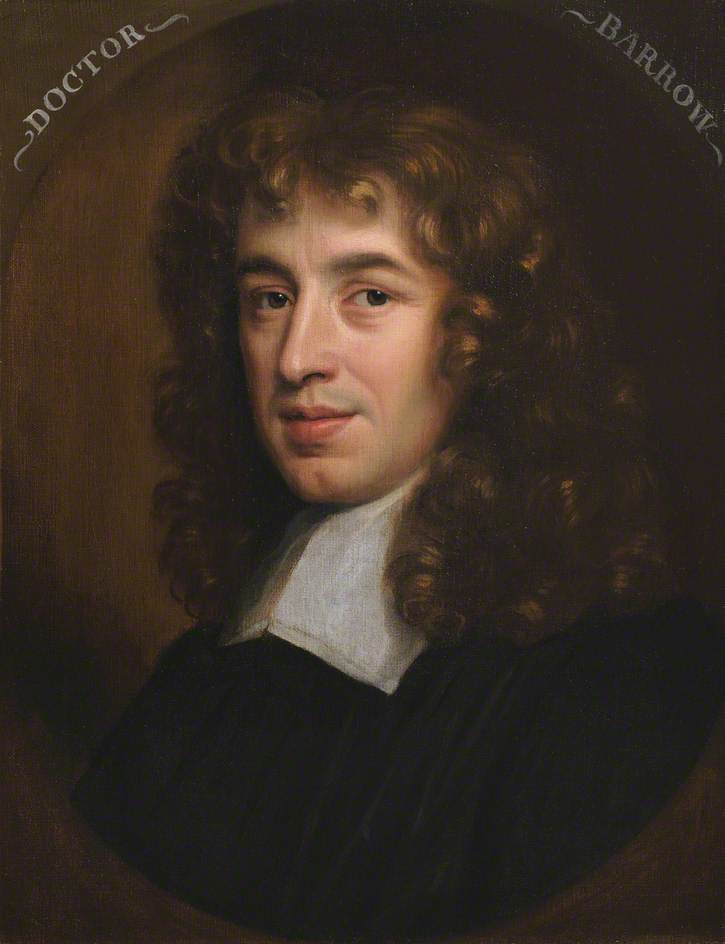
Before examining Newton’s revolutionary work, it is vital to highlight the contributions of two significant English scholars: Isaac Barrow (1630–1677) and John Wallis (1616–1703). They profoundly impacted Newton’s mathematical methodology in physics, which was distinct from the predominantly mechanical perspective of European intellectuals. Contrary to popular belief, Barrow was not Newton’s educator but he did recommend Newton as his successor for the Lucasian Professorship of Mathematics. Newton’s methodology was groundbreaking within Cambridge’s still-feudal, Aristotelian institution, which assigned only a minor significance to mathematics.
Isaac Barrow, coming from a learned family, initially attended Charterhouse School before moving to Felsted School due to unruly behavior. He enrolled at Trinity College Cambridge in 1646, finishing with a BA in 1649 and an MA in 1652. Throughout the 1650s, Barrow concentrated on mathematics and natural sciences, alongside fellow young scholars like John Ray (1627–1705) and Francis Willughby (1625–1672), adopting Descartes’ mathematical sciences and discarding his metaphysical notions. Barrow produced summaries of classical Greek mathematical texts, utilizing the condensed symbolism of William Oughtred (1574–1660).
With the rise of Puritanism, Barrow departed England in 1655 for Europe and Asia Minor, returning in 1659. Following John Wilkins’ backing, he was appointed Regius Professor of Greek at Cambridge, and later became Professor of Geometry at Gresham College. In 1663, upon Wilkins’ advice, he took on the role of the first Lucasian Professor of Mathematics, resigning from his other posts in 1664. While Barrow was knowledgeable about contemporary analytical mathematics, he favored distilling arithmetic into geometry, shunning algebra, which made his work both progressive and antiquated. His calculus framework proposed a generalized expression of the fundamental theorem of calculus. Barrow had a major impact on Newton, and even though Gottfried Leibniz (1646–1716) disputed Barrow’s influence, he acquired Barrow’s “Lectiones geometricae” when it was published in 1670.
Barrow readied his lectures on optics for publication with Newton’s help, who was simultaneously presenting his own optics lectures. Barrow’s “Optics Lectures” mathematically tackled image positioning within geometrical optics, rejecting Cartesian mechanical associations in favor of strictly mathematical approaches. His research resonated with and likely shaped Newton’s “Philosophiæ Naturalis Principia Mathematica,” placing a strong emphasis on mathematics.
Shifting to John Wallis, his influence on English mathematics in the 17th century was substantial. A self-taught mathematician, Wallis became fascinated with arithmetic during the Christmas holidays of 1631, later pursuing it as a pastime. After his studies at Emmanuel College Cambridge, where he earned his BA in 1637 and MA in 1640, Wallis was ordained and developed a knack for cryptography, which he employed in a political context.
In 1649, Wallis became the Savilian Professor of Geometry at Oxford, despite lacking formal training or experience in mathematics—a position he maintained for more than fifty years. Wallis diligently engaged with crucial mathematical works in Oxford’s libraries, operating largely in line with the requirements of his chair. He produced publications such as “De sectionibus conicis” (1655), which introduced analytical conic sections, and the significant “Arithmetica Infinitorum” (1656), which systematized the analytical techniques of Descartes and Cavalieri. Wallis incorporated negative and complex roots, inspired by Harriot, and advanced Descartes’ methods for solving algebraic issues.
Additionally, Wallis advanced physics by refining Descartes’ collision laws, accounting for imperfectly elastic bodies and the concept of momentum conservation, which was crucial to Newton’s dynamics. Newton studied Wallis thoroughly between 1664 and 1665, recognizing his impact, which enhanced Newton’s mathematical evolution and supported his stance against Leibniz in their calculus debate. The intellectual influences of Barrow and Wallis were vital to Newton’s development as a major figure in mathematics and physics.